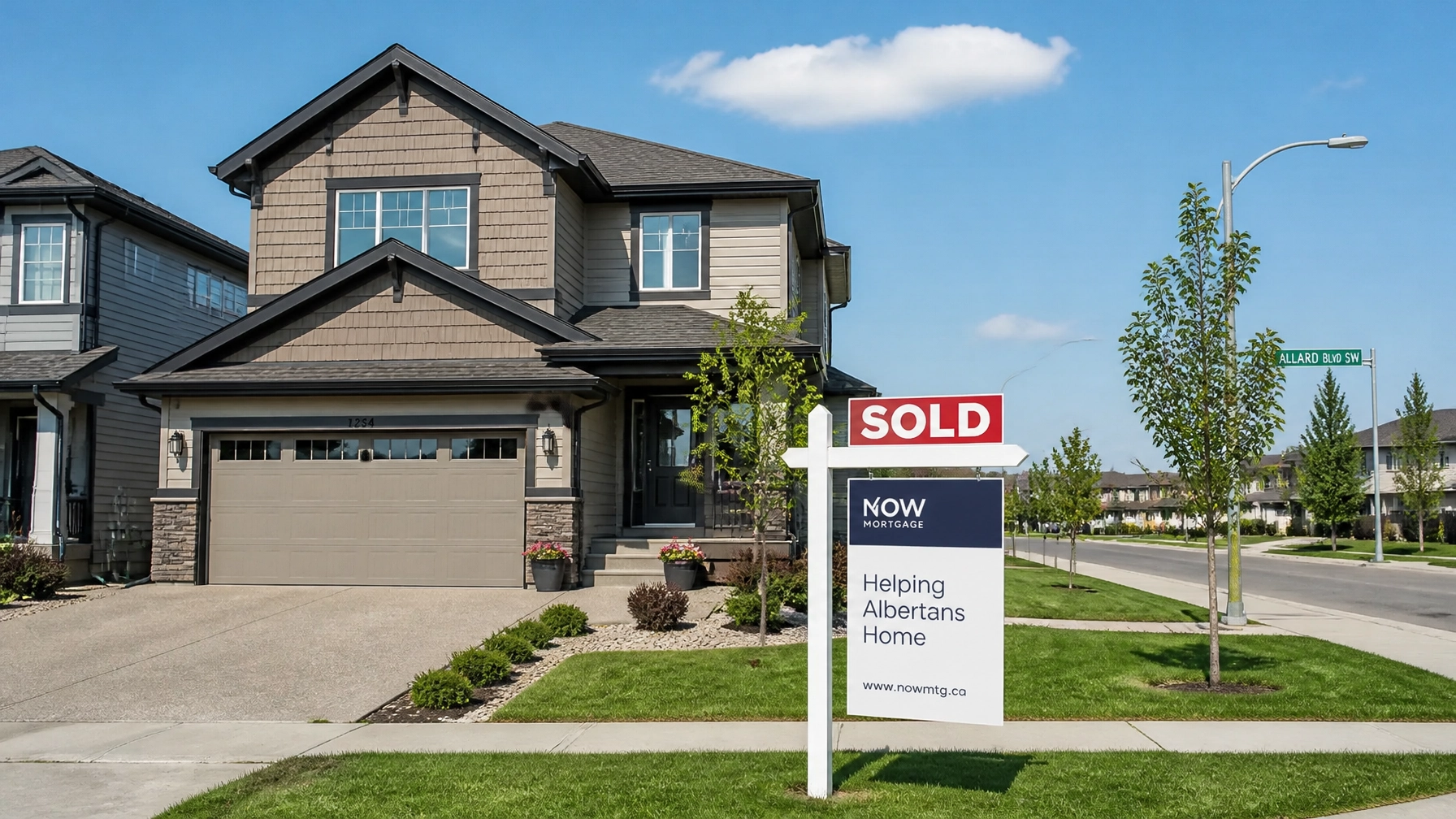
If you are researching a second mortgages calgary, here is what matters most before you apply.
Quick Facts
- Loan-to-value (LTV): How much you owe compared with the property’s appraised value.
- Combined LTV: The first mortgage and second mortgage added together.
- Property type: Detached homes are usually easier to resell than condos or rural properties.
- Appraised value: The lender uses a current appraisal, not yesterday’s estimate or the price you paid.
- First mortgage balance: A large first mortgage leaves less equity available.
- First mortgage rate and payment: The existing payment affects the overall debt structure.
Second Mortgages Calgary: What to Know
Calgary is having a two-speed housing market.
Detached homes in established communities remain relatively firm. Condo apartments, especially in the downtown and inner-city segments, are facing more supply and softer resale conditions. Outside the city, acreages in Rocky View County and Foothills County bring a different set of appraisal and property concerns.
So, does your Calgary location change the cost of a second mortgage?
Not by itself. Calgary’s municipal boundary does not set your rate. The bigger question is what sits inside that boundary: a detached home in Brentwood, a condo in the Beltline, or an acreage outside the city with a private well and several outbuildings.
What actually moves a second mortgage rate?
A second mortgage is priced around risk. The lender is looking at the property, the existing mortgage, the borrower, and the plan for repayment.
The main factors are:
- Loan-to-value (LTV): How much you owe compared with the property’s appraised value.
- Combined LTV: The first mortgage and second mortgage added together.
- Property type: Detached homes are usually easier to resell than condos or rural properties.
- Appraised value: The lender uses a current appraisal, not yesterday’s estimate or the price you paid.
- First mortgage balance: A large first mortgage leaves less equity available.
- First mortgage rate and payment: The existing payment affects the overall debt structure.
- Borrower situation: Credit events, income documentation, self-employment, collections, or a separation may affect pricing.
- Exit strategy: The lender wants to understand how the second mortgage will be paid out.
A lower combined LTV generally gives a lender more protection. More equity can mean better availability and more competitive pricing.
That does not mean every borrower at the same LTV receives the same rate. A detached property with strong resale demand may still be viewed differently from a condo in a building with a pending special assessment.
Calgary’s two-speed market matters
According to the August 2026 Calgary housing market report, the detached benchmark price was approximately $744,300, down only about 1.1% year over year. Detached homes had roughly 3.4 months of supply.
Apartment condos were a different story. The benchmark was approximately $295,400, down about 8.2% year over year, with around 5.7 months of supply.
That gap matters because a second-mortgage lender is not only asking, “What is this property worth today?”
They are also asking, “How easy would this property be to sell if the loan does not pay out as planned?”
In established northwest communities such as Brentwood, Varsity, Edgemont, and Tuscany, a well-maintained detached home may have a broad resale market. A downtown condo may still be perfectly financeable, but the lender could take a closer look at the building, competing listings, condo fees, reserve fund, litigation, and recent comparable sales.

Scenario 1: A $700,000 detached home in northwest Calgary
Imagine a homeowner with a detached property in an established northwest community.
- Estimated property value: $700,000
- First mortgage balance: $480,000
- Current first-mortgage LTV: approximately 68.6%
- Illustrative second mortgage request: $45,000
- Combined debt after the second: $525,000
- Combined LTV: approximately 75%
This is the type of file that may receive stronger consideration from private lenders because the property has a familiar residential use, a broad buyer pool, and reasonable equity.
The rate will still depend on the borrower’s situation and the lender’s guidelines. A recent bankruptcy, active collections, or an urgent closing may increase the cost. But the property itself is generally straightforward collateral.
For a homeowner who needs funds for debt consolidation, a business investment, a tax obligation, or a mortgage for divorce settlement, a second mortgage may be worth examining if the first mortgage is attractive and the repayment plan is realistic.
Scenario 2: A $400,000 downtown Calgary condo
Now consider a condo in the downtown, Beltline, East Village, or Downtown West End market.
- Estimated property value: $400,000
- First mortgage balance: $320,000
- Current first-mortgage LTV: 80%
- Potential second mortgage: limited or unavailable with many lenders
- Combined LTV at $320,000: already 80%
There may be little usable equity after accounting for the lender’s maximum combined LTV, appraisal risk, legal fees, and other closing costs.
Even if the owner believes the condo is worth $400,000, the appraisal may come in lower if comparable units have recently sold for less. The lender may also apply additional caution if the building has:
- High investor or rental concentration
- A weak reserve fund
- Significant upcoming repairs
- A special assessment
- Ongoing litigation
- Unusual construction or insurance concerns
- Many competing units listed for sale
This is why condo second mortgages can be hard to place at reasonable terms. It is not simply a Calgary issue or a downtown issue. It is the combination of property value, building quality, market liquidity, and available equity.
If the condo has enough equity, a second mortgage may still be possible. But borrowers should expect a more detailed review and should compare the total cost carefully.
NOW Mortgage also works with homeowners facing condo-related funding problems, including special assessment financing.
Scenario 3: A $900,000 acreage in Rocky View County
An acreage may have a higher property value than either of the city examples, but that does not automatically make it easier to finance.
Consider:
- Estimated property value: $900,000
- First mortgage balance: $500,000
- Current first-mortgage LTV: approximately 55.6%
- Illustrative rural combined-LTV range: 65% to 70%
- Potential gross equity room: approximately $85,000 to $130,000, before fees and lender conditions
The acreage may have plenty of equity, but rural lending requires more than a quick glance at the purchase price.
A lender may want information about:
- Well and septic systems
- Road access and year-round maintenance
- Zoning and permitted uses
- Outbuildings, shops, barns, or secondary residences
- Legal descriptions and parcel configuration
- Agricultural or commercial activity
- Distance from major employment centres
- The likely pool of future buyers
An unfinished shop may add value to the owner but not the same value to every lender. A rural property that includes agricultural operations may also require more documentation than a standard residential application.
That is where specialized private lenders in Alberta can be useful. The lender may understand the property better, but the added complexity can still affect pricing, LTV, and conditions.

When keeping your first mortgage makes sense
A second mortgage is usually more expensive than a first mortgage. However, refinancing the entire property is not automatically cheaper.
Keeping the first mortgage and adding a second may make sense when:
- Your existing first mortgage has a very low pre-2022 rate.
- Breaking the first mortgage would trigger a substantial prepayment penalty.
- You are close to renewal but need funds now.
- Your income or credit profile makes a full refinance difficult.
- You need a short-term bridge to a sale, settlement, bonus, inheritance, or refinance.
- You want to preserve the payment structure on the existing mortgage.
For example, replacing a low-rate first mortgage with a new higher-rate mortgage could increase the cost of the entire balance, not just the cash you need. A second mortgage allows you to leave the first mortgage in place.
But compare the full numbers. Include:
- Interest on the second mortgage
- Lender and broker fees
- Appraisal cost
- Legal fees
- Renewal or discharge fees
- Any prepayment penalty on the first mortgage
- The expected cost if the loan remains outstanding longer than planned
The cheapest-looking rate is not always the cheapest structure.
When a second mortgage is the wrong move
A second mortgage may not be suitable when:
- There is not enough equity after both mortgages and closing costs.
- The monthly payment is already difficult to maintain.
- The funds are being used to cover an ongoing monthly deficit.
- There is no realistic plan to pay out or refinance the loan.
- The property value is uncertain or falling quickly.
- The requested amount is too small to justify the setup costs.
- A sale, refinance, or debt-consolidation plan is unlikely to work.
Private lending is designed to solve a financing problem, not hide one indefinitely. A good application should include a clear reason for the funds and a realistic exit.
How NOW Mortgage reviews a Calgary second mortgage
The process starts with the property and the objective, not an automatic decline based on a credit score.
NOW Mortgage’s private mortgage process generally includes:
- A conversation about your property and funding goal.
- An equity and property review.
- A discussion of likely costs and lender options.
- An appraisal, when required.
- Lender underwriting and a formal commitment.
- Legal registration and funding.
You can also review options for bruised or bad credit mortgages if missed payments, collections, a consumer proposal, or bankruptcy are part of the story.
Calgary second mortgage FAQ
Does living in Calgary automatically mean a lower second-mortgage rate?+
No. Rates are driven more by combined LTV, property type, appraisal quality, borrower circumstances, and exit strategy than by the city name on the application.
Are detached homes easier to finance than Calgary condos?+
Often, yes. A detached home typically has a broader resale market. Condos can still qualify, but building condition, supply, fees, assessments, and resale demand may affect the lender’s decision.
Can I get a second mortgage on an acreage in Rocky View or Foothills County?+
Possibly. The lender may review the well, septic, access, zoning, outbuildings, agricultural use, and rural resale market. Acreage financing is usually more property-specific than a standard city-home application.
Is a second mortgage better than refinancing?+
It depends. A second mortgage may preserve a low-rate first mortgage and avoid a prepayment penalty. Refinancing may be more cost-effective if the first mortgage rate is no longer competitive and there is enough income and equity to qualify.
Can I get a second mortgage with bad credit in Calgary?+
Potentially. A bad credit mortgage in Calgary is often assessed using equity and the complete situation rather than the credit score alone. The lender will still want to understand the reason for the credit problem and how the loan will be repaid.
How do I find out what I may qualify for?+
Start with the property value, first mortgage balance, amount required, and intended repayment plan. You can start an application securely with NOW Mortgage, with no obligation to proceed.
A second mortgage is not priced by the Calgary sign at the edge of town. It is priced by the risk behind the property: and in Calgary, that means the difference between a firm detached neighbourhood, a soft condo segment, and a rural acreage can be substantial.
Market figures referenced above are from an August 2026 Calgary market report based on CREB data. Lending examples are illustrative only. Actual approval, LTV, rates, fees, and terms depend on the property, appraisal, lender, and borrower circumstances.