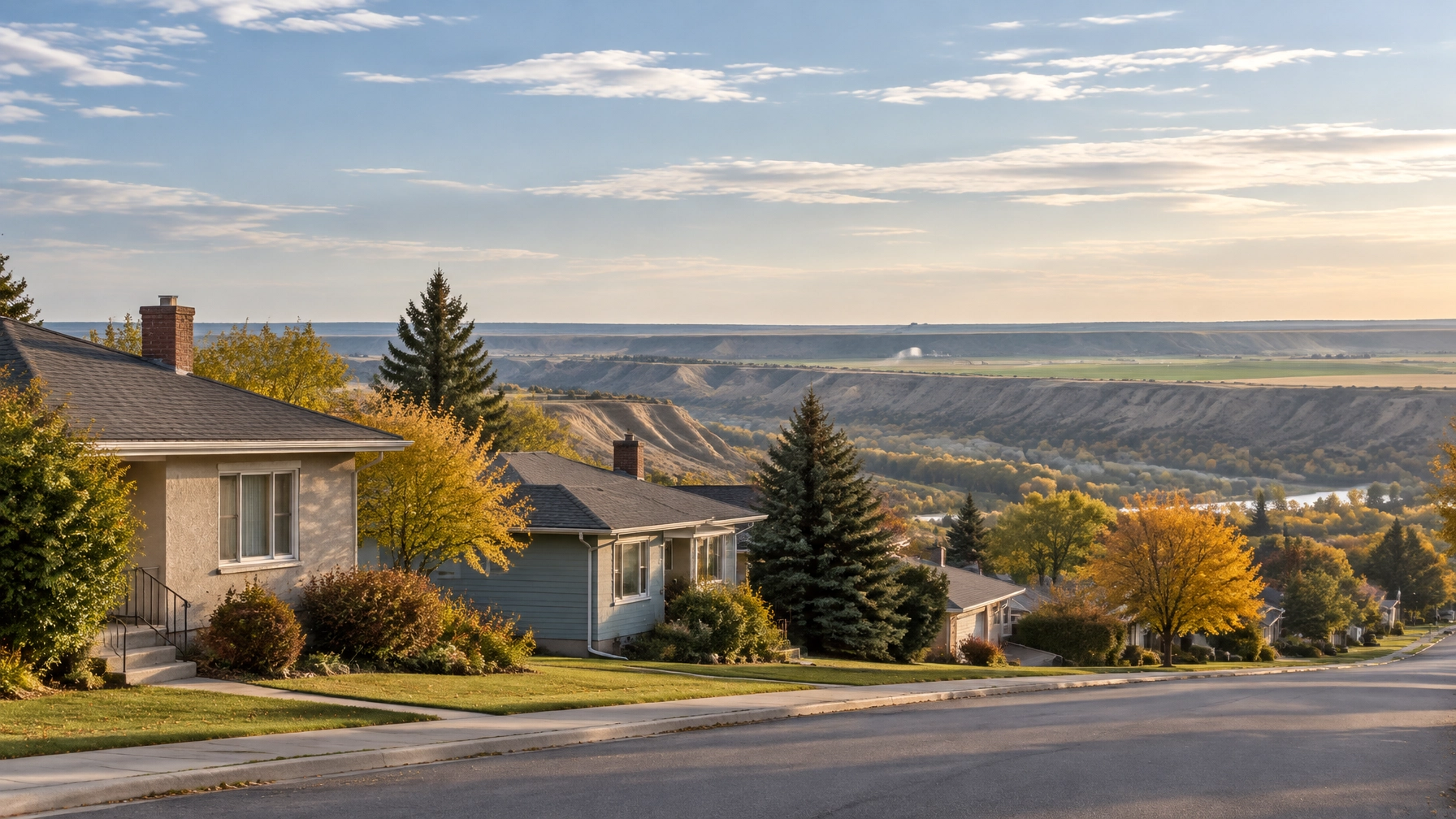
If you are researching a lethbridge second mortgage, here is what matters most before you apply.
Lethbridge Second Mortgage at a Glance
- Lets you access home equity without touching your existing low-rate first mortgage
- Approval depends on combined loan-to-value, property type, and your exit strategy
- Property type and location can affect your rate as much as your credit profile
- Funding is typically faster than refinancing through a bank
- Best suited to short- to medium-term needs with a clear repayment plan
Lethbridge Second Mortgage: What to Know
If you are comparing a second mortgage in Calgary with one in Lethbridge, the short answer is this:
Lethbridge does not automatically mean a higher or lower rate. The property and the borrower’s file matter far more than the city name.
That said, location can affect pricing indirectly. Lethbridge has a mix of older south- and north-side homes, newer west-side development, rural acreages, and irrigated farmland throughout Lethbridge County. Calgary has a larger urban resale market and more standardized housing stock.
Those differences can change a lender’s risk assessment. They do not create a simple “Lethbridge rate” versus “Calgary rate.”
What actually sets a second-mortgage rate?
A second mortgage sits behind your existing first mortgage. If the property is sold after a default, the first lender is paid before the second lender. That is why the second lender focuses heavily on the equity cushion.
The main pricing factors are:
- Loan-to-value (LTV) and combined LTV
- Property type and location
- Appraised value and resaleability
- Your first mortgage balance and rate
- Credit, income, and documentation
- The purpose of the loan
- Your exit strategy
The combined LTV calculation is straightforward:
Combined LTV = first mortgage balance + second mortgage ÷ appraised property value
For example, a $190,000 first mortgage and a $45,000 second mortgage on a $350,000 property produces a combined LTV of about 67%.
Generally, a lower combined LTV gives a lender more protection and may lead to better pricing. A high combined LTV, weaker documentation, or a less liquid property usually means a higher rate, larger lender fee, or both.
Public Alberta rate guides show that second-mortgage pricing can vary widely, often landing somewhere around the high single digits to the mid-teens depending on the file. A published range is only a starting point, not a quote. Rates.ca’s Alberta mortgage-rate information and Ratehub’s Alberta mortgage-rate guide are useful for general context, but private financing is priced individually.
Lethbridge versus Calgary: a practical comparison
| Scenario | Property and borrower considerations | Illustrative pricing direction |
|---|---|---|
| $350,000 south-side Lethbridge home | Older home, potentially lower appraisal due to condition or deferred maintenance; limited equity in dollar terms | Often mid-range pricing if the home is marketable and combined LTV is reasonable |
| $450,000 Calgary property | Standard urban property with a larger resale market and more lender familiarity | Often competitive pricing when the borrower and LTV are similar |
| $1.8 million irrigated Lethbridge County farm | Land, irrigation, agricultural use, buildings, access, and specialized resale market all require separate analysis | Not directly comparable to a city home; agricultural pricing and lower leverage may apply |
A Calgary homeowner is not guaranteed a better rate. A well-maintained Lethbridge home with strong equity may be easier to finance than a Calgary property with a high first-mortgage balance, weak appraisal, or complicated title.
The Lethbridge housing details lenders notice
Lethbridge is a city of roughly 100,000 people with a local economy shaped by the University of Lethbridge, health care, education, retail, construction, agriculture, and agri-food processing. Household incomes and home prices are generally lower than Calgary’s.
That lower price point can be helpful. It may make the total borrowing need more manageable.
But it also means the same percentage of equity produces fewer dollars.
A 30% equity position in a $350,000 home is $105,000. The same 30% position in a $450,000 Calgary home is $135,000. If both homeowners need $45,000, the Calgary property may have more room before the combined LTV becomes uncomfortable.
Older south-side homes
Older south-side properties can be perfectly good collateral. However, an appraisal may come in below the homeowner’s expectation if the home has:
- Deferred roof, foundation, plumbing, or electrical work
- Dated kitchens and bathrooms
- Unfinished basements
- Older mechanical systems
- Exterior maintenance issues
- Limited comparable sales
A lender does not value the home based only on what the owner has invested in it. The question is what the property could reasonably sell for in its present condition.
North-side properties and newer west-side development may have different comparable sales and buyer demand. The important point is not that one side of Lethbridge is automatically better. It is that the specific property must be appraised on its own merits.
Farms and acreages are a different lending category
An irrigated Lethbridge County farm is not simply a very large house.
Its value may depend heavily on:
- Irrigated versus non-irrigated land
- Soil quality and productive capacity
- Water rights and irrigation infrastructure
- Parcel configuration
- Outbuildings and grain or livestock facilities
- Access and servicing
- Agricultural use and zoning
- The market for comparable farm properties
For many farms, the land and irrigation value matter more than the residence. That changes both the appraisal and the exit strategy.
NOW Mortgage’s farm and raw land financing information explains that agricultural and raw-land lending is generally more conservative, with financing commonly considered up to 55% LTV and higher leverage reviewed case by case. Rates and terms depend on the land, use, location, and overall application.
That is why a $1.8 million irrigated farm may not receive the same terms as a $450,000 Calgary detached home, even if both borrowers have excellent credit.

Worked example: keeping a low-rate first mortgage
Suppose a Lethbridge homeowner owns a south-side property appraised at $350,000.
- Existing first mortgage: $190,000
- Required second mortgage: $45,000
- Combined mortgage debt: $235,000
- Combined LTV: 67.1%
- Illustrative second-mortgage rate: 11.5%
- Illustrative lender fee: 3%
The interest-only cost on the second mortgage would be approximately:
- $45,000 × 11.5% = $5,175 per year
- Approximately $431 per month in interest
- 3% lender fee = $1,350
- Plus appraisal, legal, and registration costs
The homeowner would receive roughly $45,000 before applicable fees and closing costs.
Now compare that with refinancing the entire $235,000. If the existing first mortgage has a particularly low rate, refinancing could replace the low-rate $190,000 balance with a higher-rate mortgage on the full amount. There may also be a payout penalty.
A second mortgage can make more sense when:
- The first mortgage rate is unusually low
- The first mortgage has a significant prepayment penalty
- The homeowner only needs a limited amount of cash
- The second mortgage has a clear short-term exit
- The monthly payment remains manageable
It may be less expensive overall to leave the first mortgage alone and pay a higher rate on the smaller second mortgage than to reprice the entire balance.
This is not automatic. The comparison should include interest, lender fees, legal costs, appraisal fees, penalties, and the expected term.
The practical floor: when is a second mortgage too small?
There is no universal minimum that works for every lender or borrower. But fixed costs matter.
If you borrow $10,000 and pay a $300 lender fee, a $1,000 appraisal and legal bill, and several months of interest, the transaction can become expensive very quickly. A smaller second mortgage may still be appropriate in an urgent situation, but it deserves extra scrutiny.
As a practical rule, a second mortgage below roughly $25,000 to $40,000 often needs a very clear reason to justify the fees. A straightforward file may work below that range; a complicated property or urgent closing may not.
Ask for an upfront estimate showing:
- Gross mortgage amount
- Lender fee
- Broker fee, if any
- Legal and appraisal costs
- Interest payment
- Net funds available
- Total payout required at maturity
That is the level of transparency borrowers should expect from private lenders in Alberta.
When a second mortgage is the wrong move
A second mortgage is not a magic solution for an unaffordable budget.
It may be the wrong move when:
- The new payment leaves no room for taxes, utilities, or repairs
- There is no credible exit strategy
- The loan is being used to cover recurring monthly deficits
- The property value is uncertain
- The required amount is too small to justify the fees
- A refinance, credit-union loan, or structured repayment plan would cost less
- Selling or downsizing is the more realistic solution
For seniors, a reverse mortgage in Edmonton or Lethbridge may be more suitable than a payment-based second mortgage if the main issue is retirement cash flow. For a separation, a properly structured mortgage for a divorce or separation settlement may be more appropriate than taking an improvised loan.
The same principle applies to debt consolidation. A debt consolidation mortgage in Edmonton, Calgary, or Lethbridge can simplify payments, but it only helps if the underlying spending and repayment plan are addressed.

What should your exit strategy look like?
Private second mortgages are commonly short- to medium-term tools. Before approval, you should be able to explain how the loan will be repaid.
Possible exits include:
- Refinancing into a bank or credit-union mortgage
- Selling the property
- Receiving proceeds from a pending transaction
- Paying down debt after a business or estate event
- Completing renovations that improve value and marketability
- Resolving a separation or divorce settlement
If your situation involves self-employment, temporary income disruption, or credit damage, a private mortgage may create time to stabilize. That is different from using a private loan indefinitely without a plan.
NOW Mortgage explains the broader differences in its guide to what a private mortgage is. You can also start with the company’s financing estimator without a credit check or obligation.
Lethbridge second-mortgage FAQ
Does a second mortgage cost more in Lethbridge than Calgary?+
Not automatically. Comparable urban properties with similar combined LTVs and borrower profiles may receive similar pricing. Lethbridge farms, acreages, or unusual properties may price differently because there are fewer suitable lenders and a more specialized resale market.
Can I get a second mortgage with bad credit?+
Possibly. Private lenders may focus more heavily on property equity and the exit plan than a bank does. However, bad credit can still affect pricing, fees, approval amount, and required documentation. Searching for a bad credit mortgage in Calgary or Lethbridge should not mean ignoring affordability.
How much equity do I need?+
Many lenders prefer meaningful equity, often at least 20% after considering all registered mortgages. Agricultural properties may require substantially more. The usable amount depends on the appraisal, property type, first-mortgage balance, and lender guidelines.
Can agricultural financing be used for an irrigated farm?+
It may be possible, but farm financing is assessed differently from residential lending. Irrigation, land quality, zoning, buildings, access, and agricultural use all matter. Start with the property details and appraisal: not just the estimated market value.
Should I refinance instead of taking a second mortgage?+
Refinancing may provide a lower rate, but it replaces the entire first mortgage and may trigger a penalty. Keeping a low-rate first mortgage and adding a second can be better when you need a smaller amount and have a clear short-term exit.
What information should I provide to get an initial assessment?+
Have these details ready:
- Property address and type
- Estimated value
- Current first-mortgage balance and rate
- Amount required
- Purpose of the funds
- Income and credit situation
- Expected repayment or exit plan
You do not need a perfect file to start a conversation. You do need a realistic picture of the property and the problem you are trying to solve.
Bottom line
A second mortgage in Lethbridge is not priced simply because it is in Lethbridge. The real drivers are equity, appraisal quality, property type, resaleability, borrower circumstances, and the exit strategy.
A $350,000 south-side home, a $1.8 million irrigated farm, and a $450,000 Calgary property are three different lending decisions.
The best next step is to compare the full cost of keeping your first mortgage, refinancing, or adding a second: not just the advertised rate. Start with a confidential assessment from NOW Mortgage, including the fees and net funds before you commit.
This article is general information, not financial, legal, or tax advice. Rates, fees, lending limits, and approval terms vary by lender and application.