If you are researching a okotoks second mortgage, here is what matters most before you apply.
Okotoks Second Mortgage at a Glance
- Lets you access home equity without touching your existing low-rate first mortgage
- Approval depends on combined loan-to-value, property type, and your exit strategy
- Property type and location can affect your rate as much as your credit profile
- Funding is typically faster than refinancing through a bank
- Best suited to short- to medium-term needs with a clear repayment plan
Okotoks Second Mortgage: What to Know
If you own a home in Okotoks and need access to equity, you may wonder whether living south of Calgary changes your second mortgage rate.
The short answer: usually not because of the town boundary.
A newer Okotoks subdivision home may price much like a comparable Calgary property. But an acreage near Okotoks: or a ranch property in Foothills County: can be assessed very differently.
The property itself matters more than the sign welcoming you to town.
Okotoks is not one type of real estate market
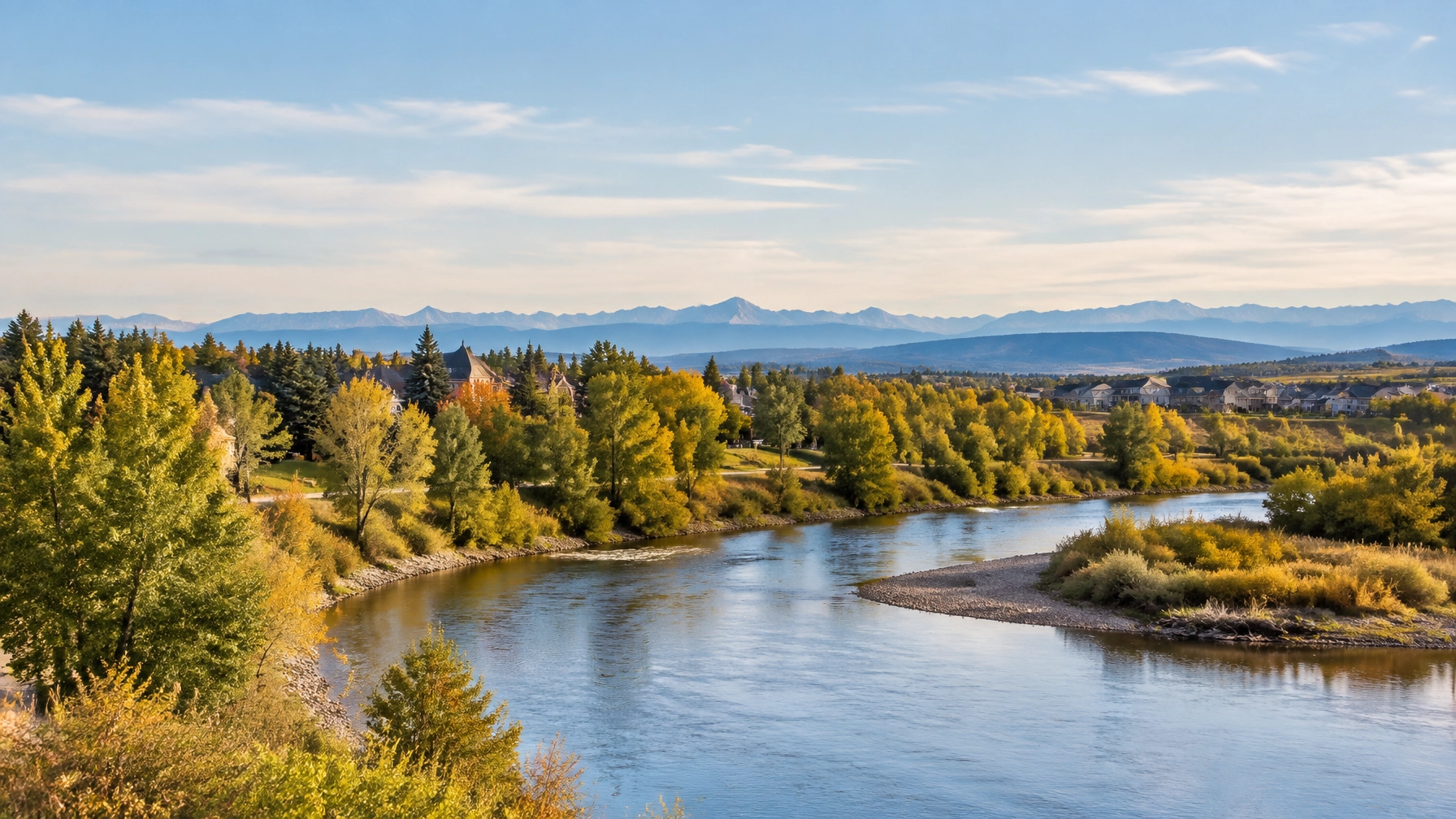
Okotoks is roughly 20 minutes south of Calgary along Highway 2A, beside the Sheep River. It has grown into one of the Calgary region’s most desirable family communities, with strong demand from Calgary commuters and families looking for more space.
It also has a deliberately managed growth history tied to the Sheep River water supply.
That creates a local market with several distinct property types:
- Older character homes near historic downtown
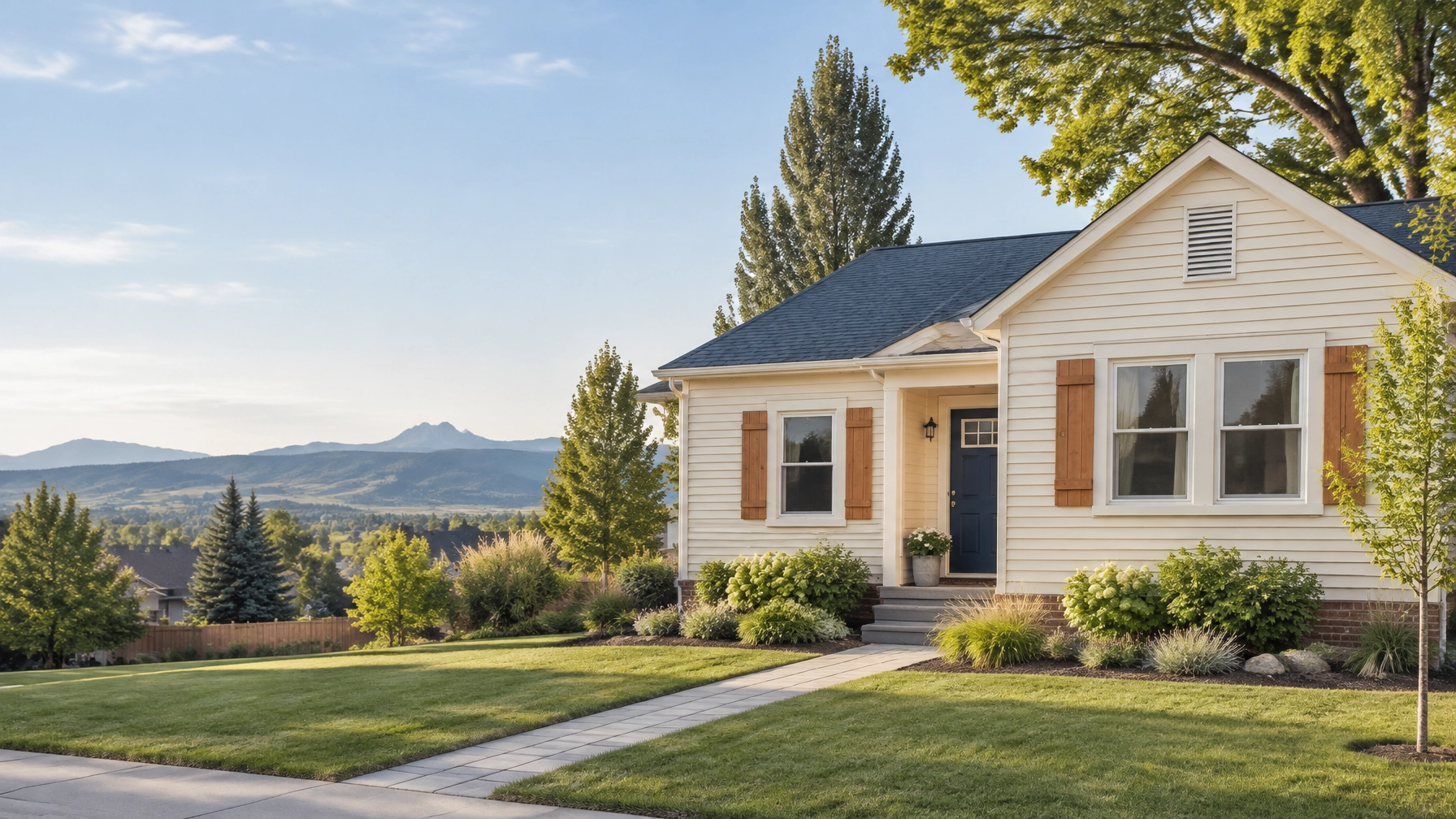
- Newer detached homes in growing subdivisions
- Larger family properties with garages, suites, or upgraded finishes
- Acreages and rural residential properties outside town
- Ranch and agricultural properties in Foothills County and the MD of Foothills
A lender does not price these properties the same way.
What actually determines a second mortgage rate?
Whether you are searching for a second mortgage Calgary homeowners can access or financing in Okotoks, lenders usually focus on the same core questions:
1. Loan-to-value and combined LTV
Combined loan-to-value, or CLTV, is the total of your first mortgage and proposed second mortgage compared with the property’s appraised value.
For example:
- Property value: $600,000
- First mortgage: $350,000
- Proposed second mortgage: $100,000
- Total secured debt: $450,000
- Combined LTV: 75%
A standard urban property may qualify near a lender’s 75%–80% CLTV range. Acreages and unusual properties may be limited closer to 65%–75%, depending on the lender.
2. Property type and resaleability
A typical subdivision home has many potential buyers. That makes it easier for a lender to understand and resell if something goes wrong.
An acreage is different.
The lender may look closely at:
- Private well water and septic systems
- Road access and year-round maintenance
- Barns, shops, fences, and other outbuildings
- Zoning and permitted uses
- Whether the property is residential, agricultural, or mixed-use
- How much of the appraised value comes from the land versus the buildings
- Distance from Calgary, Okotoks, and essential services
- The likely buyer pool if the property had to be sold
This is why a $780,000 Okotoks-area acreage may receive a higher rate than a $450,000 Calgary suburban home: even if both borrowers have similar credit.
3. Your first mortgage
The first mortgage balance, interest rate, payment history, and maturity date all matter.
A second mortgage sits behind the first mortgage on title. The second lender is taking more risk, so the rate is higher. The stronger the equity position, the more comfortable the lender may be.
4. Your situation and exit strategy
Private lenders Alberta homeowners work with will also want to understand why you need the funds and how the second mortgage will be repaid.
Common exit strategies include:
- Refinancing at renewal
- Selling another property
- Consolidating the second into a new first mortgage
- Rebuilding credit and moving to a B lender
- Selling the property after a planned life event
- Repaying the loan from a business, estate, or investment transaction
Credit still provides context, but a bruised credit history is not automatically a decline. NOW Mortgage starts with a conversation and property review: no credit check is required to see whether an option may exist.
Okotoks versus Calgary: a practical comparison
Here is how three different files might look. These are illustrations, not rate quotes.
| Property and borrower | Approx. value | First mortgage | Potential CLTV approach | Illustrative second-mortgage pricing |
|---|---|---|---|---|
| Okotoks-area acreage | $780,000 | $430,000 | Around 75% | Often higher due to rural property risk |
| Calgary suburban home | $450,000 | $280,000 | Around 80% | Often more competitive for a standard home |
| Okotoks subdivision home | $600,000 | $350,000 | Around 80% | Often similar to comparable Calgary pricing |
The important point is that the Okotoks subdivision home is not automatically more expensive to finance than the Calgary home.
The acreage is the file that changes the picture.
Worked example: how much equity might be available?
Example A: Okotoks-area acreage
- Appraised value: $780,000
- Lender’s maximum CLTV: 75%
- Total secured lending allowed: $585,000
- Existing first mortgage: $430,000
- Potential room for a second: approximately $155,000
If a lender priced a $100,000 second mortgage at an illustrative 12.5% interest-only rate, the interest would be approximately $1,042 per month, before fees and legal costs.
The final amount could be lower if the appraisal discounts the outbuildings, identifies servicing concerns, or treats part of the land as agricultural rather than residential.

Example B: Calgary suburban home
- Appraised value: $450,000
- Lender’s maximum CLTV: 80%
- Total secured lending allowed: $360,000
- Existing first mortgage: $280,000
- Potential room for a second: approximately $80,000
At an illustrative 10.5% rate, an $80,000 interest-only second mortgage would cost approximately $700 per month, before fees.
The Calgary borrower may have less available equity in dollars, but the standard property could be easier to price and resell.
Example C: Okotoks subdivision home
- Appraised value: $600,000
- Lender’s maximum CLTV: 80%
- Total secured lending allowed: $480,000
- Existing first mortgage: $350,000
- Potential room for a second: approximately $130,000
At an illustrative 9.5% rate, a $100,000 second mortgage would cost approximately $792 per month in interest-only payments.
Again, the rate is driven by the borrower’s full file, but the newer subdivision home generally fits a more familiar residential lending model than an acreage.
When keeping your first mortgage may make sense
A second mortgage usually has a higher rate than a first mortgage. So why not refinance everything?
Because refinancing can trigger a prepayment penalty, change the rate on your entire mortgage balance, and create new legal and administration costs.
Consider this illustration:
- Existing first mortgage: $350,000
- Current first-mortgage rate: 3.19%
- New money required: $100,000
- Possible prepayment penalty: $6,000
- Second mortgage rate: 10.5%
Keeping the first mortgage would produce approximate annual interest of:
- Existing first: $350,000 × 3.19% = $11,165
- Second mortgage: $100,000 × 10.5% = $10,500
- Combined annual interest: approximately $21,665
If the borrower refinanced the full $450,000 at an illustrative 6.5% rate:
- $450,000 × 6.5% = $29,250 per year
- Plus the potential $6,000 prepayment penalty
That does not prove a second mortgage is always cheaper. Payment structure, fees, amortization, lender conditions, and timing all matter.
It does show why comparing both options in dollars is more useful than looking at the second-mortgage rate alone.
When a second mortgage is the wrong move
A second mortgage may not be the right fit if:
- You are only weeks away from mortgage renewal
- Your existing mortgage rate is already high
- The required loan amount is too large for the available equity
- The payment does not fit your budget
- You have no realistic exit strategy
- The funds are being used to cover an ongoing monthly shortfall
- A sale, refinance, or debt restructuring would solve the problem more cleanly
- The fees consume too much of the money you need
A second mortgage is secured against your home. Missing payments can put the property at risk, just like missing payments on a first mortgage.
The goal should be a short-term solution with a clear next step: not simply moving today’s problem into another loan.
What can an Okotoks second mortgage be used for?
Homeowners may use a second mortgage or home equity loan Alberta borrowers can access for:
- Debt consolidation
- Renovations and repairs
- Property tax arrears
- Business or farm working capital
- Estate settlements
- A separation or mortgage for divorce settlement
- Medical or family expenses
- A time-sensitive purchase or bridge
- Agricultural financing Alberta property owners may need
For rural borrowers, NOW Mortgage also works with files involving farms, land, and complex income. Agricultural properties require additional documentation and appraisal review, so the process may involve more detail than a standard residential application.

Okotoks second mortgage FAQ
Are second mortgage rates higher in Okotoks than Calgary?+
Not automatically. A standard Okotoks subdivision property may receive similar pricing to a comparable Calgary home. Acreages and rural properties often receive higher rates because they can be more difficult to appraise and resell.
Can I get a second mortgage in Okotoks with bad credit?+
Possibly. A bad credit mortgage Calgary or Okotoks application may still work when there is sufficient equity and a reasonable repayment plan. Private lending is primarily equity-based, although the lender will still review the overall situation.
How much can I borrow against an Okotoks home?+
The amount depends on the appraised value, first mortgage balance, property type, lender, and combined LTV. A standard home may be assessed near an 80% maximum, while an acreage may be capped lower.
Do I need to refinance my first mortgage?+
No. A second mortgage is designed to sit behind your existing first mortgage. That can help you preserve a low rate and avoid a prepayment penalty. However, refinancing may be better if you are near renewal or your existing mortgage is expensive.
Can seniors in Okotoks use home equity without regular mortgage payments?+
A reverse mortgage may be an option for eligible homeowners, generally where the youngest homeowner is at least 55 and the property is a primary residence. You can review the CHIP reverse mortgage estimate to explore the basics. A reverse mortgage edmonton or Alberta application still requires property and borrower review.
How do I compare offers properly?+
Ask for the full cost, not just the interest rate:
- Interest rate and payment type
- Lender fee
- Brokerage fee
- Appraisal cost
- Legal fees
- Term and renewal conditions
- Prepayment rules
- Exit strategy
NOW Mortgage explains the expected costs before you commit. The private mortgage process outlines the usual steps, from initial inquiry through appraisal, lender review, legal registration, and funding.
The bottom line for Okotoks homeowners
Your address matters, but the property profile matters more.
A standard Okotoks home may price similarly to a Calgary home. An acreage with a well, septic system, barns, and significant land value is a different lending proposition.
If you need fast access to equity, compare a second mortgage against a refinance using your actual numbers. That is especially important when you have a low-rate first mortgage, a possible prepayment penalty, or a time-sensitive need such as debt consolidation, a divorce settlement, or an estate matter.
For a straightforward review, start with NOW Mortgage. You can also review options for a bruised credit mortgage, private farm financing in Alberta, or a refinancing and debt-consolidation mortgage.
Examples in this article are illustrative only. Rates, fees, loan amounts, appraisal values, and approval conditions vary by lender and borrower. All financing is subject to property review, qualification, and lender approval.