
Tag: Red Deer

  • Second Mortgages in Red Deer vs. Calgary and Edmonton: Does Location Change Your Rate?

    Second Mortgages in Red Deer vs. Calgary and Edmonton: Does Location Change Your Rate?

    If you are researching a red deer second mortgage, here is what matters most before you apply.

    Red Deer Second Mortgage at a Glance

    • Lets you access home equity without touching your existing low-rate first mortgage
    • Approval depends on combined loan-to-value, property type, and your exit strategy
    • Property type and location can affect your rate as much as your credit profile
    • Funding is typically faster than refinancing through a bank
    • Best suited to short- to medium-term needs with a clear repayment plan

    Red Deer Second Mortgage: What to Know

    Red Deer sits roughly halfway between Calgary and Edmonton on Highway 2. With a population of about 100,000, it is central Alberta’s regional hub for oilfield services, agriculture, agri-food, construction, trades, health care, and professional services.

    That mix creates plenty of homeowners with usable equity, but not always the income documentation, credit profile, or timing a traditional bank wants.

    So, does a second mortgage in Red Deer cost more than a second mortgage Calgary or Edmonton?

    Usually, no. The city name is not the main pricing factor.

    For similar properties with similar equity positions, second-mortgage rates in Red Deer, Calgary, and Edmonton can be broadly comparable. What changes the offer is usually the property, combined loan-to-value, borrower situation, and exit plan.

    The short answer: location matters indirectly

    Private lenders in Alberta generally care less about municipal boundaries and more about how easily they could recover their money if the loan does not work out.

    That means the important questions are:

    • How much equity is in the property?
    • What is the total borrowing compared with the appraised value?
    • Is the property easy to resell?
    • Is it a standard urban home, rental, acreage, or farm?
    • What is the balance and interest rate on the first mortgage?
    • How will the second mortgage be repaid?

    A standard owner-occupied home in Red Deer may receive pricing similar to a comparable home in Calgary or Edmonton.

    A Red Deer County acreage, however, may be priced differently, not because it is in Red Deer County, but because rural properties bring additional valuation and resale questions.

    What really drives a second-mortgage rate?

    1. Combined loan-to-value

    Combined loan-to-value, or CLTV, is one of the biggest pricing factors.

    The calculation is:

    First mortgage balance + second mortgage amount ÷ current appraised value

    For example, if a home is worth $420,000, the first mortgage is $250,000, and the second mortgage is $45,000:

    • Total secured debt: $295,000
    • Property value: $420,000
    • Combined LTV: approximately 70.2%

    Lower CLTV generally gives a lender more protection and can lead to better pricing. Higher CLTV usually means a higher rate, lower maximum loan, or both.

    Published Alberta lending grids commonly separate urban properties into different LTV bands, with lower-leverage seconds sometimes priced in the high-single digits and higher-leverage or more complex files moving into the low teens. These are illustrative ranges, not guaranteed quotes. Rates, fees, and available lenders change.

    2. Property type and resaleability

    A detached home in an established Red Deer neighbourhood is usually easier to value and resell than a specialized rural property.

    Lenders may view these properties differently:

    • Owner-occupied detached homes
    • Townhouses and condominiums
    • Rental properties
    • Acreages
    • Farms and agricultural land
    • Mobile or manufactured homes
    • Vacant or renovation properties

    A lender is asking a practical question: If repayment fails, how marketable is the security?

    That is why property type can affect rate more than whether the address says Red Deer, Calgary, or Edmonton.

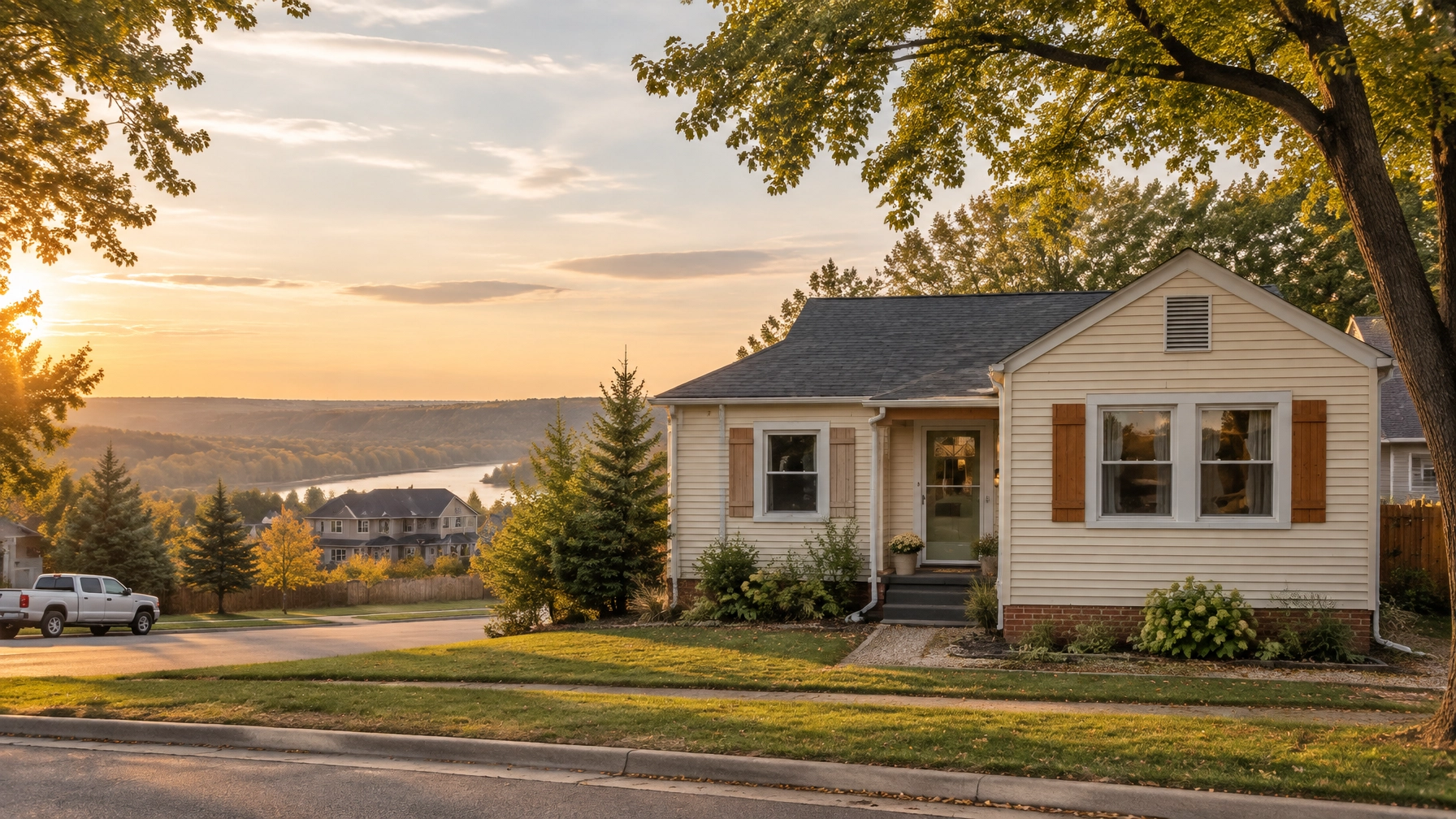
    A well-kept single-family home representing residential equity and mortgage options

    Red Deer’s housing stock creates some specific considerations

    Red Deer has a wide range of housing, from older postwar homes near established neighbourhoods to newer subdivisions and modern townhomes.

    That variety matters during appraisal.

    Older homes may appraise below the owner’s expectation

    A homeowner may think, “My neighbour sold for $450,000, so mine must be worth the same.”

    But an appraiser will consider:

    • Overall condition
    • Roof, windows, furnace, and major systems
    • Basement development
    • Lot size and layout
    • Recent comparable sales
    • Deferred maintenance
    • Quality of renovations

    In an older Red Deer home, needed repairs can reduce the appraised value. That reduces the amount available through a home equity loan Alberta homeowner may be considering.

    Acreages involve more than the house

    Red Deer County includes acreages and farm properties with wells, septic systems, outbuildings, larger parcels, and agricultural uses.

    An appraisal may need to distinguish between:

    • The value of the land
    • The value of the home
    • The value of shops, barns, or other improvements
    • The usefulness and condition of the well and septic system
    • Whether the property has a realistic buyer pool
    • Whether the property is residential, agricultural, or mixed-use

    The land may be valuable, but not every lender treats rural land the same way as a serviced urban lot.

    NOW Mortgage’s farm and raw land financing information explains why agricultural and rural properties often require more equity and case-by-case review.

    Red Deer vs. Calgary: three practical examples

    The following examples are simplified to show how pricing may be influenced. They are not rate quotes or approvals.

    ScenarioProperty valueFirst mortgageSecond mortgageApprox. CLTVMain pricing consideration
    Red Deer in-town home$420,000$250,000$45,00070.2%Urban home, condition and neighbourhood comparables
    Red Deer County acreage$750,000$390,000$75,00062.0%Rural resale, well, septic, outbuildings, land valuation
    Calgary residential property$450,000$285,000$30,00070.0%Urban liquidity, property type, borrower and exit plan

    The Red Deer in-town property and Calgary property have almost identical CLTVs. If both are standard owner-occupied homes with similar condition and borrower circumstances, their second-mortgage pricing could be similar.

    The acreage has a lower CLTV, which is positive. However, rural complexity may still lead to a different lender category, a lower maximum LTV, additional conditions, or a rate premium.

    Lower leverage helps, but it does not erase property-specific risk.

    Worked example: keeping a low-rate first mortgage

    Suppose a Red Deer homeowner has:

    • Home value: $420,000
    • First mortgage balance: $250,000
    • Existing first-mortgage rate: 3.10%
    • Additional funds required: $45,000
    • Illustrative second-mortgage rate: 10.49%

    If the homeowner keeps the first mortgage and adds a second:

    • Annual interest on the first: approximately $7,750
    • Annual interest on the second: approximately $4,721
    • Combined annual interest: approximately $12,471, before fees and payment-structure differences

    Now compare that with refinancing the full $295,000 into a new mortgage at an illustrative 5.50%:

    • Approximate annual interest: $16,225
    • Possible prepayment penalty: potentially several thousand dollars
    • Possible appraisal, legal, and discharge costs

    In this simplified example, the second mortgage has a much higher rate on the new $45,000, but refinancing would reprice the entire $250,000 first mortgage. Keeping the low-rate first can make sense when:

    • The existing mortgage has a valuable low rate
    • The prepayment penalty is significant
    • The second mortgage is relatively small
    • There is a clear repayment or refinance plan
    • The monthly payment remains manageable

    This is where the answer is not simply “take the lowest rate.” It is a comparison of total borrowing cost, penalties, fees, and flexibility.

    When a second mortgage may be the wrong move

    A second mortgage is not free money, and it should not be used to postpone an impossible situation.

    It may be the wrong option if:

    • There is no realistic exit strategy
    • The new payment creates negative monthly cash flow
    • The requested amount pushes CLTV close to the lender’s maximum
    • The funds are being used for ongoing expenses rather than a defined need
    • A sale or refinance is unlikely within the term
    • The property has serious condition or title issues
    • The borrower is already relying on short-term debt to make mortgage payments

    For seniors, a reverse mortgage Edmonton option, or a comparable Alberta reverse-mortgage solution, may be more suitable than regular monthly payments. For a separation, specialized mortgage for divorce settlement financing may provide a cleaner structure than adding unsecured debt.

    The right answer depends on the problem being solved.

    Red Deer situations where a second mortgage can help

    Homeowners in the Red Deer area may consider a second mortgage for:

    • Debt consolidation
    • Business or self-employed cash flow
    • A time-sensitive tax or legal obligation
    • Home repairs before selling or refinancing
    • A spousal buyout
    • Estate settlement costs
    • Agricultural or acreage-related financing
    • A temporary gap while returning to bank financing

    A private mortgage is often designed as a short- or medium-term solution. NOW Mortgage explains the basic structure in its guide to what a private mortgage is.

    If the issue involves separation, the divorce and separation financing page outlines common situations such as removing a partner from title, funding a spousal buyout, or managing a court-related deadline.

    Common questions from Red Deer homeowners

    Is a second mortgage more expensive in Red Deer than Calgary?

    Not automatically. A comparable urban property with the same CLTV, occupancy, condition, and borrower profile may receive similar pricing in both cities.

    A rural or specialized property can cost more to finance because of valuation and resale considerations.

    Can I get a second mortgage with bad credit?

    Possibly. Private lenders in Alberta may focus more heavily on property value and equity than a traditional bank. However, credit still matters because it helps explain the borrower’s situation and supports the repayment plan.

    “Bad credit mortgage Calgary” and “private mortgage Edmonton” searches often describe similar equity-based lending principles. The property and exit strategy still need to make sense.

    Can I use a Red Deer second mortgage for debt consolidation?

    Yes, depending on available equity and the lender’s assessment. Consolidating high-interest credit cards or unsecured loans may improve monthly cash flow, but only if the new mortgage payment and fees are sustainable.

    The same principle applies to a debt consolidation mortgage Edmonton or any other Alberta municipality.

    What documents do I need?

    Expect to provide some combination of:

    • Property address and ownership details
    • Current mortgage statement
    • Income or bank statements
    • Property tax information
    • Details of other debts
    • Intended use of funds
    • A clear exit strategy
    • Appraisal or lender-ordered valuation

    NOW Mortgage’s pre-qualification estimator can help you review potential options without a credit check or obligation to get started.

    Bottom line: the address is only part of the story

    A Red Deer home is not automatically a higher-risk mortgage than a Calgary or Edmonton home.

    For an ordinary in-town property, CLTV, condition, borrower circumstances, and repayment plan usually matter more than the municipality.

    The calculation changes when the property is an acreage, farm, rental, vacant home, or specialized asset. In those cases, the lender is pricing the property’s complexity and resaleability: not simply charging more because it is outside Calgary or Edmonton.

    Before choosing a second mortgage, compare the full structure:

    • Interest rate
    • Total fees
    • Prepayment penalty on the first mortgage
    • Monthly payment
    • Term length
    • Renewal risk
    • Exit strategy

    That is how a Red Deer homeowner can tell whether a second mortgage is a sensible bridge: or just an expensive detour.

    Homeowners meeting with a mortgage professional to discuss a tailored financing plan

    Mortgage rates and lending guidelines change. Examples in this article are for education only and are not offers, approvals, or financial advice. A full application, property review, and lender assessment are required to determine available terms.
    Related Alberta mortgage resources

  • Private Mortgages in Red Deer: What Locals Need to Know When the Bank Says No

    Private Mortgages in Red Deer: What Locals Need to Know When the Bank Says No

    If you are researching a red deer private mortgage, here is what matters most before you apply.

    Red Deer Private Mortgage at a Glance

    • Used when a bank has declined a mortgage, refinance, or renewal application
    • Approval is based mainly on property value and available equity, not credit score alone
    • Funding can often be arranged in days rather than weeks
    • Common uses include divorce buyouts, debt consolidation, and bridging a home sale
    • Rates and fees are higher than a bank mortgage, so a clear exit plan matters

    Red Deer Private Mortgage: What to Know

    Red Deer is not Calgary. It is not Edmonton either, and that is part of the point.

    Sitting almost exactly midway between the two cities on Highway 2, Red Deer is central Alberta’s regional hub. The local economy runs on oilfield services, agriculture, agri-food processing, trucking, manufacturing, construction, and the trades. That creates plenty of opportunity, but it also creates income patterns that do not always fit a bank’s tidy underwriting spreadsheet.

    A drilling slowdown, seasonal work, overtime-heavy pay, business writeoffs, or a retirement-income change can be enough for a bank to say no, even when you own a solid Red Deer home with meaningful equity.

    That is where a private mortgage in Red Deer may provide a short-term bridge.

    Why Red Deer homeowners get declined by banks

    A bank decline does not always mean you are financially irresponsible. Sometimes it means your income, property, or timing does not fit a standardized lending model.

    Red Deer homeowners commonly run into problems because of:

    • Oilfield-service income that rises and falls with the drilling cycle
    • Seasonal construction, agricultural, or industrial work
    • Overtime and bonuses that a bank averages conservatively, or refuses to count
    • Self-employed tradespeople and contractors with legitimate tax writeoffs
    • Older homes that create appraisal, condition, or insurance concerns
    • High debt ratios after a difficult year
    • Reduced retirement income despite substantial home equity
    • A recent divorce, separation, estate settlement, or credit disruption

    A bank tends to focus heavily on documented income, credit history, debt ratios, and stress-test qualification. A private lender looks more closely at the property, available equity, the reason for the financing, and your plan to repay or refinance.

    That does not make private lending free money. It makes it a different tool.

    What a private mortgage can do

    A private mortgage is secured against your property and funded by a private lender or lending group rather than a traditional bank.

    At NOW Mortgage, the initial conversation does not require a credit check. You can start by explaining your property and situation, then see whether an option may exist before committing to a full application.

    Depending on the property type and overall file, financing may be available up to 75% loan-to-value (LTV). That means your existing equity is important. A Red Deer homeowner with a $400,000 property and a $250,000 mortgage may have more options than someone with a highly leveraged property, even if both have similar credit scores.

    Private lending may help with:

    • First and second mortgages
    • Refinancing and equity take-outs
    • Debt consolidation
    • Short-term bridge financing
    • Divorce or separation buyouts
    • Estate and probate settlements
    • Agricultural and acreage financing
    • Reverse mortgage solutions for seniors

    You can learn more about the basics in our guide to what a private mortgage is.

    The Red Deer income problem: when “good income” looks weak on paper

    Red Deer tradesperson reviewing mortgage paperwork at a kitchen table

    Imagine a Red Deer contractor who earned strong gross revenue but claimed equipment, vehicle, fuel, and operating expenses. Or an oilfield worker whose income was excellent during a busy drilling season but much lower the following year.

    Those numbers may make perfect sense in real life. A bank may still average the income conservatively or qualify the borrower using a much lower figure.

    The same issue affects:

    • Heavy-equipment operators
    • Truck drivers
    • Welders and fabricators
    • Electricians and plumbers
    • Agricultural operators
    • Small business owners
    • Contractors paid through a corporation
    • Workers whose income includes substantial overtime

    This is one reason people search for private lenders Alberta when a conventional application fails. The question becomes less about fitting a standard income box and more about whether the property provides enough security and whether the financing has a realistic exit.

    For self-employed borrowers, our guide on why the bank said no and what to do about it explains the difference between tax income and actual business cash flow.

    Older Red Deer homes may need a closer look

    Red Deer has a genuinely mixed housing stock.

    Older postwar homes near downtown and the river valley can offer excellent locations, larger lots, mature trees, and plenty of character. They can also come with older wiring, aging roofs, foundation questions, deferred maintenance, or renovations that are not fully documented.

    Newer subdivisions on the city’s edges may present fewer condition concerns, but they can still be affected by appraisal values, rural-urban transition, or rapidly changing neighbourhood comparables.

    A bank may decline or delay a file if:

    • The home needs repairs before it meets standard lending criteria
    • The appraiser identifies condition concerns
    • The property has unusual additions or improvements
    • There are title, zoning, or insurance questions
    • The home is an acreage, mixed-use property, or non-standard dwelling

    A private lender may be more flexible, but the property still needs to support the loan. Flexible does not mean careless. The lender will usually want a clear understanding of the property’s value, condition, marketability, and existing registrations.

    Uses that come up often in Red Deer

    Divorce and separation buyouts

    A separation can create a tight deadline: one partner wants to keep the home, the other needs to be paid out, and the bank will not approve the refinance quickly enough.

    A short-term private mortgage may help fund a spousal buyout, remove a former partner from title, or consolidate debts connected to the separation. The goal should be to stabilize the situation and create a clear path to traditional financing later.

    See our page on divorce and separation financing for more detail.

    Debt consolidation

    Credit cards, tax balances, personal loans, and high-interest lines of credit can become especially difficult when work slows down.

    A home equity loan Alberta homeowners use for debt consolidation may replace several expensive payments with one mortgage structure. You need to compare the total costs carefully, but consolidating unaffordable consumer debt can create breathing room.

    This is similar in principle to what people researching a debt consolidation mortgage Edmonton or a second mortgage Calgary are trying to solve: use available equity to address an immediate cash-flow problem, then work toward a lower-cost refinance.

    Estate and probate settlements

    When a family property must be transferred, repairs must be completed, or beneficiaries need to be paid, estate funds may not arrive on a convenient schedule.

    A private mortgage can sometimes provide interim capital while probate, property sales, or estate administration moves forward. Legal and estate advice should be part of the process.

    Agricultural financing near Red Deer

    Red Deer County and the surrounding region include farms, acreages, raw land, and agricultural properties that do not fit ordinary residential lending.

    Agricultural financing Alberta borrowers seek may be used for land, operating needs, consolidation, or a time-sensitive purchase. Property type and location matter significantly. For example, NOW Mortgage’s farm and raw land financing page notes that agricultural and raw land files may be considered up to 55% LTV in many cases, with higher leverage only considered selectively.

    Nearby communities such as Blackfalds, Lacombe, Penhold, Sylvan Lake, and Gasoline Alley can involve different property types and appraisal considerations. A city bungalow and a rural acreage are not underwritten the same way.

    Reverse mortgages for Red Deer seniors

    Some long-tenure homeowners have substantial equity but less qualifying income after retirement. A reverse mortgage may provide cash flow without requiring conventional monthly mortgage payments, depending on the borrower and property.

    The trade-off is important: interest adds to the balance, reducing future equity over time. Homeowners must continue paying property taxes, maintaining insurance, and looking after the property.

    Our guide to reverse mortgage questions and concerns covers inheritance, interest, ownership, and moving plans.

    Bank versus private lender: what the timeline can look like

    StageTraditional bankPrivate lender
    Initial reviewSeveral business days to weeksOften same day or within a few days
    Income reviewDetailed income, credit, debt-ratio, and stress-test reviewMore equity- and property-focused
    Property reviewFull appraisal and standard condition requirementsAppraisal and property review, with more flexibility
    ApprovalMay require multiple conditionsOften faster when the file is straightforward
    FundingCommonly weeks, depending on conditionsPotentially days after approval and legal instructions
    TermUsually designed for long-term borrowingCommonly short-term, often 1–3 years
    CostLower rate, fewer specialized feesHigher rate and fees; must be reviewed upfront

    Timelines vary. A complicated private mortgage can still take time, especially if there are title issues, multiple lenders, estate matters, or rural-property questions.

    The most important part: your exit strategy

    Private lending should usually be treated as a short-term bridge, not a permanent replacement for a bank mortgage.

    Before committing, identify how you expect to leave the private mortgage:

    • Refinance with a bank after income stabilizes
    • Move to a B lender while rebuilding documentation
    • Sell the property in an orderly way
    • Pay out the loan after a business transaction or estate settlement
    • Improve credit and reduce consumer debt
    • Complete repairs that improve the property’s bankability

    The plan should include a realistic timeline, estimated costs, and a backup option. If the only plan is “the property will probably go up,” that is not much of a plan. Alberta real estate is not a vending machine.

    Transparent costs before you commit

    Private mortgages have higher rates than bank mortgages. They may also include lender fees, broker fees, appraisal costs, legal fees, and discharge or renewal costs.

    You should receive an upfront estimate showing the costs before signing. NOW Mortgage’s approach is to provide clear pricing and explain the total structure: not just advertise an attractive rate and leave the rest in the fine print.

    You can start a financing estimate without a credit check or obligation.

    Red Deer private mortgage FAQ

    Can I get a private mortgage in Red Deer with bad credit?+

    Possibly. Private lenders generally focus more on property equity and the overall exit strategy than a bank does. Credit history still matters, but a past problem does not automatically end the conversation.

    This is similar to the concern behind searches for a bad credit mortgage Calgary: the property and the plan may matter more than a perfect score.

    How much equity do I need?+

    It depends on the property, location, condition, existing mortgages, and lender. NOW Mortgage may consider up to 75% LTV depending on property type, but agricultural and unusual properties may have lower limits.

    Are private mortgage rates higher?+

    Yes. Private mortgages generally cost more than bank financing. They can be useful when the alternative is a forced sale, missed deadline, or expensive unsecured debt: but the cost must be fully understood.

    Can I get started without a credit check?+

    Yes. You can begin by discussing your situation and reviewing potential options without a credit check. A full approval may require documentation, valuation, and legal work.

    Can private financing cover Blackfalds, Lacombe, Penhold, or Sylvan Lake?+

    Potentially. Each property is reviewed individually. Rural, acreage, agricultural, and lake-area properties may require different valuation and lending assumptions than a standard Red Deer subdivision home.

    What should I prepare?+

    Have these details ready:

    • Property address and type
    • Estimated value
    • Current mortgage balances
    • Property taxes
    • Desired loan amount and purpose
    • Income information, even if irregular
    • Existing debts or registrations
    • Your expected exit strategy

    A bank decline is a problem to solve: not the final answer

    For Red Deer homeowners, the combination of variable work, self-employment, older housing, rural property, and life transitions can make traditional financing harder to access.

    A private mortgage may create time and flexibility, but it comes with higher costs and a shorter runway. The right question is not simply, “Can I get approved?”

    It is: “Does this solve the immediate problem, and can I realistically exit later?”

    At NOW Mortgage, you can review your options with transparent cost estimates, flexible lending criteria, fast decisions, and no credit check required to get started.

    Start a confidential conversation with NOW Mortgage or call 587-200-6727.