Tag: Sherwood Park

  • Second Mortgages in Sherwood Park vs. Edmonton: Does Location Change Your Rate?

    Second Mortgages in Sherwood Park vs. Edmonton: Does Location Change Your Rate?

    If you are researching a sherwood park second mortgage, here is what matters most before you apply.

    Sherwood Park Second Mortgage at a Glance

    • Lets you access home equity without touching your existing low-rate first mortgage
    • Approval depends on combined loan-to-value, property type, and your exit strategy
    • Property type and location can affect your rate as much as your credit profile
    • Funding is typically faster than refinancing through a bank
    • Best suited to short- to medium-term needs with a clear repayment plan

    Sherwood Park Second Mortgage: What to Know

    If you own a home in Sherwood Park, you may assume your second-mortgage rate is higher simply because property values are higher than in Edmonton.

    That is not quite how lenders look at it.

    The municipal boundary itself usually does not set your rate. What matters is the risk attached to the specific property and loan: your equity, combined loan-to-value, property type, existing mortgage, borrower situation, and repayment plan.

    That distinction matters in Sherwood Park, where many long-tenured homeowners have built substantial equity in detached homes, acreages, and country-residential properties.

    The short answer: Sherwood Park vs. Edmonton

    For a standard detached home, a borrower in Sherwood Park and a borrower in Edmonton may receive similar second-mortgage pricing if their files have similar risk profiles.

    The rate can change when the property or loan changes.

    Lenders typically look at:

    • Combined loan-to-value (CLTV)
    • Property type and condition
    • Appraised value
    • Resaleability and market demand
    • First-mortgage balance and interest rate
    • Credit, income, and overall borrower situation
    • The purpose of the funds
    • Your realistic exit strategy
    • Whether the property is an acreage with a well and septic system

    So, while Sherwood Park’s higher average property values can create more borrowing room, they do not automatically create a higher rate.

    What makes Sherwood Park different?

    Sherwood Park is a large hamlet in Strathcona County immediately east of Edmonton, with roughly 100,000 residents and one of the strongest household-income profiles in Canada.

    It is mostly known for:

    • Detached single-family homes
    • Larger lots and established neighbourhoods
    • Higher average property values than many Edmonton areas
    • Long-tenured homeowners with significant equity
    • Acreages and country-residential properties outside the more urban core

    That last point is important.

    A standard Sherwood Park home on municipal services is usually assessed much like a comparable Edmonton property. An acreage with a private well, septic system, a long driveway, and a smaller resale market is a different underwriting question.

    The issue is not “Sherwood Park.” The issue is how easily that specific property could be sold if the lender ever had to recover its money.

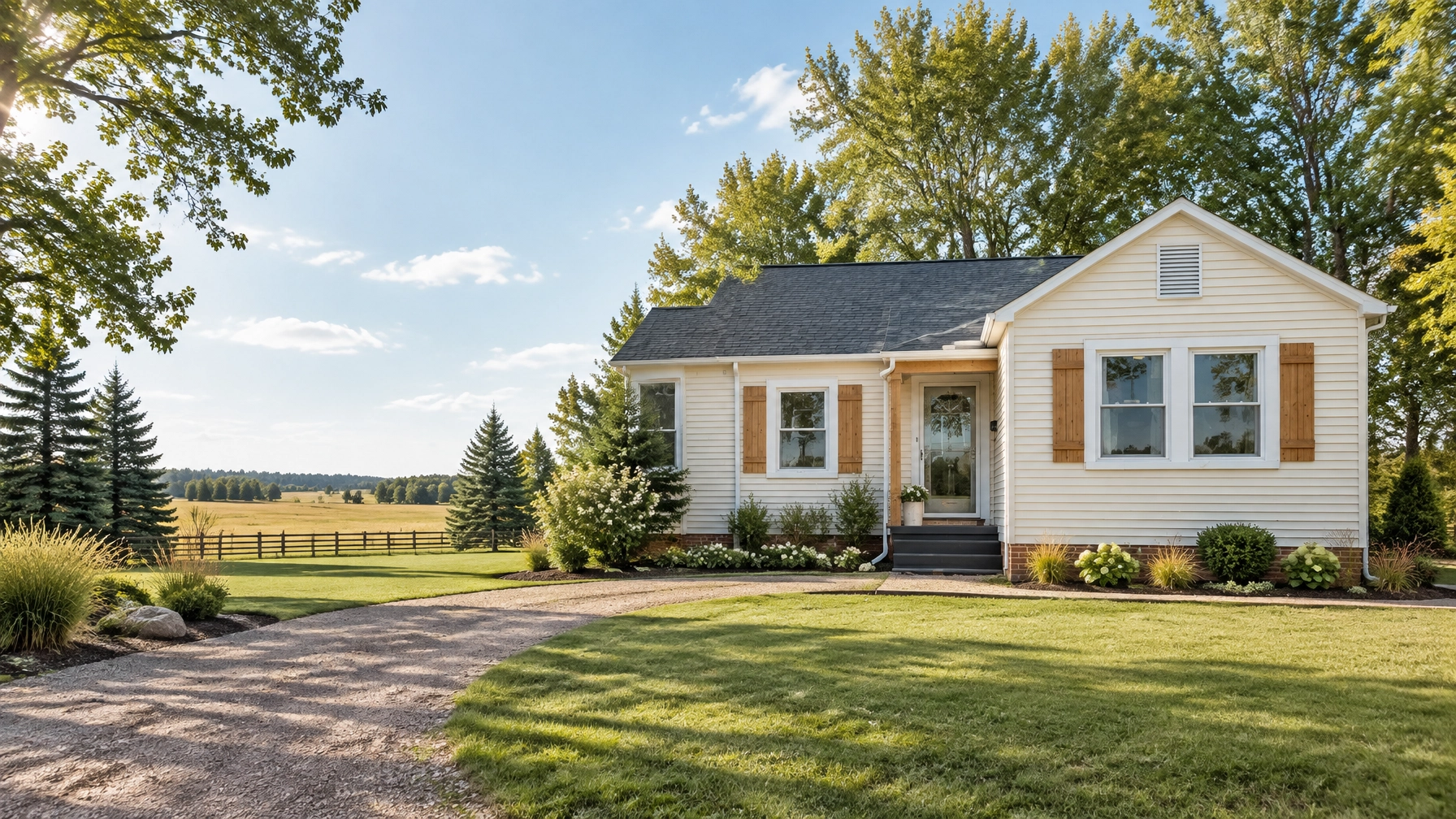
    Well-kept detached home representing urban home-equity lending

    How lenders price a second mortgage

    A second mortgage is registered behind your first mortgage. If the property were sold, the first lender is paid before the second lender.

    That additional position creates additional risk. The higher the risk, the more likely the lender is to require a higher rate, lower maximum loan amount, or both.

    1. Combined loan-to-value

    The basic calculation is:

    CLTV = (first mortgage balance + second mortgage amount) ÷ appraised property value

    For example, if your home is worth $800,000, your first mortgage is $420,000, and you want a $80,000 second mortgage:

    • Total registered debt: $500,000
    • Property value: $800,000
    • Combined LTV: 62.5%

    That is a very different risk profile from an $80,000 second mortgage on a $450,000 property with a $300,000 first mortgage.

    2. Property type and resaleability

    Urban detached homes typically have a broad buyer pool.

    Acreages and country-residential properties can still qualify for private financing, but lenders may assess:

    • Well records and water quality
    • Septic system condition and compliance
    • Road access and winter maintenance
    • Outbuildings and land use
    • Property condition
    • Comparable sales
    • Time expected to sell
    • Whether the property has unusual features or limited demand

    An acreage may have excellent equity but still receive a more conservative maximum CLTV because it could take longer to sell.

    3. The first mortgage

    Your first mortgage balance affects the available equity. Its interest rate also matters when comparing a second mortgage with a full refinance.

    If you have a low-rate first mortgage, replacing it may be expensive, even if the new mortgage appears simpler.

    4. Your situation and exit strategy

    Private lenders are not only asking, “Can this loan be secured against the property?”

    They are also asking, “How does this get paid out?”

    Your plan might involve:

    • Selling another property
    • Receiving proceeds from an estate settlement
    • Completing a divorce or separation buyout
    • Consolidating high-interest debts
    • Rebuilding credit
    • Moving to a bank or B lender at renewal
    • Selling the property after a short-term bridge

    A clear exit strategy can make a file easier to understand and may improve the available options.

    Side-by-side: Sherwood Park acreage vs. Edmonton home

    FactorSherwood Park borrowerEdmonton borrower
    Property typeCountry residential acreageUrban detached home
    Estimated value$800,000$450,000
    First-mortgage balance$420,000$300,000
    Requested second mortgage$80,000$80,000
    Total secured debt$500,000$380,000
    Combined LTV62.5%84.4%
    Likely lender viewStrong equity, but acreage review requiredHigher leverage and less remaining equity
    Potential pricing pressureProperty type and well/septic riskHigh CLTV and reduced equity cushion

    The Sherwood Park borrower owns the more complex property, but the loan is much less leveraged.

    The Edmonton borrower owns the more straightforward property, but the lender has a smaller equity cushion.

    That is why the Edmonton borrower could receive a higher rate, even though the property is easier to sell.

    Worked example: keeping the first mortgage in place

    Let’s say the Sherwood Park homeowner has:

    • An $800,000 acreage
    • A $420,000 first mortgage at 3.1%
    • Two years remaining on the first-mortgage term
    • A need for $80,000 for debt consolidation or a settlement
    • A proposed second mortgage priced at an illustrative 10.5%

    The second mortgage’s interest-only cost would be approximately:

    • $80,000 × 10.5% ÷ 12
    • About $700 per month, before fees and other costs

    Now compare that with refinancing the entire first mortgage.

    Breaking a closed mortgage before maturity may trigger a prepayment penalty. The Financial Consumer Agency of Canada explains that the penalty may be based on three months’ interest or an interest rate differential, depending on the mortgage contract and lender calculation.

    You can review the FCAC guidance on mortgage prepayment penalties.

    If the homeowner refinanced everything, they would need to consider:

    • The prepayment penalty
    • Legal and appraisal costs
    • Any lender or broker fees
    • A potentially higher rate on the entire mortgage balance
    • Whether the new payment fits their budget

    In some cases, adding a second mortgage and keeping the low-rate first mortgage intact is the better structure.

    In other cases, the second mortgage’s rate and fees are too high, and refinancing is the cleaner option.

    The right answer comes from comparing the total cost, not just looking at the advertised rate.

    Homeowner and mortgage advisor comparing financing options

    When a second mortgage can make sense

    A second mortgage may be worth considering when:

    • You have strong equity but do not qualify with a bank
    • You want to keep a low-rate first mortgage
    • Refinancing would trigger a large penalty
    • You need funds quickly
    • You are consolidating high-interest debt
    • You are completing a mortgage for divorce settlement
    • You need to resolve an estate or tax obligation
    • Your credit is bruised but the property has enough equity
    • You have an acreage that traditional lenders do not handle comfortably

    This is one reason homeowners search for a private mortgage Edmonton, private lenders Alberta, or a home equity loan Alberta solution. The structure is based more heavily on the property and equity than on a perfect credit score.

    NOW Mortgage starts with an equity and property review. Learn how the private mortgage process works.

    When a second mortgage is the wrong move

    A second mortgage is not automatically the best answer just because you have equity.

    It may be the wrong move when:

    • The monthly payment is not sustainable
    • The loan only postpones an ongoing cash-flow problem
    • The fees consume too much of the available funds
    • You have no realistic exit strategy
    • Selling the property is the likely outcome anyway
    • A refinance at renewal would be much cheaper
    • You are borrowing for short-term spending without a repayment plan
    • The property’s value or condition is uncertain

    For debt consolidation, the goal should be more than moving debt from credit cards onto your home. You need a plan to avoid rebuilding the same unsecured balances.

    If credit challenges are part of the problem, review options for bruised credit. If refinancing may be more appropriate, compare the broader refinancing and debt-consolidation options.

    What about Calgary, reverse mortgages, or farm financing?

    The same core logic applies across Alberta.

    Someone researching a second mortgage Calgary, private mortgage Calgary, or bad credit mortgage Calgary solution still needs to understand CLTV, property type, fees, and the exit plan.

    Different products may fit different situations:

    • A senior may prefer to investigate a reverse mortgage Edmonton option rather than add regular monthly payments.
    • A farm or rural business owner may need agricultural financing Alberta, which can involve different documentation and property considerations.
    • A homeowner consolidating debt may be better served by a structured debt consolidation mortgage Edmonton solution.
    • A separation or estate settlement may require a short-term second mortgage with a clearly defined payout event.

    The product name matters less than whether the structure solves the actual problem.

    Frequently asked questions

    Does living in Sherwood Park automatically mean a higher second-mortgage rate?+

    No. The municipal boundary itself usually does not determine the rate. Your CLTV, property type, appraised value, marketability, first mortgage, borrower profile, and exit strategy matter more.

    Are second mortgages available on Sherwood Park acreages?+

    They can be. However, lenders may review the well, septic system, access, property condition, outbuildings, comparable sales, and resaleability. Maximum CLTV may be lower than it would be for a standard urban home.

    Can I get a second mortgage with bad credit?+

    Possibly. Private lending is generally equity-focused, so a low credit score, past consumer proposal, bankruptcy, or collection history does not automatically end the conversation. The available rate and fees will depend on the complete file.

    Is a second mortgage cheaper than refinancing?+

    Not always. A second mortgage may preserve a low-rate first mortgage and avoid a prepayment penalty. However, second mortgages typically have higher rates and may include lender, legal, appraisal, or brokerage costs. Compare the total cost of both options.

    Can I use a second mortgage for debt consolidation?+

    Yes, in suitable cases. The important question is whether consolidation improves your monthly cash flow and whether you have a plan to prevent the debt from returning.

    Is there a credit check to start?+

    At NOW Mortgage, you can start with a conversation and property review without a credit check. If you proceed, credit may be reviewed with your consent as part of the full application. Start the application process.

    The bottom line for Sherwood Park homeowners

    A Sherwood Park address does not automatically make a second mortgage more expensive than an Edmonton one.

    Equity and risk set the price, not the town sign.

    A low-CLTV mortgage on a valuable Sherwood Park acreage may be stronger than a high-CLTV mortgage on a standard Edmonton home. At the same time, well, septic, and resale considerations can affect how a lender views the acreage.

    The best next step is a transparent comparison showing:

    • Estimated property value
    • First-mortgage balance and rate
    • Requested second-mortgage amount
    • Combined LTV
    • All fees
    • Monthly payment
    • Prepayment penalty considerations
    • A practical exit strategy

    That is how you find out whether a second mortgage is a useful tool: or an expensive detour.
  • Private Mortgages in Sherwood Park: What Locals Need to Know When the Bank Says No

    Private Mortgages in Sherwood Park: What Locals Need to Know When the Bank Says No

    If you are researching a sherwood park private mortgage, here is what matters most before you apply.

    Sherwood Park Private Mortgage at a Glance

    • Used when a bank has declined a mortgage, refinance, or renewal application
    • Approval is based mainly on property value and available equity, not credit score alone
    • Funding can often be arranged in days rather than weeks
    • Common uses include divorce buyouts, debt consolidation, and bridging a home sale
    • Rates and fees are higher than a bank mortgage, so a clear exit plan matters

    Sherwood Park Private Mortgage: What to Know

    Sherwood Park homeowners are not usually short on assets.

    With roughly 100,000 people, strong household incomes, established neighbourhoods, larger detached homes, acreages, and decades of homeownership, Strathcona County has plenty of property equity. It also has plenty of reasons a traditional bank may still say no.

    A job disruption in the industrial sector. A contract gap. A recent separation. An estate that needs to be settled before probate is complete. A rural property that does not fit a bank’s standard checklist.

    That is where a private mortgage in Sherwood Park can act as a short-term bridge, not a permanent replacement for traditional financing.

    Why a Sherwood Park bank decline can happen

    A high income and a valuable home help, but they do not guarantee a bank approval.

    Traditional lenders generally assess your application through strict rules around:

    • Credit history and recent payment issues
    • Debt-service ratios
    • Employment and income documentation
    • The mortgage stress test
    • Property type and appraisal results
    • Existing liens, judgments, or unsecured debt
    • The purpose and timing of the financing

    That can create a frustrating result: a homeowner with substantial equity and a strong long-term income history gets declined because the file does not fit the bank’s current box.

    This is especially relevant in Sherwood Park, where many households rely on industrial, petrochemical, construction, contract, or business income. Those careers can pay well, but income may not always look simple on a standard application.

    A private lender looks at the full picture, with a much stronger focus on property value and available equity.

    What a private mortgage in Sherwood Park actually does

    A private mortgage is financing from a private lender or mortgage investment company rather than a traditional bank or credit union.

    The approval is primarily based on:

    • The current value of the property
    • The amount of equity available
    • The mortgage position being requested
    • The reason for the financing
    • A realistic plan to repay or refinance

    At NOW Mortgage, no credit check is required to get started and review your options. Credit may be reviewed later as part of the completed file, with your authorization, but a bruised score is not automatically the end of the conversation.

    Depending on the property and the overall file, financing may be available up to 75% loan-to-value. That is not a guaranteed amount, especially for acreages or unusual properties, but it can provide more room than a bank’s approval criteria.

    Sherwood Park’s property mix matters

    Sherwood Park is dominated by detached single-family homes, often with more space than you would find in a typical Edmonton neighbourhood. The broader county also includes acreages, farms, country residential properties, and rural homes.

    That variety is part of the appeal, and sometimes part of the lending challenge.

    A bank may be cautious about:

    • Larger rural lots
    • Outbuildings or agricultural improvements
    • Private wells and septic systems
    • Mixed residential and farm use
    • Properties with limited comparable sales
    • Acreage appraisal questions
    • Zoning or title complications

    A private lender may be able to assess the property more practically, particularly when there is meaningful equity and a clear purpose for the funds.

    That does not mean every acreage qualifies. It means the property gets reviewed as a real asset, rather than rejected automatically because it is not a standard suburban house.

    Common Sherwood Park situations private lending can solve

    Divorce or separation buyouts

    When a relationship ends, the mortgage is only one piece of the problem.

    One spouse may need to buy out the other, pay legal costs, consolidate existing debt, and keep the family home. A bank may decline the refinance because income has changed, support payments complicate the application, or the separation is too recent.

    A private mortgage can provide temporary financing to:

    • Complete a spousal buyout
    • Pay out an existing mortgage
    • Consolidate high-interest debt
    • Give the remaining homeowner time to stabilize income
    • Create a path back to bank or B-lender financing

    The key is to understand the full settlement amount and build the exit plan before signing.

    Debt consolidation after a job disruption

    Sherwood Park’s industrial economy creates strong incomes, but it can also be sensitive to layoffs, shutdowns, contract gaps, and changing work schedules.

    If unsecured debt piled up during a period without regular income, a bank may focus on the current debt ratios and decline the refinance. A private mortgage may use home equity to consolidate credit cards, personal loans, tax debt, or other obligations.

    The goal is not simply to move debt around. The goal is to reduce monthly pressure and create a workable path to better financing.

    Estate and probate financing

    Estate settlements rarely move at the speed of a mortgage renewal date.

    Heirs may need funds to:

    • Pay property taxes and carrying costs
    • Complete urgent repairs
    • Buy out another beneficiary
    • Pay legal or estate expenses
    • Prevent a rushed sale
    • Refinance or sell the property in an orderly way

    Private financing can sometimes bridge the gap while probate, title transfers, or the property sale are being completed. The estate structure and title situation matter, so legal advice should be part of the process.

    Acreage and agricultural financing

    County properties may include working farms, hobby farms, leased land, equipment, shops, or agricultural buildings.

    For a farm or acreage file, lenders may request more information, including:

    • A current appraisal
    • Mortgage and title details
    • Property tax information
    • Income or lease documentation
    • Up to 12 months of bank statements for commercial or farming files
    • Details about buildings, land use, and existing liens

    Private financing can be useful when timing matters or when agricultural income is difficult to document using a traditional lender’s formula.

    Reverse mortgages for Sherwood Park seniors

    Many long-time Sherwood Park homeowners have substantial equity but limited monthly income in retirement.

    A reverse mortgage may allow eligible homeowners to access funds while retaining ownership and staying in the home. At NOW Mortgage, the CHIP reverse mortgage estimator can provide an initial estimate.

    A reverse mortgage may be considered for:

    • Retirement income
    • Home repairs or accessibility upgrades
    • Debt consolidation
    • In-home care
    • Helping family members
    • An emergency reserve

    Eligibility depends on factors including the youngest homeowner’s age, property value, mortgage balance, and occupancy. Reverse mortgages also have different costs and long-term effects than standard financing, so compare the options carefully.

    What can you borrow against a Sherwood Park home?

    Private mortgage approval depends on the property, appraisal, existing debt, and lender risk.

    As a general guide, NOW Mortgage may consider financing up to 75% LTV depending on property type and the complete file.

    For example:

    • A $600,000 home with $300,000 owing has approximately $300,000 in gross equity.
    • A new private mortgage at 75% LTV would have a maximum theoretical balance of $450,000.
    • That leaves room for approximately $150,000 before fees, penalties, and other secured debts are considered.

    This is an illustration, not a commitment. The actual amount may be lower after the appraisal, existing mortgage payout, legal fees, lender fees, and property-specific adjustments.

    Bank timeline vs. private mortgage timeline

    When a deadline is approaching, speed matters. Here is the typical difference:

    StageTraditional bankPrivate mortgage
    Initial conversationSeveral days to weeksSame day in many cases
    Income and credit reviewOften 1–3 weeksEquity and property review can begin immediately
    Property appraisalSeveral days to two weeksUsually about 2–5 business days
    UnderwritingOften 1–3 weeksTypically 1–3 business days after a complete file
    Legal instructionsAfter full approvalUsually 1–3 business days after commitment
    Possible closingOften 3–6 weeksSometimes 7–10 days, depending on the file

    Private financing is not instant money with no paperwork. You still need identification, property information, a mortgage statement, and usually an appraisal. The difference is that the file is assessed for its actual situation, not sent through the same narrow approval lane that already rejected it.

    Know the cost before you commit

    Private mortgages generally have higher interest rates and fees than bank mortgages. That is the trade-off for flexible criteria, faster decisions, and the ability to work around temporary problems.

    Before committing, ask for the complete cost estimate, including:

    • Interest rate
    • Lender fee
    • Brokerage fee, if applicable
    • Legal fees
    • Appraisal cost
    • Discharge or renewal fees
    • Any penalties or payout costs
    • Total funds available after deductions

    NOW Mortgage provides upfront all-in cost estimates before you commit, so you can decide whether the solution makes financial sense.

    Build the exit strategy first

    Private lending should usually be treated as a short-term bridge, commonly for 6–24 months depending on the file.

    A realistic exit strategy might involve:

    • Returning to stable employment
    • Rebuilding credit through on-time payments
    • Reducing credit utilization
    • Completing a separation or estate settlement
    • Selling the property
    • Moving to a B lender
    • Refinancing with a traditional bank at renewal

    If there is no credible exit plan, the financing deserves a closer look. The objective is not to remain in a higher-cost private mortgage forever. It is to solve the immediate problem and create a better next step.

    Sherwood Park private mortgage FAQ

    Can I get a private mortgage if my bank declined me?+

    Possibly. Private lenders focus more heavily on property equity and the reason for the request. Approval still depends on the appraisal, loan amount, property type, title, and overall risk.

    Is a credit check required?+

    No credit check is required to get started and review your options. Once you proceed with a formal application, credit may be pulled with authorization as part of the complete lender review.

    Can I use a private mortgage for an acreage?+

    Potentially. Acreages and agricultural properties are reviewed case by case. The appraisal, zoning, land use, buildings, income, and existing debt all matter.

    How fast can private financing fund?+

    Some straightforward files may fund in 7–10 days. The actual timeline depends on appraisal availability, document collection, lender approval, and the lawyer’s ability to complete registration.

    Is private lending more expensive than a bank mortgage?+

    Usually, yes. Higher rates and fees are the cost of flexibility and speed. The financing should be compared against the cost of doing nothing, missing a deadline, losing a property, or carrying expensive unsecured debt.

    What should I prepare?+

    Start with:

    • Two pieces of government-issued ID for every person on title
    • Current mortgage statement
    • Property tax information
    • Details of the amount you need and why
    • Income or employment information
    • Relevant separation, estate, farm, or debt documents
    • Bank statements if requested

    You can review the NOW Mortgage process or start an application securely online.

    A bank decline is not the end of the road

    Sherwood Park homeowners often have something valuable that a bank application does not fully capture: equity, stability, and a realistic plan to recover from a temporary setback.

    Whether the issue is a separation, contract gap, acreage financing, estate deadline, debt consolidation, or retirement cash flow, a private mortgage may provide the bridge.

    Start with the numbers, understand the full cost, and insist on a clear exit strategy. That is how flexible financing becomes a solution( not just another financial problem.)