Tag: Edmonton

  • Second Mortgages in Camrose vs. Edmonton: Does Location Change Your Rate?

    Second Mortgages in Camrose vs. Edmonton: Does Location Change Your Rate?

    If you are researching a camrose second mortgage, here is what matters most before you apply.

    Camrose Second Mortgage at a Glance

    • Lets you access home equity without touching your existing low-rate first mortgage
    • Approval depends on combined loan-to-value, property type, and your exit strategy
    • Property type and location can affect your rate as much as your credit profile
    • Funding is typically faster than refinancing through a bank
    • Best suited to short- to medium-term needs with a clear repayment plan

    Camrose Second Mortgage: What to Know

    If you own a home in Camrose and need access to equity, you may wonder whether your rate will automatically be higher than someone borrowing against a property in Edmonton.

    The honest answer is: sometimes: but not simply because the property is in Camrose.

    Lenders price a second mortgage based on the property, the total debt against it, the borrower’s situation, and the repayment plan. Location matters because it can affect resaleability and lender competition. But the city name on the application is only one piece of the file.

    For a Camrose homeowner, the bigger question is usually: How much equity is actually usable after the first mortgage and closing costs?

    Camrose is not Edmonton: and that can affect lender risk

    Camrose is a central Alberta city of roughly 20,000 people, about an hour southeast of Edmonton. It has a diverse local economy built around:

    • Agriculture and agri-food
    • Healthcare and regional services
    • Education, including the University of Alberta’s Augustana Campus
    • Retail, professional services, and small businesses
    • A large retiree population

    The city also has a mix of historic downtown properties, older established neighbourhoods, and newer development. Outside the city limits, Camrose County includes farms, acreages, and rural properties near communities such as Bashaw and New Norway.

    That mix matters to a lender.

    A standard, well-maintained home in Camrose may be straightforward to finance. An older home near the downtown core, a rural acreage, or a farm with specialized improvements may require more careful appraisal work.

    Edmonton generally has:

    • A deeper pool of lenders
    • More comparable sales
    • More predictable resale activity
    • More competition between private lenders

    That competition can sometimes improve pricing. But a strong Camrose file with conservative borrowing may still receive better terms than a highly leveraged Edmonton file with a weak exit strategy.

    The real drivers of a second-mortgage rate

    1. Loan-to-value and combined LTV

    The most important calculation is usually combined loan-to-value, or CLTV.

    CLTV = first mortgage balance + second mortgage amount ÷ property value

    For example, if your home is worth $330,000, your first mortgage is $210,000, and you want a $40,000 second mortgage:

    • Total debt: $250,000
    • Property value: $330,000
    • Combined LTV: approximately 75.8%

    As CLTV rises, the lender has less equity protection. That normally means higher rates, more fees, or a lower approved amount.

    2. Property type

    A conventional detached home in Camrose is not underwritten the same way as:

    • A farm or raw-land property
    • An acreage with multiple buildings
    • A manufactured or unconventional home
    • A rental property
    • A commercial or mixed-use building

    Standard residential properties are usually easier to resell. Rural properties can still qualify, but the lender may focus more heavily on land use, access, servicing, buildings, zoning, and comparable sales.

    3. Appraised value and resaleability

    Your estimate of the home’s value is not the same as the lender’s mortgage value.

    Older homes around Camrose’s historic downtown and established neighbourhoods may have charm, renovations, and a strong local buyer base. However, an appraisal may still come in below the owner’s expectations because of:

    • Older mechanical systems
    • Deferred maintenance
    • Dated kitchens or bathrooms
    • Limited comparable sales
    • Functional obsolescence
    • A smaller buyer pool for certain layouts

    A lower appraisal can reduce the amount you qualify for or push the CLTV into a more expensive bracket.

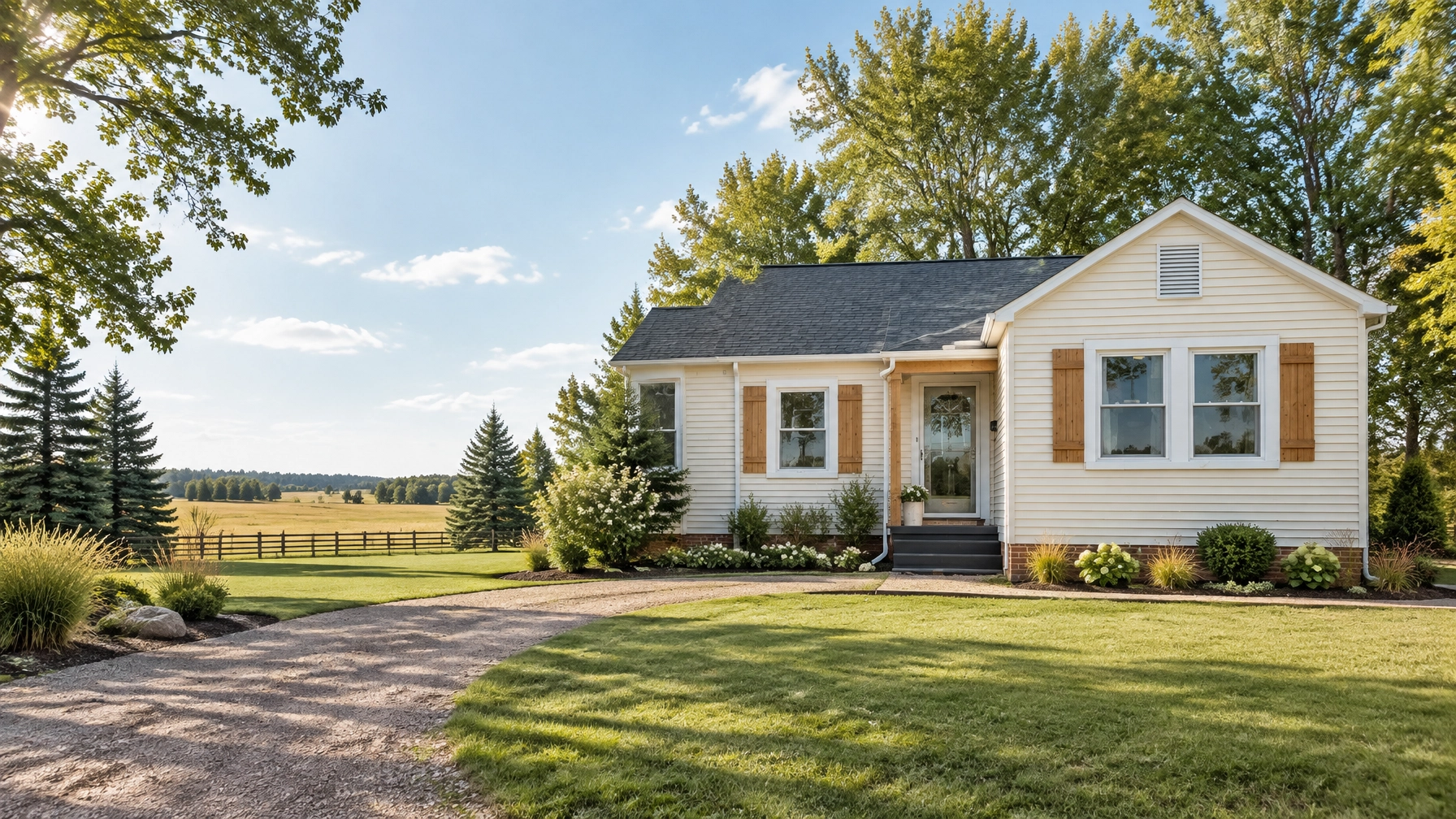
    Well-kept Alberta residential property for mortgage planning

    4. Your first mortgage balance and rate

    The first mortgage is already ahead of the second mortgage in priority. A lender will review:

    • Current first-mortgage balance
    • Monthly payment
    • Interest rate
    • Renewal date
    • Payment history
    • Whether there are penalties to refinance or discharge it

    A borrower with a low first-mortgage balance and a manageable payment may present less risk, even if their credit has recently been damaged.

    5. Your situation and exit strategy

    Private lenders in Alberta generally want to understand how the second mortgage will be repaid.

    Possible exit strategies include:

    • Refinancing into a bank or credit-union mortgage
    • Selling another property
    • Completing a debt-consolidation plan
    • Receiving proceeds from an estate
    • Returning to stable employment or self-employment income
    • Selling the property after a divorce or separation

    A second mortgage without a realistic exit plan is expensive short-term money with no clear finish line. That is a problem in Camrose, Edmonton, Calgary, or anywhere else.

    Camrose versus Edmonton: does the city change your rate?

    For a standard in-town Camrose home, the rate difference compared with Edmonton may be modest if:

    • The property is easy to resell
    • The appraisal is well supported
    • The CLTV is reasonable
    • The first mortgage is in good standing
    • The borrower has a clear exit strategy

    The difference becomes more noticeable when the property is rural, unusual, highly leveraged, or difficult to value.

    That is why private mortgage Edmonton is not automatically cheaper than financing in Camrose. Edmonton offers more lender competition, but the borrower’s overall risk still drives the price.

    Camrose, county farm, and Calgary: side-by-side comparison

    The following examples are illustrative only. They are not rate quotes or approvals.

    ExampleProperty valueFirst mortgageRequested secondCombined LTVLikely lender focus
    Camrose in-town home$330,000$210,000$40,00075.8%Appraisal, resaleability, limited usable equity
    Camrose County farm$1,100,000$450,000$150,00054.5%Land value, agricultural use, buildings, access, exit plan
    Calgary residential property$450,000$270,000$60,00073.3%Urban comparables, CLTV, borrower profile, lender competition

    The Calgary borrower may have access to more lenders because the property is in a larger urban market. But the Camrose homeowner with lower leverage may still receive competitive pricing.

    The farm may have the lowest CLTV, but it is not automatically the easiest file. With a farm, much of the property’s value may sit in the land. Buildings, agricultural use, environmental factors, access, and marketability can all affect the lender’s view.

    For land-heavy properties, specialized agricultural financing Alberta solutions may be more appropriate than treating the property like a regular city house.

    Worked example: when $40,000 of equity is not really $40,000

    Suppose your Camrose home appraises at $330,000.

    You owe:

    • First mortgage: $210,000
    • Requested second mortgage: $40,000
    • Total registered debt: $250,000
    • CLTV: 75.8%

    Now account for approximate costs:

    • Lender fee: $2,000
    • Appraisal: $500
    • Legal and registration costs: $1,000
    • Estimated interest reserve or other closing adjustments: $500

    Your gross approval is $40,000, but your usable proceeds may be closer to $36,000.

    At an illustrative rate of 12%, interest-only payments on $40,000 would be approximately $400 per month, before considering fees and any other charges.

    If you need $40,000 in hand, you may need to borrow more than $40,000. That raises the CLTV and could make the deal more expensive.

    This is the point many homeowners miss: moderate property prices can leave plenty of percentage equity but not much usable dollar equity.

    Before accepting a second mortgage, ask what you will actually receive after all costs: not just the approved amount.

    When a second mortgage is the wrong move

    A second mortgage may be the wrong tool when:

    • The funds are for ongoing monthly expenses with no improvement in sight
    • The amount you receive after fees is too small to solve the problem
    • The new payment leaves no room for property taxes, repairs, or emergencies
    • There is no credible refinance, sale, or repayment plan
    • You are borrowing to cover another short-term loan
    • The property appraisal is likely to come in below expectations
    • A less expensive option, such as a refinance or structured debt consolidation, is available

    This is especially important for a $330,000 Camrose property. A $40,000 or $50,000 second mortgage can look workable on paper but become uneconomic after fees and interest.

    A home equity loan Alberta homeowner can afford is better than the largest loan available.

    How Camrose homeowners commonly use second mortgages

    A second mortgage may help with:

    • Debt consolidation mortgage Edmonton or Camrose-area credit-card debt
    • A time-sensitive mortgage for divorce settlement
    • A temporary income interruption
    • A business or self-employed cash-flow gap
    • Repairs needed before selling
    • A bridge while an estate is being settled
    • A private mortgage Calgary or Edmonton refinance that cannot close through a bank

    For older homeowners, a reverse mortgage Edmonton solution: or another retirement-focused option: may be more suitable than a conventional second mortgage, particularly when monthly payments are the main concern.

    At NOW Mortgage, the starting point is not a credit score alone. We look at the property, equity, timing, and intended solution. You can review the difference between bank and private lending in our guide to what a private mortgage is.

    Camrose second-mortgage FAQ

    Is a second mortgage more expensive in Camrose than Edmonton?+

    It can be, particularly for rural, acreage, unusual, or highly leveraged properties. But there is no fixed “Camrose rate.” A strong in-town property with reasonable CLTV may price similarly to an Edmonton property.

    Can I get a second mortgage on a Camrose County farm?+

    Possibly, depending on the appraisal, land use, access, existing debt, and exit strategy. Farm financing is assessed differently from ordinary residential lending. NOW Mortgage outlines its farm and raw land financing approach.

    What if my credit is poor?+

    Credit challenges do not automatically end the conversation. Private lenders may focus more on equity and the repayment plan, although weaker credit can affect pricing and structure. The same applies to borrowers searching for a bad credit mortgage Calgary or private mortgage solution elsewhere in Alberta.

    Do I need a new appraisal?+

    Usually, the lender needs reliable evidence of current market value. An existing appraisal may not be accepted if it is outdated or does not meet the lender’s requirements.

    Can a second mortgage fund a divorce or separation settlement?+

    It may be possible to use home equity for a spousal buyout, debt division, or removing a former partner from title. Read more about divorce and separation financing.

    The bottom line

    Location can influence your second-mortgage rate, but it does not decide it by itself.

    For Camrose homeowners, the key factors are the property’s appraised value, the combined LTV, the first mortgage, the type of property, and the plan for repayment. A standard home in town may be priced competitively. A county farm may have substantial equity but require specialized underwriting.

    Before signing, ask for a clear breakdown of:

    • Gross loan amount
    • Net proceeds after fees
    • Interest rate and payment
    • Total borrowing cost
    • Renewal or payout terms
    • Realistic exit strategy

    NOW Mortgage provides upfront cost estimates and helps Alberta homeowners compare options before committing. You can start a confidential mortgage conversation without a credit check to see whether the numbers make sense.

    This article is general information, not legal, tax, or financial advice. Mortgage availability, rates, fees, and approval amounts depend on the complete application and property review.

  • Second Mortgages in Red Deer vs. Calgary and Edmonton: Does Location Change Your Rate?

    Second Mortgages in Red Deer vs. Calgary and Edmonton: Does Location Change Your Rate?

    If you are researching a red deer second mortgage, here is what matters most before you apply.

    Red Deer Second Mortgage at a Glance

    • Lets you access home equity without touching your existing low-rate first mortgage
    • Approval depends on combined loan-to-value, property type, and your exit strategy
    • Property type and location can affect your rate as much as your credit profile
    • Funding is typically faster than refinancing through a bank
    • Best suited to short- to medium-term needs with a clear repayment plan

    Red Deer Second Mortgage: What to Know

    Red Deer sits roughly halfway between Calgary and Edmonton on Highway 2. With a population of about 100,000, it is central Alberta’s regional hub for oilfield services, agriculture, agri-food, construction, trades, health care, and professional services.

    That mix creates plenty of homeowners with usable equity, but not always the income documentation, credit profile, or timing a traditional bank wants.

    So, does a second mortgage in Red Deer cost more than a second mortgage Calgary or Edmonton?

    Usually, no. The city name is not the main pricing factor.

    For similar properties with similar equity positions, second-mortgage rates in Red Deer, Calgary, and Edmonton can be broadly comparable. What changes the offer is usually the property, combined loan-to-value, borrower situation, and exit plan.

    The short answer: location matters indirectly

    Private lenders in Alberta generally care less about municipal boundaries and more about how easily they could recover their money if the loan does not work out.

    That means the important questions are:

    • How much equity is in the property?
    • What is the total borrowing compared with the appraised value?
    • Is the property easy to resell?
    • Is it a standard urban home, rental, acreage, or farm?
    • What is the balance and interest rate on the first mortgage?
    • How will the second mortgage be repaid?

    A standard owner-occupied home in Red Deer may receive pricing similar to a comparable home in Calgary or Edmonton.

    A Red Deer County acreage, however, may be priced differently, not because it is in Red Deer County, but because rural properties bring additional valuation and resale questions.

    What really drives a second-mortgage rate?

    1. Combined loan-to-value

    Combined loan-to-value, or CLTV, is one of the biggest pricing factors.

    The calculation is:

    First mortgage balance + second mortgage amount ÷ current appraised value

    For example, if a home is worth $420,000, the first mortgage is $250,000, and the second mortgage is $45,000:

    • Total secured debt: $295,000
    • Property value: $420,000
    • Combined LTV: approximately 70.2%

    Lower CLTV generally gives a lender more protection and can lead to better pricing. Higher CLTV usually means a higher rate, lower maximum loan, or both.

    Published Alberta lending grids commonly separate urban properties into different LTV bands, with lower-leverage seconds sometimes priced in the high-single digits and higher-leverage or more complex files moving into the low teens. These are illustrative ranges, not guaranteed quotes. Rates, fees, and available lenders change.

    2. Property type and resaleability

    A detached home in an established Red Deer neighbourhood is usually easier to value and resell than a specialized rural property.

    Lenders may view these properties differently:

    • Owner-occupied detached homes
    • Townhouses and condominiums
    • Rental properties
    • Acreages
    • Farms and agricultural land
    • Mobile or manufactured homes
    • Vacant or renovation properties

    A lender is asking a practical question: If repayment fails, how marketable is the security?

    That is why property type can affect rate more than whether the address says Red Deer, Calgary, or Edmonton.

    A well-kept single-family home representing residential equity and mortgage options

    Red Deer’s housing stock creates some specific considerations

    Red Deer has a wide range of housing, from older postwar homes near established neighbourhoods to newer subdivisions and modern townhomes.

    That variety matters during appraisal.

    Older homes may appraise below the owner’s expectation

    A homeowner may think, “My neighbour sold for $450,000, so mine must be worth the same.”

    But an appraiser will consider:

    • Overall condition
    • Roof, windows, furnace, and major systems
    • Basement development
    • Lot size and layout
    • Recent comparable sales
    • Deferred maintenance
    • Quality of renovations

    In an older Red Deer home, needed repairs can reduce the appraised value. That reduces the amount available through a home equity loan Alberta homeowner may be considering.

    Acreages involve more than the house

    Red Deer County includes acreages and farm properties with wells, septic systems, outbuildings, larger parcels, and agricultural uses.

    An appraisal may need to distinguish between:

    • The value of the land
    • The value of the home
    • The value of shops, barns, or other improvements
    • The usefulness and condition of the well and septic system
    • Whether the property has a realistic buyer pool
    • Whether the property is residential, agricultural, or mixed-use

    The land may be valuable, but not every lender treats rural land the same way as a serviced urban lot.

    NOW Mortgage’s farm and raw land financing information explains why agricultural and rural properties often require more equity and case-by-case review.

    Red Deer vs. Calgary: three practical examples

    The following examples are simplified to show how pricing may be influenced. They are not rate quotes or approvals.

    ScenarioProperty valueFirst mortgageSecond mortgageApprox. CLTVMain pricing consideration
    Red Deer in-town home$420,000$250,000$45,00070.2%Urban home, condition and neighbourhood comparables
    Red Deer County acreage$750,000$390,000$75,00062.0%Rural resale, well, septic, outbuildings, land valuation
    Calgary residential property$450,000$285,000$30,00070.0%Urban liquidity, property type, borrower and exit plan

    The Red Deer in-town property and Calgary property have almost identical CLTVs. If both are standard owner-occupied homes with similar condition and borrower circumstances, their second-mortgage pricing could be similar.

    The acreage has a lower CLTV, which is positive. However, rural complexity may still lead to a different lender category, a lower maximum LTV, additional conditions, or a rate premium.

    Lower leverage helps, but it does not erase property-specific risk.

    Worked example: keeping a low-rate first mortgage

    Suppose a Red Deer homeowner has:

    • Home value: $420,000
    • First mortgage balance: $250,000
    • Existing first-mortgage rate: 3.10%
    • Additional funds required: $45,000
    • Illustrative second-mortgage rate: 10.49%

    If the homeowner keeps the first mortgage and adds a second:

    • Annual interest on the first: approximately $7,750
    • Annual interest on the second: approximately $4,721
    • Combined annual interest: approximately $12,471, before fees and payment-structure differences

    Now compare that with refinancing the full $295,000 into a new mortgage at an illustrative 5.50%:

    • Approximate annual interest: $16,225
    • Possible prepayment penalty: potentially several thousand dollars
    • Possible appraisal, legal, and discharge costs

    In this simplified example, the second mortgage has a much higher rate on the new $45,000, but refinancing would reprice the entire $250,000 first mortgage. Keeping the low-rate first can make sense when:

    • The existing mortgage has a valuable low rate
    • The prepayment penalty is significant
    • The second mortgage is relatively small
    • There is a clear repayment or refinance plan
    • The monthly payment remains manageable

    This is where the answer is not simply “take the lowest rate.” It is a comparison of total borrowing cost, penalties, fees, and flexibility.

    When a second mortgage may be the wrong move

    A second mortgage is not free money, and it should not be used to postpone an impossible situation.

    It may be the wrong option if:

    • There is no realistic exit strategy
    • The new payment creates negative monthly cash flow
    • The requested amount pushes CLTV close to the lender’s maximum
    • The funds are being used for ongoing expenses rather than a defined need
    • A sale or refinance is unlikely within the term
    • The property has serious condition or title issues
    • The borrower is already relying on short-term debt to make mortgage payments

    For seniors, a reverse mortgage Edmonton option, or a comparable Alberta reverse-mortgage solution, may be more suitable than regular monthly payments. For a separation, specialized mortgage for divorce settlement financing may provide a cleaner structure than adding unsecured debt.

    The right answer depends on the problem being solved.

    Red Deer situations where a second mortgage can help

    Homeowners in the Red Deer area may consider a second mortgage for:

    • Debt consolidation
    • Business or self-employed cash flow
    • A time-sensitive tax or legal obligation
    • Home repairs before selling or refinancing
    • A spousal buyout
    • Estate settlement costs
    • Agricultural or acreage-related financing
    • A temporary gap while returning to bank financing

    A private mortgage is often designed as a short- or medium-term solution. NOW Mortgage explains the basic structure in its guide to what a private mortgage is.

    If the issue involves separation, the divorce and separation financing page outlines common situations such as removing a partner from title, funding a spousal buyout, or managing a court-related deadline.

    Common questions from Red Deer homeowners

    Is a second mortgage more expensive in Red Deer than Calgary?

    Not automatically. A comparable urban property with the same CLTV, occupancy, condition, and borrower profile may receive similar pricing in both cities.

    A rural or specialized property can cost more to finance because of valuation and resale considerations.

    Can I get a second mortgage with bad credit?

    Possibly. Private lenders in Alberta may focus more heavily on property value and equity than a traditional bank. However, credit still matters because it helps explain the borrower’s situation and supports the repayment plan.

    “Bad credit mortgage Calgary” and “private mortgage Edmonton” searches often describe similar equity-based lending principles. The property and exit strategy still need to make sense.

    Can I use a Red Deer second mortgage for debt consolidation?

    Yes, depending on available equity and the lender’s assessment. Consolidating high-interest credit cards or unsecured loans may improve monthly cash flow, but only if the new mortgage payment and fees are sustainable.

    The same principle applies to a debt consolidation mortgage Edmonton or any other Alberta municipality.

    What documents do I need?

    Expect to provide some combination of:

    • Property address and ownership details
    • Current mortgage statement
    • Income or bank statements
    • Property tax information
    • Details of other debts
    • Intended use of funds
    • A clear exit strategy
    • Appraisal or lender-ordered valuation

    NOW Mortgage’s pre-qualification estimator can help you review potential options without a credit check or obligation to get started.

    Bottom line: the address is only part of the story

    A Red Deer home is not automatically a higher-risk mortgage than a Calgary or Edmonton home.

    For an ordinary in-town property, CLTV, condition, borrower circumstances, and repayment plan usually matter more than the municipality.

    The calculation changes when the property is an acreage, farm, rental, vacant home, or specialized asset. In those cases, the lender is pricing the property’s complexity and resaleability: not simply charging more because it is outside Calgary or Edmonton.

    Before choosing a second mortgage, compare the full structure:

    • Interest rate
    • Total fees
    • Prepayment penalty on the first mortgage
    • Monthly payment
    • Term length
    • Renewal risk
    • Exit strategy

    That is how a Red Deer homeowner can tell whether a second mortgage is a sensible bridge: or just an expensive detour.

    Homeowners meeting with a mortgage professional to discuss a tailored financing plan

    Mortgage rates and lending guidelines change. Examples in this article are for education only and are not offers, approvals, or financial advice. A full application, property review, and lender assessment are required to determine available terms.

    Related Alberta mortgage resources

  • Second Mortgages in Fort Saskatchewan vs. Edmonton: Does Location Change Your Rate?

    Second Mortgages in Fort Saskatchewan vs. Edmonton: Does Location Change Your Rate?

    If you are researching a fort saskatchewan second mortgage, here is what matters most before you apply.

    Fort Saskatchewan Second Mortgage at a Glance

    • Lets you access home equity without touching your existing low-rate first mortgage
    • Approval depends on combined loan-to-value, property type, and your exit strategy
    • Property type and location can affect your rate as much as your credit profile
    • Funding is typically faster than refinancing through a bank
    • Best suited to short- to medium-term needs with a clear repayment plan

    Fort Saskatchewan Second Mortgage: What to Know

    Fort Saskatchewan is not Edmonton. But when you apply for a second mortgage, that municipal boundary usually matters a lot less than you might expect.

    Fort Saskatchewan is a city of roughly 27,000 people, about 25 minutes northeast of Edmonton along the North Saskatchewan River. It is also at the centre of Alberta’s heavy industrial and petrochemical corridor, with newer subdivisions, established neighbourhoods, acreages, and farmland nearby.

    That creates an interesting mortgage question:

    Does owning a home in Fort Saskatchewan change what you pay for a second mortgage compared with owning in Edmonton?

    Usually, not because of the city name alone. Pricing is more commonly driven by your property’s value, your total mortgage debt, resaleability, and the lender’s confidence in your repayment plan.

    The short answer: location matters, but equity matters more

    A Fort Saskatchewan property may be priced slightly differently from an Edmonton property if a lender classifies it as a smaller or semi-rural market.

    But for a standard residential property, Fort Saskatchewan is close to Edmonton, well connected, and generally familiar to Alberta lenders. It is not the same risk category as a remote rural property.

    The bigger pricing factors are:

    • Combined loan-to-value (CLTV)
    • Property type and condition
    • Appraised value
    • How easy the property would be to resell
    • Your existing first-mortgage balance and rate
    • Credit history and income stability
    • The reason for borrowing
    • Your exit strategy

    In plain English: the lender is usually pricing the file, not the street sign.

    What is a combined loan-to-value ratio?

    Your combined loan-to-value ratio measures all registered mortgage debt against the property’s current value.

    Formula:

    CLTV = (first mortgage balance + second mortgage balance) ÷ property value

    For example:

    • Property value: $560,000
    • First mortgage: $360,000
    • New second mortgage: $75,000
    • Total secured debt: $435,000
    • CLTV: 77.7%

    As the CLTV rises, the lender has less protection if the property must be sold. That generally means higher rates, more fees, or a lower approved amount.

    A borrower with 55% CLTV may receive very different pricing from a borrower at 78% CLTV, even if both own similar homes in the same neighbourhood.

    Fort Saskatchewan’s industrial income creates a different question

    Fort Saskatchewan sits beside Alberta’s Industrial Heartland, one of the country’s major petrochemical and hydrocarbon-processing regions.

    That brings strong employment and high industrial wages. It also brings exposure to:

    • Turnaround cycles
    • Planned shutdowns
    • Contract work
    • Seasonal income changes
    • Layoffs between projects
    • Overtime that is not always guaranteed

    A bank may see fluctuating income and say, “This does not fit our standard qualification model.”

    A private lender may ask a different question:

    Is there enough equity in the property, and is there a sensible plan to repay or refinance the mortgage?

    That is the difference between qualifying on income and qualifying on equity.

    Private lending is not a free pass. The property still needs to support the loan, and the exit strategy needs to make sense. But a temporary income interruption may carry less weight when there is substantial, verifiable equity.

    A model home representing equity-based mortgage planning

    Fort Saskatchewan vs. Edmonton: side-by-side comparison

    FactorFort Saskatchewan borrowerEdmonton borrower
    Example property value$560,000 newer home$450,000 residential property
    Example existing equity$200,000$150,000
    Estimated first mortgage$360,000$300,000
    Example second mortgage$75,000$75,000
    Combined debt$435,000$375,000
    Approximate CLTV77.7%83.3%
    Main pricing concernHigher CLTV, but strong resaleabilityHigher CLTV and less available equity
    Does the city alone determine the rate?NoNo

    In this example, the Fort Saskatchewan borrower may actually present the stronger second-mortgage file, even though the property is outside Edmonton.

    Why? The Fort Saskatchewan property has a lower CLTV after the proposed second mortgage.

    The Edmonton property is at approximately 83.3% CLTV. Depending on the lender, property, and borrower profile, that may be outside a preferred range or may require more expensive private financing.

    Now change the Edmonton example:

    • Edmonton property value: $450,000
    • First mortgage: $250,000
    • Second mortgage: $75,000
    • CLTV: 72.2%

    That Edmonton borrower may receive better pricing than the Fort Saskatchewan borrower because the equity position is stronger, not because Edmonton is automatically cheaper.

    Worked example: keeping a low-rate first mortgage

    Suppose the Fort Saskatchewan homeowner has:

    • Home value: $560,000
    • Existing first mortgage: $360,000
    • Existing first-mortgage rate: 2.69%
    • First mortgage remaining amortization: 25 years
    • Second mortgage required: $75,000
    • Illustrative second-mortgage rate: 11.50%
    • Interest-only second-mortgage structure

    The existing first-mortgage payment is approximately $1,640 per month.

    The interest-only payment on the second mortgage would be approximately:

    • $75,000 × 11.50% ÷ 12
    • About $719 per month

    Combined monthly mortgage payments would be approximately $2,359, before property taxes, insurance, and other costs.

    Now compare that with refinancing the full $435,000 into a new first mortgage at an illustrative 6.50% over 25 years:

    • New payment: approximately $2,936 per month
    • Possible prepayment penalty on the existing first mortgage
    • New appraisal, lender, legal, and administration costs
    • Potentially losing a very favourable 2.69% first-mortgage rate

    In this illustration, keeping the first mortgage and adding a second could preserve roughly $575 per month in payment room.

    However, the second mortgage is not free money. At $719 per month, you are mostly paying interest. The $75,000 principal still has to be repaid, refinanced, or cleared through a sale.

    That is why the right comparison is not just:

    “Which payment is lower?”

    It is:

    “Which structure solves the problem without creating a larger one at renewal?”

    All figures above are illustrative only. Actual rates, fees, penalties, payment structures, and approval amounts vary by lender and file.

    When keeping the first mortgage can make sense

    A second mortgage may be worth considering when:

    • Your current first-mortgage rate is significantly below today’s available rates
    • Refinancing would trigger a large prepayment penalty
    • You need a defined amount of capital, not a full refinance
    • The funds will solve a short-term problem
    • You have a credible refinance, sale, or repayment plan
    • Your property has enough equity to support the additional debt

    This can be useful for debt consolidation, a mortgage for divorce settlement, urgent repairs, tax arrears, or a temporary income disruption during an industrial turnaround.

    A debt consolidation mortgage in Edmonton or a second mortgage in Fort Saskatchewan should still be structured around a clear objective. “Access cash” is not an exit strategy.

    When a second mortgage is the wrong move

    A second mortgage may be the wrong tool if:

    • You are borrowing to cover ongoing monthly deficits
    • The payment only works if overtime returns immediately
    • You have no plan to repay the principal
    • The combined mortgage debt leaves little equity cushion
    • The property value is uncertain or difficult to verify
    • You are using new debt to delay an unavoidable sale
    • The fees consume too much of the benefit
    • A refinance or sale would be less expensive overall

    A second mortgage can create breathing room. It cannot permanently repair a budget that is already running underwater.

    For seniors, a reverse mortgage in Edmonton or Fort Saskatchewan may be more appropriate than a conventional second mortgage in some situations, especially when the goal is long-term cash flow and the homeowner is at least 55. For farm and acreage owners, agricultural financing in Alberta may need to be reviewed separately because property use, land value, and income documentation can change the lending analysis.

    A professional mortgage signing process with clear documentation

    How private lenders assess a Fort Saskatchewan file

    A private lender will typically want to understand:

    • Current property value
    • First-mortgage balance and payment history
    • Requested second-mortgage amount
    • Property taxes and insurance
    • Employment or contract history
    • Reason for the borrowing
    • Any credit problems or registered debts
    • How and when the second mortgage will be repaid

    The process generally starts with an equity and property review. At NOW Mortgage, you can discuss your situation before a credit check is pulled, and expected costs are reviewed before you commit.

    A current appraisal is commonly required. Residential files may also require recent bank statements, a mortgage statement, and property tax information. Commercial or farming files may require more extensive documentation.

    What about bad credit or bank declines?

    If you are searching for a private mortgage in Edmonton, a second mortgage in Calgary, or a bad credit mortgage in Calgary, the same principle applies: the property and the complete situation matter.

    A bank decline does not automatically mean there is no option. Private lenders in Alberta may consider:

    • Missed payments
    • Collections
    • Consumer proposals
    • Previous bankruptcy
    • Variable employment
    • High debt ratios
    • Recent separation or divorce

    But the cost of private financing must be clear. Rates and lender fees are typically higher than bank financing, and terms are often shorter.

    The goal should be a realistic bridge, not staying in expensive financing indefinitely.

    Frequently asked questions

    Does Fort Saskatchewan have higher second-mortgage rates than Edmonton?+

    Not automatically. Fort Saskatchewan’s proximity to Edmonton and established residential market may lead many lenders to price comparable homes similarly. A lender may charge more if it views a property as less liquid, rural, specialized, or difficult to resell.

    What matters more than location?+

    Usually, CLTV, property type, appraisal quality, resaleability, credit history, income stability, and exit strategy matter more than the municipal boundary.

    Can industrial workers qualify if their income fluctuates?+

    Possibly. Banks often rely heavily on stable, documentable income and standard debt-service ratios. Private lenders may place more weight on home equity and the repayment plan, particularly when the income fluctuation is connected to a known turnaround or contract cycle.

    Is a second mortgage better than refinancing?+

    Sometimes. Keeping a low-rate first mortgage may avoid a prepayment penalty and preserve a favourable payment. But a second mortgage can have higher interest and fees, so the total cost and repayment plan need to be compared carefully.

    Can I use a second mortgage for debt consolidation?+

    Yes, if the equity and overall structure support it. Consolidating high-interest debt may improve monthly cash flow, but the spending problem must also be addressed. Otherwise, the unsecured debt can simply build up again.

    How quickly can a private second mortgage close?+

    Timelines depend on the property, appraisal, title, legal work, and lender conditions. Straightforward files can move quickly, but an approval is not complete until the commitment is reviewed, documents are signed, and a lawyer registers the mortgage.

    The bottom line for Fort Saskatchewan homeowners

    Your Fort Saskatchewan address may influence how a lender views the market. It does not, by itself, determine your second-mortgage rate.

    The biggest pricing levers are usually:

    • How much equity you have
    • How much total debt will be registered
    • How easy the property is to resell
    • How stable your financial situation appears
    • What happens at the end of the term

    If you are considering a second mortgage, compare the full structure: not just the rate. Ask for the expected fees, payment type, renewal terms, prepayment conditions, and exit strategy in writing.

    You can review the private mortgage process at NOW Mortgage, explore options for bruised or bad credit, or start an application securely. There is no obligation to move forward, and you can begin by discussing your property, your goal, and what the numbers actually support.

    A homeowner and mortgage advisor discussing financing options in a modern home

  • Second Mortgages in Gibbons vs. Edmonton: Does Location Change Your Rate?

    Second Mortgages in Gibbons vs. Edmonton: Does Location Change Your Rate?

    If you are researching a gibbons second mortgage, here is what matters most before you apply.

    Gibbons Second Mortgage at a Glance

    • Lets you access home equity without touching your existing low-rate first mortgage
    • Approval depends on combined loan-to-value, property type, and your exit strategy
    • Property type and location can affect your rate as much as your credit profile
    • Funding is typically faster than refinancing through a bank
    • Best suited to short- to medium-term needs with a clear repayment plan

    Gibbons Second Mortgage: What to Know

    If you own a home in Gibbons and need access to equity, you may wonder whether living outside Edmonton automatically means paying a higher second-mortgage rate.

    The short answer: the municipal boundary itself does not set your rate.

    Lenders care about the full file: your property’s value, your existing mortgage, the requested loan amount, resaleability, and your plan to repay or refinance. But Gibbons does have a few practical differences from Edmonton, especially when the property is an acreage or the appraisal is difficult.

    Here’s what actually matters.

    The rate is not based on a map alone

    A second mortgage is registered behind your existing first mortgage. Because the second lender is paid after the first lender if the property is sold, the risk is higher.

    That usually means a higher rate than your first mortgage.

    Lenders typically look at:

    • Loan-to-value ratio (LTV)
    • Combined loan-to-value ratio (CLTV)
    • Existing first-mortgage balance and rate
    • Property type and condition
    • Appraised value
    • Resaleability
    • Your credit, income, and overall situation
    • The purpose of the funds
    • Your exit strategy

    A standard detached home in Edmonton may be easier to sell quickly than a specialized rural property. That can influence pricing and the maximum loan amount.

    But a well-maintained townhome in Gibbons with a conservative CLTV may be a stronger file than an Edmonton property with high debt, poor condition, or an uncertain repayment plan.

    Location is one factor. It is not the whole decision.

    What is different about borrowing in Gibbons?

    Gibbons is a small community of roughly 3,500 people, about 40 minutes north of Edmonton along Highway 28A. It sits near the Sturgeon River and is surrounded by farmland, acreages, and rural properties.

    Many residents commute to Edmonton, while others work in local industry, agriculture, and nearby communities.

    The local housing market generally includes:

    • Older detached homes
    • Modest newer builds
    • Smaller-town residential properties
    • Acreages and rural homes outside the main town
    • More modest property values than many Edmonton neighbourhoods

    That creates two lender considerations.

    1. The appraisal may carry more weight

    In Edmonton, appraisers often have many recent comparable sales to work with.

    In a smaller market like Gibbons, there may be fewer directly comparable properties. The appraiser may need to look farther away or make more adjustments. A conservative appraisal can reduce the amount you are able to borrow.

    2. Acreages require more due diligence

    For rural properties, lenders may pay closer attention to:

    • Well and septic systems
    • Outbuildings and garages
    • Access roads and drainage
    • Property condition
    • Acreage size and use
    • Agricultural or commercial activity
    • Whether the property appeals to a broad group of buyers

    That does not make an acreage impossible to finance. It simply means the lender wants to understand how easily the property could be resold if the loan had to be enforced.

    Rural acreage property near Gibbons with practical outbuildings and open farmland

    Gibbons vs. Edmonton: side-by-side

    FactorGibbons town propertyGibbons-area acreageEdmonton urban property
    Typical marketSmall-town residentialRural or semi-ruralUrban residential
    Comparable salesMay be limitedOften more limitedUsually easier to find
    ResaleabilityDepends on condition and demandCan take longerGenerally broader buyer pool
    Appraisal riskModerateHigher if specializedOften lower
    Possible CLTVCase-by-case, often conservativeFrequently more conservativeOften stronger for standard homes
    Rate pressureDepends mainly on equity and riskRural risk may increase pricingStrong files may receive better pricing
    Practical loan sizeLimited by lower property valuesLimited by value, type, and resaleabilityOften greater because property values are higher

    The important point is that the same rate drivers apply in all three locations.

    A rural Gibbons property may cost more to finance because its resaleability is harder to establish, not simply because it has a Gibbons address.

    Worked example: $320,000 Gibbons home vs. $450,000 Edmonton home

    Consider two homeowners who each want a $50,000 second mortgage.

    Borrower A: Gibbons

    • Property value: $320,000
    • Existing first mortgage: $140,000
    • Existing equity: $180,000
    • Requested second mortgage: $50,000
    • New combined debt: $190,000
    • Combined LTV: 59.4%

    The requested second mortgage is only $50,000, and the combined LTV remains below 60%.

    That is a relatively conservative position, assuming the appraisal supports the $320,000 value and the home is a standard, marketable residential property.

    Borrower B: Edmonton

    • Property value: $450,000
    • Existing first mortgage: $292,500
    • Existing equity: $157,500
    • Requested second mortgage: $50,000
    • New combined debt: $342,500
    • Combined LTV: 76.1%

    The Edmonton property is worth more, but the borrower is using a much larger share of the property’s value.

    That means Borrower B could face more pricing pressure despite owning a property in Edmonton. The urban location helps with resaleability, but the higher CLTV increases the lender’s risk.

    Bottom line: Borrower A may receive better pricing because the equity position is stronger, even though the property is in Gibbons.

    Now change the Gibbons example to an acreage with a limited buyer pool, an older septic system, and fewer recent comparable sales. The lender may reduce the maximum loan amount or increase the rate because the appraisal and resaleability are less certain.

    That is where the Gibbons-specific factor becomes important.

    When keeping your first mortgage makes sense

    Sometimes a second mortgage is more practical than refinancing the entire first mortgage.

    Suppose your current first mortgage has a fixed rate of 2.49%, but refinancing would trigger a significant prepayment penalty. Replacing that mortgage with a new first mortgage could also mean paying a higher rate on the entire balance, not just on the additional funds you need.

    A second mortgage may make sense when:

    • Your first-mortgage rate is unusually low
    • The prepayment penalty is substantial
    • You only need a moderate amount of cash
    • You have enough equity for a reasonable CLTV
    • You have a clear repayment or refinance plan
    • The second mortgage term is short

    For example, keeping a $140,000 first mortgage at 2.49% and adding a $50,000 second mortgage may be less expensive overall than refinancing the full $190,000 at a higher current rate plus a penalty.

    That comparison must include interest, lender fees, broker fees, legal fees, appraisal costs, and the prepayment penalty. The cheapest-looking rate is not always the cheapest structure.

    When refinancing may be better

    A full refinance can be more suitable when:

    • You need a large amount of equity
    • Your first mortgage is already near renewal
    • The prepayment penalty is small
    • You want to consolidate several high-interest debts
    • The new mortgage produces a meaningful monthly-payment improvement
    • You qualify for a better first-mortgage product

    A debt consolidation mortgage in Edmonton, Gibbons, or elsewhere in Alberta should be judged by the complete monthly and long-term cost, not just whether it lowers the payment today.

    Stretching short-term debt over a longer mortgage term can reduce monthly pressure but increase total interest.

    When a second mortgage is the wrong move

    A second mortgage is not automatically the right answer just because you have equity.

    It may be the wrong move when:

    • You cannot explain how the loan will be repaid
    • The payment would leave no room for basic expenses
    • The property value is uncertain
    • Your total debt is already unsustainable
    • You are borrowing to cover recurring monthly shortfalls
    • The fees consume too much of the available equity
    • A sale, refinance, or other exit plan is unrealistic
    • You are using a high-cost loan to delay an unavoidable problem

    A second mortgage can help with a temporary gap, debt consolidation, a divorce settlement, tax arrears, or an urgent repair. It should not be used to keep an unaffordable financial structure running indefinitely.

    At NOW Mortgage, the process starts with an equity and property review, not a hard sell. You can review the private mortgage process and see the expected costs before committing.

    Common reasons Gibbons homeowners use a second mortgage

    Homeowners may explore a second mortgage for:

    • Consolidating credit cards and personal loans
    • A mortgage for divorce settlement
    • Separation or property buyout
    • Estate and inheritance expenses
    • Tax arrears or judgments
    • Major home repairs
    • Business or agricultural expenses
    • Agricultural financing in Alberta
    • Bridging a temporary income interruption

    The same equity-based approach may also apply to borrowers comparing a home equity loan in Alberta, a private first mortgage, or a short-term second mortgage.

    The best structure depends on the property, the amount required, and what happens next.

    What about bad credit or a private lender?

    Credit still matters, but it is not always the only deciding factor.

    Private lenders in Alberta typically focus heavily on property equity and the lender’s ability to recover the balance from the property. A past credit event may be considered differently from an ongoing affordability problem.

    That is why someone researching a bad credit mortgage in Calgary, a private mortgage in Edmonton, or a second mortgage in Calgary should not assume the answer is based on credit score alone.

    A clear explanation of what happened, what has changed, and how the mortgage will be repaid can make the file easier to assess.

    NOW Mortgage offers a bruised-credit mortgage review, with no credit check required to start the conversation.

    Frequently asked questions

    Does living in Gibbons automatically mean a higher second-mortgage rate?+

    No. The Gibbons address itself does not set the rate. However, smaller markets, lower property values, limited comparable sales, and rural property features can affect the appraisal, CLTV, and resaleability.

    Is a second mortgage available on an acreage near Gibbons?+

    Possibly. The lender may review the well, septic system, outbuildings, access, condition, property use, and comparable sales. Acreages can qualify, but the maximum loan and pricing may be more conservative.

    Can I keep my low-rate first mortgage and add a second mortgage?+

    Often, yes. This can be worth considering if refinancing would trigger a large prepayment penalty or force you to replace a very low first-mortgage rate. Compare the full cost of both options.

    How much equity do I need?+

    There is no single answer. Lenders consider the property value, first-mortgage balance, requested amount, property type, and marketability. A lower combined LTV generally creates more options.

    Can a second mortgage consolidate debt?+

    It can, if the equity and repayment structure support it. Consolidating high-interest debt may improve cash flow, but it can also convert unsecured debt into debt secured against your home. Review the long-term cost carefully.

    What documents are usually needed?+

    You may need a current mortgage statement, property tax information, identification, an application, and an appraisal. Farm or commercial files may require additional documentation. Start an application securely when you are ready.

    The practical answer

    A second mortgage in Gibbons is not priced by postal code alone.

    Equity, combined LTV, property type, appraisal quality, resaleability, and your exit strategy usually matter more than the town boundary. A standard Gibbons home with substantial equity may be priced competitively. An acreage with difficult comparables may face tighter lending limits.

    If you are comparing a second mortgage, refinance, private mortgage, or home equity option, ask for the full picture:

    • Approved amount
    • Interest rate
    • All lender and broker fees
    • Legal and appraisal costs
    • Monthly payment
    • Term and renewal conditions
    • Prepayment options
    • Realistic exit strategy

    That is how you compare Gibbons with Edmonton fairly: and avoid making a small-town address carry more blame than it deserves.

    Review your options with NOW Mortgage.

  • Second Mortgages in Morinville vs. Edmonton: Does Location Change Your Rate?

    Second Mortgages in Morinville vs. Edmonton: Does Location Change Your Rate?

    If you are researching a morinville second mortgage, here is what matters most before you apply.

    Morinville Second Mortgage at a Glance

    • Lets you access home equity without touching your existing low-rate first mortgage
    • Approval depends on combined loan-to-value, property type, and your exit strategy
    • Property type and location can affect your rate as much as your credit profile
    • Funding is typically faster than refinancing through a bank
    • Best suited to short- to medium-term needs with a clear repayment plan

    Morinville Second Mortgage: What to Know

    If you live in Morinville, you may wonder whether getting a second mortgage in Morinville costs more than getting one in Edmonton.

    The short answer is: the municipal boundary itself does not set your rate.

    What matters is what that location says about your property’s marketability, resale value, available equity, and lender risk. A standard detached home near Morinville’s town centre may be assessed very differently from an acreage in Sturgeon County, even though both use a Morinville mailing address.

    And because Morinville home prices are generally lower than Edmonton’s, the bigger difference is often not the rate. It is the amount you can realistically borrow.

    Morinville is not Edmonton, but the street address is only part of the file

    Morinville is a growing community roughly 35 kilometres north of Edmonton along Highway 2. It has deep francophone roots, established modest detached homes, newer subdivisions, and a large population that commutes into the Edmonton region.

    That creates a useful mix for homeowners:

    • A town-lot home may be familiar and reasonably easy for a lender to resell.
    • A newer subdivision property may have strong appeal but fewer comparable sales.
    • An acreage or farm-related property may require a more specialized review.
    • A lower-priced home may have solid percentage equity but less absolute equity to borrow against.

    So, yes, a lender may price a Morinville property differently from a similar Edmonton property. But it is not because Morinville has a special “second mortgage rate.”

    It is because the lender is asking a practical question:

    If the loan needs to be repaid through a sale or refinance, how easily can this property support the debt?

    What actually drives second-mortgage pricing?

    Private lenders in Alberta usually look at the entire file, not just the borrower’s credit score or city.

    The key factors include:

    1. Loan-to-value and combined LTV

    Your first mortgage already uses part of the property’s value. A second mortgage sits behind it, so the lender focuses heavily on combined loan-to-value, or CLTV.

    The calculation is:

    First mortgage balance + second mortgage amount ÷ property value = combined LTV

    The higher the CLTV, the less equity cushion remains for both lenders. That generally means:

    • Higher interest rates
    • More conservative loan amounts
    • Greater scrutiny of the property and repayment plan

    2. Property type and resaleability

    A standard detached home in Morinville may be easier to finance than:

    • An acreage with limited comparable sales
    • A rural property with unusual improvements
    • A mixed-use or agricultural property
    • A home requiring significant repairs
    • A property with an unusual layout or restricted buyer pool

    This is where “Morinville versus Edmonton” can matter in practice. Edmonton has a larger buyer pool and more sales data. Morinville properties can still qualify, but a lender may use a more conservative value or CLTV.

    3. Appraised value

    The lender does not base the loan on what you paid for the home or what you hope it is worth.

    An independent appraisal typically considers:

    • Recent comparable sales
    • Condition and improvements
    • Neighbourhood and access
    • Lot size and property utility
    • Current marketability

    A strong appraisal can improve the available loan amount. A low or heavily discounted appraisal can reduce it quickly.

    4. Your first mortgage

    The existing first mortgage matters in two ways:

    • Balance: A larger first mortgage leaves less room for a second.
    • Rate and penalty: Refinancing may trigger a costly prepayment penalty, while adding a second mortgage could preserve the first mortgage’s low rate.

    5. Your situation and exit strategy

    Private lending is usually short-term financing. The lender wants to understand how the second mortgage will be repaid.

    Possible exit strategies include:

    • Refinancing with a bank or B lender
    • Selling the property
    • Paying off high-interest debt and improving cash flow
    • Receiving funds from an estate settlement
    • Completing a property sale after a divorce or separation
    • Rebuilding credit before renewal

    A clear exit plan can strengthen a file. “I’ll figure it out later” is less persuasive: mortgage math is many things, but sentimental is not.

    Well-kept Alberta detached home representing home equity and private mortgage options

    Morinville vs. Edmonton: side-by-side

    FactorMorinville propertyEdmonton property
    Municipal boundaryDoes not automatically set the rateDoes not automatically guarantee a lower rate
    Typical property marketSmaller town market, with established homes and newer growthLarger, deeper urban market
    Buyer poolOften smaller, especially for unusual properties or acreagesGenerally broader
    Comparable salesMay be more limited depending on the propertyOften more abundant
    First-mortgage LTVA major pricing factorA major pricing factor
    Property typeTown home, acreage, farm-related property, or subdivision home all assessed differentlyDetached, condo, infill, rental, and other urban properties assessed differently
    Potential loan amountOften smaller because home values are lowerOften larger because property values are higher
    Rate driverCLTV, property, appraisal, borrower profile, and exit planCLTV, property, appraisal, borrower profile, and exit plan

    The important point is that the rate drivers are mostly the same. The difference is how the property performs under those tests.

    Worked example: why equity and LTV matter more than the city

    Let’s compare two hypothetical homeowners.

    Morinville borrower

    • Property value: $340,000
    • First mortgage balance: $210,000
    • Existing first-mortgage LTV: 61.8%
    • Gross equity: $130,000

    If a lender approves a 65% combined LTV:

    • Maximum total mortgage: $340,000 × 65% = $221,000
    • Potential second mortgage before costs: $221,000 − $210,000 = $11,000

    At 70% combined LTV:

    • Maximum total mortgage: $340,000 × 70% = $238,000
    • Potential second mortgage before costs: $28,000

    At 75% combined LTV:

    • Maximum total mortgage: $340,000 × 75% = $255,000
    • Potential second mortgage before costs: $45,000

    That $45,000 is not necessarily the amount the homeowner receives. Appraisal fees, legal fees, lender fees, broker fees, and any required payouts may reduce the net proceeds.

    Edmonton borrower

    Now consider an Edmonton property:

    • Property value: $450,000
    • First mortgage balance: $210,000
    • Existing first-mortgage LTV: 46.7%
    • Gross equity: $240,000

    At 75% combined LTV:

    • Maximum total mortgage: $450,000 × 75% = $337,500
    • Potential second mortgage before costs: $127,500

    The Edmonton borrower may qualify for a larger second mortgage because the property has a higher value and a lower first-mortgage LTV: not simply because it is in Edmonton.

    A strong Morinville town-lot property could still receive reasonable pricing. An Edmonton property with high debt, poor condition, or weak resaleability could receive a smaller loan at a higher rate.

    There may be a practical minimum loan size

    This is especially important in Morinville.

    A second mortgage of $10,000 or $15,000 can look useful on paper. But after legal and lender costs, the net benefit may be too small to justify the transaction.

    Before proceeding, ask:

    • How much will I actually receive after all fees?
    • What is the total interest over the term?
    • What will the monthly payment be?
    • Is the money solving a meaningful problem?
    • Does the exit strategy still work if the property takes longer to sell or refinance?

    A home equity loan in Alberta needs to create enough value to justify its cost. Sometimes the correct answer is a smaller solution, a negotiated payment arrangement, or waiting until more equity is available.

    When keeping your first mortgage makes sense

    Suppose your first mortgage has a very attractive rate, but refinancing it would trigger a substantial prepayment penalty.

    Adding a second mortgage can sometimes be more sensible than replacing the entire first mortgage.

    This may apply when you need funds for:

    • Debt consolidation
    • A mortgage for divorce settlement
    • Estate or inheritance obligations
    • Urgent repairs
    • A time-sensitive purchase
    • Business or agricultural financing in Alberta

    The strategy is not automatically better. A second mortgage usually carries a higher rate than a first mortgage. But you are only paying that higher rate on the additional amount, rather than refinancing the entire balance.

    A proper comparison should include:

    1. The first-mortgage prepayment penalty
    2. New lender and legal fees
    3. The second-mortgage interest rate
    4. Monthly payments under each option
    5. The expected repayment date
    6. The cost if the exit takes longer than planned

    Person signing mortgage documents during a transparent financing process

    When a second mortgage is the wrong move

    A second mortgage may not be appropriate if:

    • You are borrowing only to cover ongoing monthly shortfalls.
    • The loan amount is too small after fees.
    • There is no realistic repayment or refinance plan.
    • Your property has insufficient equity.
    • The payment would create another cash-flow problem.
    • You are using short-term financing for a long-term expense.
    • Selling the property would be a better financial decision.
    • A lower-cost bank, B lender, credit union, or negotiated debt solution is available.

    Private lending can be useful during difficult transitions, including bad credit, separation, estate issues, or declined bank financing. But it should be structured as a solution: not used as a way to postpone an unsolved problem.

    How NOW Mortgage reviews a Morinville second mortgage

    At NOW Mortgage, the process starts with your property and your objective.

    You can begin with a conversation without a credit check at the initial inquiry stage. We review the broad picture first, including:

    • Property value and type
    • Existing mortgage balance
    • Requested loan amount
    • Purpose of the funds
    • Credit and income situation
    • Proposed exit strategy

    The usual process includes an appraisal, document review, lender submission, commitment letter, and legal registration. You can read the full private mortgage process here.

    We provide upfront estimates of expected costs before you commit. That matters because the interest rate is only one part of the price.

    Hand holding a model house representing flexible mortgage options and stability

    FAQ: Second mortgages in Morinville

    Does living in Morinville automatically mean a higher second-mortgage rate?+

    No. The town itself does not set your rate. A lender may price a Morinville property differently because of its appraisal, marketability, property type, or available comparable sales.

    Can I get a second mortgage on a Morinville acreage?+

    Possibly. Acreages and farm-related properties are reviewed case by case. The appraisal, access, improvements, zoning, marketability, and exit plan can all affect approval and pricing.

    Is a private mortgage in Edmonton always cheaper than one in Morinville?+

    Not always. A strong Morinville property with moderate CLTV may receive better pricing than a highly leveraged or complicated Edmonton file.

    Can I keep my low-rate first mortgage?+

    Often, that is one reason homeowners consider a second mortgage. Keeping the first mortgage may avoid a prepayment penalty, but the full cost comparison should be completed before making a decision.

    Do private lenders require perfect credit?+

    No. Private lending is primarily equity-based. A poor credit history does not guarantee approval, but it does not automatically end the conversation either. NOW Mortgage explains the options before moving forward.

    What about second mortgage Calgary or private mortgage Calgary options?+

    The same principles generally apply across Alberta, including Calgary and Edmonton: property value, CLTV, property type, borrower circumstances, and exit strategy drive the offer. A bad credit mortgage in Calgary or a private mortgage in Edmonton should still be evaluated based on the complete file, not just the city name.

    Can seniors use home equity without taking a standard second mortgage?+

    Possibly. Depending on age, property, income, and goals, a reverse mortgage option may be worth comparing with a second mortgage or refinance.

    The bottom line

    For Morinville homeowners, location can influence a lender’s risk assessment: but the municipal boundary does not decide your rate.

    The biggest factors are:

    • Combined LTV
    • Property type and resaleability
    • Appraised value
    • Existing first-mortgage balance and rate
    • Borrower circumstances
    • A realistic exit strategy

    Morinville’s lower home values may mean less absolute equity and a smaller practical loan amount than an Edmonton homeowner can access. That is the real comparison.

    If you want to explore your options, you can start with NOW Mortgage. There is no obligation to proceed, and the initial conversation is focused on understanding the numbers before you commit.

  • Second Mortgages in Stony Plain vs. Edmonton: Does Location Change Your Rate?

    Second Mortgages in Stony Plain vs. Edmonton: Does Location Change Your Rate?

    If you are researching a stony plain second mortgage, here is what matters most before you apply.

    Stony Plain Second Mortgage at a Glance

    • Lets you access home equity without touching your existing low-rate first mortgage
    • Approval depends on combined loan-to-value, property type, and your exit strategy
    • Property type and location can affect your rate as much as your credit profile
    • Funding is typically faster than refinancing through a bank
    • Best suited to short- to medium-term needs with a clear repayment plan

    Stony Plain Second Mortgage: What to Know

    If you own a home in Stony Plain, you may wonder whether getting a second mortgage there costs more than getting one in Edmonton.

    The short answer is: the municipal boundary itself usually does not determine your rate.

    A Stony Plain property and an Edmonton property with the same equity position, similar condition, and similar resale appeal may receive very similar pricing. But the details behind the location can matter, especially with older homes, large lots, acreages, wells, septic systems, and outbuildings.

    That is where the rate conversation gets more interesting.

    Stony Plain vs. Edmonton: What Actually Changes the Price?

    Stony Plain is a town of roughly 18,000 west of Spruce Grove and about 30 minutes from Edmonton. It has a historic main street, established neighbourhoods, older detached homes near the core, newer development at the edges, and plenty of surrounding acreage, hobby farm, and equine properties in Parkland County.

    That mix creates different lending considerations than a standard Edmonton subdivision.

    For a second mortgage, lenders are mainly looking at:

    • Loan-to-value ratio (LTV)
    • Combined LTV, including your first mortgage
    • The property’s appraised value
    • Home age and condition
    • Resaleability and buyer demand
    • Your existing first-mortgage balance and rate
    • Your credit, income, and overall situation
    • Your repayment or exit strategy

    What generally does not determine the rate by itself?

    • The fact that your tax bill says Stony Plain instead of Edmonton
    • The town boundary
    • Whether the property is 30 minutes from downtown Edmonton

    The property and the numbers matter more than the postal code.

    How a Second Mortgage Works

    A second mortgage is registered behind your existing first mortgage. You keep the first mortgage in place and borrow against the equity left in your property.

    Because the second lender is paid after the first lender if the property is sold, the risk is higher. That is why second-mortgage rates are normally higher than first-mortgage rates.

    The lender is asking one basic question:

    If something goes wrong, is there enough equity and resale value to protect the loan?

    The more equity and marketability you have, the stronger your file may be.

    House models representing different property financing options

    Why Older Stony Plain Homes Can Price Differently

    Many homes near Stony Plain’s established core were built decades ago. That does not automatically make them poor mortgage security. An older home can still be a strong property if it has been maintained properly.

    The issue is deferred maintenance.

    A lender or appraiser may pay close attention to:

    • Roof age and condition
    • Foundation movement or water issues
    • Plumbing and electrical systems
    • Heating equipment
    • Windows and insulation
    • Unfinished repairs
    • Overall upkeep and presentation

    Suppose an owner believes their home is worth $480,000, but an appraisal comes in at $440,000 because the roof and mechanical systems need work. The requested second mortgage has not changed, but the available equity has.

    That pushes the combined LTV higher, which can mean:

    • A lower approved amount
    • A higher rate
    • Additional lender conditions
    • Fewer lenders willing to consider the file

    Home condition affects pricing indirectly through value, risk, and resaleability.

    Acreages, Wells, Septic Systems, and Outbuildings

    Stony Plain’s surrounding acreage and hobby farm market is one of the area’s strengths. It is also one reason a file may need more careful review.

    Private lenders may be comfortable lending on properties with:

    • A private well
    • Septic systems
    • Large lots
    • Shops or barns
    • Riding arenas
    • Detached garages
    • Agricultural or equine improvements

    Banks and credit unions often have narrower guidelines for these properties, particularly when the property is difficult to compare with standard residential sales or has mixed agricultural use.

    That does not mean a Stony Plain acreage is automatically more expensive to finance. It means the lender may assess:

    • Whether the improvements add value or limit the buyer pool
    • Whether the well and septic systems appear functional
    • How easily the property could be sold
    • Whether the parcel is primarily residential or agricultural
    • Whether the appraisal has enough comparable sales
    • Whether the lender will accept the full land and improvement value

    This is where private lenders Alberta borrowers often look to can provide more flexibility than traditional institutions. The tradeoff may be a more conservative LTV, additional documentation, or pricing toward the higher end of the lender’s range.

    Side-by-Side: Stony Plain vs. Edmonton

    FactorStony Plain propertyEdmonton property
    Municipal boundaryUsually not a direct pricing factorUsually not a direct pricing factor
    Typical property typesOlder detached homes, newer subdivisions, acreages and large lotsDetached homes, condos, infill properties and suburban developments
    Appraisal considerationsOlder systems, deferred maintenance, well, septic and outbuildings may require closer reviewCondition, neighbourhood comparables, zoning and resale demand
    Lender poolMay be narrower for rural or specialized propertiesOften broader for standard residential properties
    Possible LTV impactAcreage features or uncertain value may reduce maximum LTVStandard properties may be easier to price and compare
    Rate impactDriven by risk and structure, not simply being in Stony PlainDriven by LTV, property and borrower profile
    Best next stepReview the property and equity position carefullyCompare lender options based on the complete file

    A standard detached home in Stony Plain may price similarly to a comparable Edmonton home. An older acreage with a private well and several outbuildings may not.

    Worked Example: A $480,000 Stony Plain Home

    Let’s use an illustrative example.

    A Stony Plain homeowner owns an older detached home on a large lot:

    • Appraised value: $480,000
    • Existing first mortgage: $300,000
    • Requested second mortgage: $60,000
    • Total registered debt: $360,000
    • Combined LTV: 75%

    The homeowner wants to consolidate credit cards and complete several repairs.

    Assume the second mortgage is priced at an illustrative 11.5% interest-only rate for 12 months, with a 3% lender fee:

    • Annual interest: $60,000 × 11.5% = $6,900
    • Estimated lender fee: $60,000 × 3% = $1,800
    • Appraisal and legal costs: approximately $2,000
    • Estimated financing cost before any taxes or other charges: $10,700

    This is not a quote. Actual pricing depends on the lender, property, term, fees, appraisal, and borrower profile.

    Now compare an Edmonton homeowner:

    • Appraised value: $450,000
    • Existing first mortgage: $300,000
    • Requested second mortgage: $60,000
    • Total registered debt: $360,000
    • Combined LTV: 80%

    Even though the Edmonton property is in the larger market, the higher combined LTV may create more risk. That could lead to a higher rate, higher fee, lower approved amount, or a different lender structure.

    The Edmonton borrower may pay more because of the numbers, not because Edmonton is more expensive than Stony Plain.

    When Keeping Your First Mortgage Makes Sense

    Refinancing everything into one new mortgage is not always the cheapest move.

    Suppose your existing first mortgage is $300,000 at a low fixed rate of 3.2%. Breaking that mortgage early could trigger a prepayment penalty, and the replacement mortgage may be priced much higher.

    A second mortgage can sometimes allow you to:

    • Keep the existing low-rate first mortgage
    • Avoid or reduce a large prepayment penalty
    • Borrow only what you need
    • Pay out high-interest credit cards
    • Fund a time-sensitive repair or settlement
    • Create a short-term bridge to a better refinance later

    For example, a $60,000 second mortgage at an illustrative 11.5% costs approximately $575 per month in interest if structured as interest-only.

    Replacing the full $360,000 with a new mortgage at a hypothetical 7.49% rate would produce approximately $2,247 per month in interest-only cost, before considering the prepayment penalty and other fees.

    That does not mean a second mortgage is automatically better. It means the comparison should include:

    • Your current first-mortgage rate
    • Prepayment penalty
    • New mortgage rate
    • Second-mortgage rate and fees
    • Monthly payment
    • Term length
    • Exit strategy

    A proper comparison can prevent an expensive “simple refinance” from becoming the wrong solution.

    When a Second Mortgage Is the Wrong Move

    A second mortgage may not be appropriate if:

    • You have no realistic way to make the payments
    • The loan only delays an unaffordable problem
    • Your equity is too thin after fees
    • You are borrowing for ongoing spending rather than a defined purpose
    • The exit strategy depends on an uncertain sale or income event
    • A lower-cost refinance is available without a damaging penalty
    • The property needs major repairs that could reduce its value
    • The second mortgage would leave you at an uncomfortable combined LTV

    Private financing should be a strategy, not a financial fire extinguisher you keep using every month.

    At NOW Mortgage, the process starts with an equity and property review. You can discuss your situation before a credit check is pulled, and the goal is to understand the total cost and the path forward, not just the approval amount.

    Other Situations That May Require a Different Structure

    The right solution depends on what the funds are for.

    A second mortgage or private mortgage may be considered for:

    • Debt consolidation
    • A mortgage for divorce settlement
    • Estate or inheritance-related obligations
    • Urgent property repairs
    • Agricultural or acreage financing
    • A credit event, proposal, or judgment
    • A short-term bridge while selling another property

    Someone searching for a private mortgage Edmonton, second mortgage Calgary, or bad credit mortgage Calgary may face similar questions: How much equity is available? What is the property worth? What is the repayment plan?

    For seniors, a reverse mortgage may be a better fit than a traditional second mortgage. For agricultural properties, agricultural financing Alberta options may need to account for land use, buildings, and farm income separately.

    The product should match the problem.

    Frequently Asked Questions

    Does living in Stony Plain automatically mean a higher second-mortgage rate?+

    No. The town itself usually does not set the rate. Pricing is more closely tied to LTV, property type, condition, appraisal, borrower circumstances, and exit strategy.

    Are older Stony Plain homes eligible for second mortgages?+

    Often, yes. Age alone is not necessarily a problem. The lender will usually focus on the home’s condition, marketability, appraised value, and the amount of equity remaining after the second mortgage.

    Can I get a second mortgage on an acreage with a well and septic system?+

    Possibly. Some private lenders are comfortable with acreages and rural properties that traditional lenders may decline. The well, septic system, outbuildings, land use, and resaleability may affect the maximum LTV and pricing.

    Is a second mortgage better than refinancing?+

    It depends. Keeping a low-rate first mortgage and adding a second may make sense when refinancing would trigger a large prepayment penalty or replace inexpensive debt with a much higher rate.

    Can I start without a credit check?+

    You can start the conversation without a credit check. NOW Mortgage first reviews your property, equity, and goals. A credit report may be requested later with consent as part of the full application.

    Get a Clear Second-Mortgage Comparison

    Whether your property is near Stony Plain’s historic core, in a newer subdivision, or on an acreage outside town, the same principle applies:

    Your rate is driven by the risk of the complete file; not simply the community name.

    For a transparent review of your options, visit the NOW Mortgage process page, learn about private mortgage options, or start an application. You can also review options for bruised or bad credit.

    All examples are illustrative only. Approval, rates, fees, terms, and available loan amounts are subject to lender review, property appraisal, qualification, and applicable legal requirements. This article is general information and is not legal, tax, or financial advice.

  • Second Mortgages in Spruce Grove vs. Edmonton: Does Location Change Your Rate?

    Second Mortgages in Spruce Grove vs. Edmonton: Does Location Change Your Rate?

    If you are researching a spruce grove second mortgage, here is what matters most before you apply.

    Spruce Grove Second Mortgage at a Glance

    • Lets you access home equity without touching your existing low-rate first mortgage
    • Approval depends on combined loan-to-value, property type, and your exit strategy
    • Property type and location can affect your rate as much as your credit profile
    • Funding is typically faster than refinancing through a bank
    • Best suited to short- to medium-term needs with a clear repayment plan

    Spruce Grove Second Mortgage: What to Know

    If you own a newer home in Spruce Grove and need access to equity, you may wonder whether your address changes the price of a second mortgage.

    Usually, the municipal boundary itself does not determine your rate. A borrower in Spruce Grove is not automatically charged more simply because the property is west of Edmonton.

    What matters more is the lender’s risk:

    • Combined loan-to-value (CLTV)
    • Property type and condition
    • The home’s appraised value and resaleability
    • Your existing first-mortgage balance and rate
    • Your credit, income, and overall situation
    • Your plan for repaying or refinancing the second mortgage

    That said, Spruce Grove has a specific challenge: many homeowners have newer, valuable properties but also carry a large first mortgage from buying near the top of their qualification range. That can leave less usable room for a second mortgage than the home’s apparent equity suggests.

    Spruce Grove is not Edmonton with a different postal code

    Spruce Grove is a growing city of roughly 40,000 people just west of Edmonton along the Yellowhead. It has a large supply of newer subdivision homes, many built during the 2000s and 2010s.

    It is also a community of commuters. Many households work in Edmonton, while their housing costs, car payments, credit cards, and other consumer debts stay in Spruce Grove.

    That creates a common scenario:

    • The home has increased in value.
    • The first mortgage is still substantial.
    • Consumer debt has accumulated.
    • The borrower needs cash but does not want to disturb a low-rate first mortgage.
    • A bank may decline the request because of debt-service ratios, credit history, or income documentation.

    This is where a second mortgage or home equity loan in Alberta may be worth considering.

    Does Spruce Grove cost more than Edmonton?

    Not automatically.

    A lender generally does not apply a separate “Spruce Grove rate” and “Edmonton rate.” The pricing is more likely to change based on the overall file and the lender’s comfort with the property.

    Location can still matter indirectly because it affects:

    • Local comparable sales used by the appraiser
    • How quickly the property could likely be resold
    • Demand for the neighbourhood and property type
    • Whether the home is conventional residential housing or something more specialized

    A newer detached home in a well-established Spruce Grove subdivision may be highly marketable. A rural acreage, unusual property, or home requiring significant repairs may receive different treatment, even if it is only a short drive away.

    So the honest answer is this:

    Location may affect the appraisal and resale assessment, but the city name alone usually does not set the rate.

    Couple meeting with a mortgage professional inside a modern home

    What actually drives the cost of a second mortgage?

    1. Combined loan-to-value

    The central calculation is:

    CLTV = first mortgage balance + second mortgage amount ÷ appraised property value

    For example, a home appraised at $500,000 with a $350,000 first mortgage already has a 70% loan-to-value before a second mortgage is added.

    The lender then considers how much total debt the property can support. Depending on the lender and property, a maximum may be around 75% or 80%, while some private lenders may consider higher CLTVs at a higher cost.

    2. Appraised value and resaleability

    You may think, “My home is worth $520,000 and I owe $420,000, so I have $100,000 in equity.”

    That is apparent equity, not necessarily $100,000 of borrowable equity.

    A lender does not normally advance your full equity. Instead, the lender calculates a permitted percentage of the appraised value and subtracts the existing mortgage balance.

    A property with strong comparable sales and good resaleability is easier to lend against. If the appraisal comes in lower than expected, your borrowing room can shrink quickly.

    3. Property type and condition

    A standard detached home in Spruce Grove or Edmonton is generally easier to value and resell than:

    • A rural or agricultural property
    • A property with major deferred maintenance
    • A unique or mixed-use building
    • A home with title, tax, or legal complications

    This is one reason private lenders in Alberta assess the property itself carefully, even when credit is not perfect.

    4. Your situation and exit strategy

    A second mortgage for a clearly defined short-term need is different from one being used to cover an ongoing monthly shortfall.

    Lenders will want to understand whether the loan is being used for:

    • Debt consolidation
    • A divorce or separation settlement
    • Tax or judgment payments
    • Renovations or business funding
    • A bridge to a future refinance or sale

    A realistic exit strategy can strengthen the file. That might mean refinancing with a bank later, selling another asset, improving credit, documenting income, or selling the property.

    Spruce Grove vs. Edmonton: a side-by-side example

    Here is an illustrative comparison using two different equity positions.

    FactorSpruce Grove borrowerEdmonton borrower
    Property typeNewer detached subdivision homeEstablished residential property
    Appraised value$520,000$450,000
    First mortgage balance$420,000$225,000
    Existing LTV80.8%50%
    Apparent equity$100,000$225,000
    Total debt at 75% LTV$390,000$337,500
    Room at 75% LTVNone$112,500
    Total debt at 80% LTV$416,000$360,000
    Room at 80% LTVNone$135,000

    The Spruce Grove home is worth more, but the borrower has much less usable room because the first mortgage is already large.

    At an 80% combined LTV, the Spruce Grove borrower is already over the limit before adding a second mortgage:

    • $420,000 first mortgage
    • ÷ $520,000 appraised value
    • = approximately 80.8% existing LTV

    A lender willing to consider 85% CLTV would theoretically leave:

    • $520,000 × 85% = $442,000 maximum total debt
    • $442,000 − $420,000 = $22,000 before fees

    At 90% CLTV, the theoretical room would be $48,000. But higher CLTV generally means higher pricing, more lender scrutiny, and greater risk if the property value changes.

    The Edmonton borrower, on the other hand, has more room because the first mortgage is only half of the property’s assumed value.

    Worked example: keep the low-rate first mortgage or refinance?

    Suppose the Spruce Grove homeowner has:

    • Home value: $520,000
    • First mortgage: $420,000
    • Existing first-mortgage rate: 2.49%
    • Remaining first-mortgage term: 18 months
    • Required funds: $40,000

    One option is to refinance the entire mortgage. That could mean:

    • Breaking the existing first mortgage
    • Paying a prepayment penalty
    • Losing the older 2.49% rate
    • Requalifying for the full new mortgage
    • Paying legal, appraisal, and lender costs on the refinance

    A second option may be to leave the first mortgage in place and add a second mortgage.

    For illustration, a $40,000 second mortgage at 11.99% interest-only would have an estimated monthly interest payment of approximately $400, before fees and other costs.

    The borrower would keep the existing first mortgage untouched and use the second mortgage for a defined purpose, such as consolidating high-interest debt or funding a settlement.

    This does not mean the second mortgage is “cheap.” It is not. But if refinancing would trigger a large penalty or replace a very low first-mortgage rate, keeping the first mortgage and adding a smaller second mortgage may be the lower-cost strategy over the short term.

    The correct comparison is not simply “Which rate is lower?” Compare:

    • Monthly payment
    • Prepayment penalty
    • Lender and broker fees
    • Legal and appraisal costs
    • Interest over the expected holding period
    • The cost of renewing or refinancing later

    All figures above are illustrative only. Actual approval, rates, fees, and available LTV depend on the property, lender, appraisal, and borrower circumstances.

    When a second mortgage is the wrong move

    A second mortgage may not be appropriate if:

    • You need it to cover a permanent monthly budget deficit.
    • There is no realistic way to repay or refinance it.
    • The property value is uncertain or the appraisal may not support the requested amount.
    • The payment would leave no room for emergencies.
    • A conventional refinance is available at a meaningfully lower total cost.
    • You are using home equity to continue accumulating unsecured debt.
    • Selling the property would solve the problem more safely.
    • The second mortgage would push the CLTV too high for the risk involved.

    Private financing should be a strategy, not a panic button with paperwork.

    At NOW Mortgage, the review starts with the property, existing mortgage, purpose of funds, and intended exit. You can start with a conversation and see your options before committing to a full application. Learn how the private mortgage process works.

    Common Spruce Grove situations

    A second mortgage may be considered for:

    • Credit card and personal loan consolidation
    • A debt consolidation mortgage in Edmonton or the surrounding region
    • A mortgage for divorce settlement or equalization payment
    • Consumer proposals, judgments, or tax obligations
    • Renovations that improve property value
    • Temporary business or investment needs
    • A bridge while waiting for a sale or refinance

    The same equity-first approach can apply to a borrower searching for a private mortgage in Edmonton, a second mortgage in Calgary, or a private mortgage in Calgary. The address changes the comparable sales and local market context, not necessarily the basic pricing logic.

    Other specialized needs, such as agricultural financing in Alberta or a reverse mortgage in Edmonton, involve different underwriting considerations and should not be treated as identical to a standard residential second mortgage.

    FAQ

    Does living in Spruce Grove make a second mortgage more expensive?+

    Not by itself. Pricing is mainly influenced by CLTV, property type, appraisal, credit, income, lender type, loan size, and exit strategy. Spruce Grove can affect the appraisal and resale assessment, but the municipal boundary is not usually the deciding factor.

    How much can I borrow on a Spruce Grove home?+

    It depends on the appraised value and the first-mortgage balance. The basic calculation is the lender’s maximum combined LTV minus the existing mortgage and registered debts. A home with a $520,000 appraisal and $420,000 first mortgage may have very limited room, despite showing $100,000 in apparent equity.

    Can I get a second mortgage with bad credit?+

    Possibly. Private lenders may focus more heavily on property equity than a traditional bank does. A difficult credit history, consumer proposal, or past bankruptcy does not automatically mean no, but the cost may be higher and the exit plan becomes especially important. See options for bruised or bad credit.

    Should I refinance instead of taking a second mortgage?+

    Compare the complete cost. A refinance may offer a lower rate, but it could trigger a prepayment penalty and replace an older low-rate first mortgage. A second mortgage may make sense when the required amount is modest and preserving the first mortgage saves money.

    What documents are usually needed?+

    Requirements vary, but lenders may request:

    • Current mortgage statement
    • Property tax information
    • Identification for everyone on title
    • Appraisal
    • Bank statements
    • Details about debts being paid out
    • Information supporting your repayment or exit plan

    You can start a secure application with NOW Mortgage. There is no credit check required just to begin discussing your options.

    The bottom line for Spruce Grove homeowners

    Spruce Grove does not automatically mean a higher second-mortgage rate than Edmonton. Your first-mortgage balance and combined LTV usually matter much more than the city on the sign.

    For many newer Spruce Grove homes, the key issue is not whether the property has equity. It is whether enough usable equity remains after applying the lender’s maximum LTV.

    If you are considering a second mortgage, get the property appraised, calculate the CLTV, compare the cost of refinancing, and make sure the exit strategy is realistic. That is how you turn “the bank said no” into a clear decision instead of an expensive guess.

    For more practical Alberta mortgage guides, visit the NOW Mortgage blog.

  • Second Mortgages in Sherwood Park vs. Edmonton: Does Location Change Your Rate?

    Second Mortgages in Sherwood Park vs. Edmonton: Does Location Change Your Rate?

    If you are researching a sherwood park second mortgage, here is what matters most before you apply.

    Sherwood Park Second Mortgage at a Glance

    • Lets you access home equity without touching your existing low-rate first mortgage
    • Approval depends on combined loan-to-value, property type, and your exit strategy
    • Property type and location can affect your rate as much as your credit profile
    • Funding is typically faster than refinancing through a bank
    • Best suited to short- to medium-term needs with a clear repayment plan

    Sherwood Park Second Mortgage: What to Know

    If you own a home in Sherwood Park, you may assume your second-mortgage rate is higher simply because property values are higher than in Edmonton.

    That is not quite how lenders look at it.

    The municipal boundary itself usually does not set your rate. What matters is the risk attached to the specific property and loan: your equity, combined loan-to-value, property type, existing mortgage, borrower situation, and repayment plan.

    That distinction matters in Sherwood Park, where many long-tenured homeowners have built substantial equity in detached homes, acreages, and country-residential properties.

    The short answer: Sherwood Park vs. Edmonton

    For a standard detached home, a borrower in Sherwood Park and a borrower in Edmonton may receive similar second-mortgage pricing if their files have similar risk profiles.

    The rate can change when the property or loan changes.

    Lenders typically look at:

    • Combined loan-to-value (CLTV)
    • Property type and condition
    • Appraised value
    • Resaleability and market demand
    • First-mortgage balance and interest rate
    • Credit, income, and overall borrower situation
    • The purpose of the funds
    • Your realistic exit strategy
    • Whether the property is an acreage with a well and septic system

    So, while Sherwood Park’s higher average property values can create more borrowing room, they do not automatically create a higher rate.

    What makes Sherwood Park different?

    Sherwood Park is a large hamlet in Strathcona County immediately east of Edmonton, with roughly 100,000 residents and one of the strongest household-income profiles in Canada.

    It is mostly known for:

    • Detached single-family homes
    • Larger lots and established neighbourhoods
    • Higher average property values than many Edmonton areas
    • Long-tenured homeowners with significant equity
    • Acreages and country-residential properties outside the more urban core

    That last point is important.

    A standard Sherwood Park home on municipal services is usually assessed much like a comparable Edmonton property. An acreage with a private well, septic system, a long driveway, and a smaller resale market is a different underwriting question.

    The issue is not “Sherwood Park.” The issue is how easily that specific property could be sold if the lender ever had to recover its money.

    Well-kept detached home representing urban home-equity lending

    How lenders price a second mortgage

    A second mortgage is registered behind your first mortgage. If the property were sold, the first lender is paid before the second lender.

    That additional position creates additional risk. The higher the risk, the more likely the lender is to require a higher rate, lower maximum loan amount, or both.

    1. Combined loan-to-value

    The basic calculation is:

    CLTV = (first mortgage balance + second mortgage amount) ÷ appraised property value

    For example, if your home is worth $800,000, your first mortgage is $420,000, and you want a $80,000 second mortgage:

    • Total registered debt: $500,000
    • Property value: $800,000
    • Combined LTV: 62.5%

    That is a very different risk profile from an $80,000 second mortgage on a $450,000 property with a $300,000 first mortgage.

    2. Property type and resaleability

    Urban detached homes typically have a broad buyer pool.

    Acreages and country-residential properties can still qualify for private financing, but lenders may assess:

    • Well records and water quality
    • Septic system condition and compliance
    • Road access and winter maintenance
    • Outbuildings and land use
    • Property condition
    • Comparable sales
    • Time expected to sell
    • Whether the property has unusual features or limited demand

    An acreage may have excellent equity but still receive a more conservative maximum CLTV because it could take longer to sell.

    3. The first mortgage

    Your first mortgage balance affects the available equity. Its interest rate also matters when comparing a second mortgage with a full refinance.

    If you have a low-rate first mortgage, replacing it may be expensive, even if the new mortgage appears simpler.

    4. Your situation and exit strategy

    Private lenders are not only asking, “Can this loan be secured against the property?”

    They are also asking, “How does this get paid out?”

    Your plan might involve:

    • Selling another property
    • Receiving proceeds from an estate settlement
    • Completing a divorce or separation buyout
    • Consolidating high-interest debts
    • Rebuilding credit
    • Moving to a bank or B lender at renewal
    • Selling the property after a short-term bridge

    A clear exit strategy can make a file easier to understand and may improve the available options.

    Side-by-side: Sherwood Park acreage vs. Edmonton home

    FactorSherwood Park borrowerEdmonton borrower
    Property typeCountry residential acreageUrban detached home
    Estimated value$800,000$450,000
    First-mortgage balance$420,000$300,000
    Requested second mortgage$80,000$80,000
    Total secured debt$500,000$380,000
    Combined LTV62.5%84.4%
    Likely lender viewStrong equity, but acreage review requiredHigher leverage and less remaining equity
    Potential pricing pressureProperty type and well/septic riskHigh CLTV and reduced equity cushion

    The Sherwood Park borrower owns the more complex property, but the loan is much less leveraged.

    The Edmonton borrower owns the more straightforward property, but the lender has a smaller equity cushion.

    That is why the Edmonton borrower could receive a higher rate, even though the property is easier to sell.

    Worked example: keeping the first mortgage in place

    Let’s say the Sherwood Park homeowner has:

    • An $800,000 acreage
    • A $420,000 first mortgage at 3.1%
    • Two years remaining on the first-mortgage term
    • A need for $80,000 for debt consolidation or a settlement
    • A proposed second mortgage priced at an illustrative 10.5%

    The second mortgage’s interest-only cost would be approximately:

    • $80,000 × 10.5% ÷ 12
    • About $700 per month, before fees and other costs

    Now compare that with refinancing the entire first mortgage.

    Breaking a closed mortgage before maturity may trigger a prepayment penalty. The Financial Consumer Agency of Canada explains that the penalty may be based on three months’ interest or an interest rate differential, depending on the mortgage contract and lender calculation.

    You can review the FCAC guidance on mortgage prepayment penalties.

    If the homeowner refinanced everything, they would need to consider:

    • The prepayment penalty
    • Legal and appraisal costs
    • Any lender or broker fees
    • A potentially higher rate on the entire mortgage balance
    • Whether the new payment fits their budget

    In some cases, adding a second mortgage and keeping the low-rate first mortgage intact is the better structure.

    In other cases, the second mortgage’s rate and fees are too high, and refinancing is the cleaner option.

    The right answer comes from comparing the total cost, not just looking at the advertised rate.

    Homeowner and mortgage advisor comparing financing options

    When a second mortgage can make sense

    A second mortgage may be worth considering when:

    • You have strong equity but do not qualify with a bank
    • You want to keep a low-rate first mortgage
    • Refinancing would trigger a large penalty
    • You need funds quickly
    • You are consolidating high-interest debt
    • You are completing a mortgage for divorce settlement
    • You need to resolve an estate or tax obligation
    • Your credit is bruised but the property has enough equity
    • You have an acreage that traditional lenders do not handle comfortably

    This is one reason homeowners search for a private mortgage Edmonton, private lenders Alberta, or a home equity loan Alberta solution. The structure is based more heavily on the property and equity than on a perfect credit score.

    NOW Mortgage starts with an equity and property review. Learn how the private mortgage process works.

    When a second mortgage is the wrong move

    A second mortgage is not automatically the best answer just because you have equity.

    It may be the wrong move when:

    • The monthly payment is not sustainable
    • The loan only postpones an ongoing cash-flow problem
    • The fees consume too much of the available funds
    • You have no realistic exit strategy
    • Selling the property is the likely outcome anyway
    • A refinance at renewal would be much cheaper
    • You are borrowing for short-term spending without a repayment plan
    • The property’s value or condition is uncertain

    For debt consolidation, the goal should be more than moving debt from credit cards onto your home. You need a plan to avoid rebuilding the same unsecured balances.

    If credit challenges are part of the problem, review options for bruised credit. If refinancing may be more appropriate, compare the broader refinancing and debt-consolidation options.

    What about Calgary, reverse mortgages, or farm financing?

    The same core logic applies across Alberta.

    Someone researching a second mortgage Calgary, private mortgage Calgary, or bad credit mortgage Calgary solution still needs to understand CLTV, property type, fees, and the exit plan.

    Different products may fit different situations:

    • A senior may prefer to investigate a reverse mortgage Edmonton option rather than add regular monthly payments.
    • A farm or rural business owner may need agricultural financing Alberta, which can involve different documentation and property considerations.
    • A homeowner consolidating debt may be better served by a structured debt consolidation mortgage Edmonton solution.
    • A separation or estate settlement may require a short-term second mortgage with a clearly defined payout event.

    The product name matters less than whether the structure solves the actual problem.

    Frequently asked questions

    Does living in Sherwood Park automatically mean a higher second-mortgage rate?+

    No. The municipal boundary itself usually does not determine the rate. Your CLTV, property type, appraised value, marketability, first mortgage, borrower profile, and exit strategy matter more.

    Are second mortgages available on Sherwood Park acreages?+

    They can be. However, lenders may review the well, septic system, access, property condition, outbuildings, comparable sales, and resaleability. Maximum CLTV may be lower than it would be for a standard urban home.

    Can I get a second mortgage with bad credit?+

    Possibly. Private lending is generally equity-focused, so a low credit score, past consumer proposal, bankruptcy, or collection history does not automatically end the conversation. The available rate and fees will depend on the complete file.

    Is a second mortgage cheaper than refinancing?+

    Not always. A second mortgage may preserve a low-rate first mortgage and avoid a prepayment penalty. However, second mortgages typically have higher rates and may include lender, legal, appraisal, or brokerage costs. Compare the total cost of both options.

    Can I use a second mortgage for debt consolidation?+

    Yes, in suitable cases. The important question is whether consolidation improves your monthly cash flow and whether you have a plan to prevent the debt from returning.

    Is there a credit check to start?+

    At NOW Mortgage, you can start with a conversation and property review without a credit check. If you proceed, credit may be reviewed with your consent as part of the full application. Start the application process.

    The bottom line for Sherwood Park homeowners

    A Sherwood Park address does not automatically make a second mortgage more expensive than an Edmonton one.

    Equity and risk set the price, not the town sign.

    A low-CLTV mortgage on a valuable Sherwood Park acreage may be stronger than a high-CLTV mortgage on a standard Edmonton home. At the same time, well, septic, and resale considerations can affect how a lender views the acreage.

    The best next step is a transparent comparison showing:

    • Estimated property value
    • First-mortgage balance and rate
    • Requested second-mortgage amount
    • Combined LTV
    • All fees
    • Monthly payment
    • Prepayment penalty considerations
    • A practical exit strategy

    That is how you find out whether a second mortgage is a useful tool: or an expensive detour.

  • Second Mortgages in St. Albert vs. Edmonton: Does Location Change Your Rate?

    Second Mortgages in St. Albert vs. Edmonton: Does Location Change Your Rate?

    If you are researching a st. albert second mortgage, here is what matters most before you apply.

    St. Albert Second Mortgage at a Glance

    • Lets you access home equity without touching your existing low-rate first mortgage
    • Approval depends on combined loan-to-value, property type, and your exit strategy
    • Property type and location can affect your rate as much as your credit profile
    • Funding is typically faster than refinancing through a bank
    • Best suited to short- to medium-term needs with a clear repayment plan

    St. Albert Second Mortgage: What to Know

    If you own a home in St. Albert, you may assume your second mortgage rate will be different from what a homeowner pays in Edmonton.

    Usually, it isn’t.

    St. Albert is a distinct city with its own municipal boundary, but lenders generally view St. Albert and Edmonton as part of the same Greater Edmonton urban market. The address matters. But your combined loan-to-value, property, equity, and repayment plan matter much more.

    That is good news if you need a private mortgage in Edmonton or St. Albert. You are not automatically paying more simply because your home is north of the Henday.

    St. Albert and Edmonton: Similar Market, Different Housing Profiles

    St. Albert has grown to 72,316 residents, according to the city’s 2024 municipal census. It is known for established neighbourhoods, a high share of detached homes, strong household incomes, and a large population of long-time homeowners and seniors.

    The older areas around historic downtown and the Sturgeon River also include housing stock that may be several decades old. Newer subdivisions, meanwhile, feature larger detached homes with substantial equity.

    That mix creates plenty of opportunities for home equity lending. It also means lenders look carefully at the individual property rather than relying only on the city name.

    An Edmonton property could be a detached home, condo, infill, duplex, or older character property. Each may be treated differently because resaleability, condition, and demand can vary from one neighbourhood to the next.

    The municipal boundary does not set your rate. The risk profile of the deal does.

    What Actually Drives a Second Mortgage Rate?

    A second mortgage sits behind your existing first mortgage. If the property is sold, the first lender is paid before the second lender.

    That second position creates additional risk. Lenders price for that risk using several factors:

    • Combined loan-to-value (CLTV): Your first mortgage plus the new second mortgage, divided by the property’s appraised value.
    • Property type: Detached homes are often easier to resell than unusual, heavily customized, mixed-use, or remote properties.
    • Appraised value: The lender needs confidence that the value is realistic and supported by comparable sales.
    • Resaleability: A well-maintained home in a desirable St. Albert or Edmonton neighbourhood may be easier to liquidate than a highly specialized property.
    • First mortgage balance and rate: A large first mortgage leaves less equity cushion. A very low first-mortgage rate may also make a second mortgage more attractive than refinancing.
    • Borrower situation: Credit challenges, income interruptions, debt load, or a recent separation can affect the structure of the deal.
    • Exit strategy: The lender wants to understand how the second mortgage will be repaid, through refinancing, selling, receiving funds, or improving cash flow.

    Your credit history can be part of the picture, but private lenders may focus more heavily on the property equity and the plan to repay. That is why a homeowner turned down by a bank may still have options through private lenders in Alberta.

    St. Albert vs. Edmonton: A Side-by-Side Example

    Here is a simplified illustration using the same requested second mortgage in both cities.

    DetailsSt. Albert borrowerEdmonton borrower
    Property typeDetached homeResidential property
    Estimated property value$650,000$450,000
    Existing first mortgage$350,000$300,000
    Requested second mortgage$70,000$70,000
    Total secured financing$420,000$370,000
    Combined LTV64.6%82.2%
    Equity before second mortgage$300,000$150,000
    Illustrative second rate11%14%
    Interest-only paymentAbout $642/monthAbout $817/month

    These are illustrative numbers, not a quote. The point is that the St. Albert borrower could receive better pricing, not because St. Albert is “cheaper,” but because the deal has a much stronger equity position.

    At 11%, the annual interest on $70,000 is approximately $7,700. At 14%, it is approximately $9,800. A 2% lender fee would add another $1,400 in either case, before legal and appraisal costs.

    The Edmonton borrower has significantly more debt relative to the property value. That higher CLTV leaves the lender with a smaller equity cushion, so pricing may be higher and the maximum loan may be lower.

    Same region. Same requested loan. Different risk. Different price.

    When Keeping Your Low-Rate First Mortgage Makes Sense

    Suppose a St. Albert homeowner has:

    • Home value: $650,000
    • First mortgage balance: $350,000
    • First mortgage rate: 2.49%
    • Time remaining: Three years
    • Second mortgage needed: $70,000

    A full refinance would replace the low-rate first mortgage. It could also trigger a prepayment penalty.

    For illustration, assume:

    • Second mortgage rate: 11%
    • Second mortgage lender fee: 2%, or $1,400
    • One-year holding period
    • Estimated first-mortgage break penalty: $8,000

    The second mortgage’s approximate first-year cost would be:

    • Interest: $70,000 × 11% = $7,700
    • Lender fee: $1,400
    • Total before legal and appraisal costs: $9,100

    Now compare that with refinancing. If the replacement mortgage rate were 6.5%, the homeowner could face:

    • Estimated penalty on the existing mortgage: $8,000
    • Additional interest on the existing $350,000 balance for one year: about $14,035 compared with 2.49%
    • Interest on the new $70,000: about $4,550
    • Total approximate additional cost: $26,585, before other fees

    This is not a recommendation or a guaranteed calculation. Your lender must provide the actual penalty. But it shows why a second mortgage can sometimes be sensible when you have a very low first-mortgage rate and a short-term funding need.

    The Financial Consumer Agency of Canada explains that prepayment penalties can be based on the greater of three months’ interest or the lender’s interest-rate differential. Read the details here.

    When a Second Mortgage Is the Wrong Move

    A second mortgage is not automatically the best solution just because you have equity.

    It may be the wrong move if:

    • You need permanent financing but have no realistic refinance or repayment plan.
    • The new payment would make your monthly budget unsustainable.
    • Your combined LTV is already very high.
    • A bank HELOC or credit-union solution is available at a substantially lower cost.
    • You are using the funds to cover an ongoing income shortfall.
    • The property has serious repair, title, zoning, or marketability issues.
    • The fees are too high for the amount you need.
    • Selling the property would be the more practical solution.

    Before accepting an offer, compare the total cost, not just the interest rate. Ask about lender fees, broker fees, appraisal, legal costs, renewal fees, discharge fees, and any payout penalty on the second mortgage itself.

    Common Reasons St. Albert Homeowners Use a Second Mortgage

    Homeowners in established St. Albert neighbourhoods may have significant equity but still face timing or qualification problems.

    A second mortgage may help with:

    • Debt consolidation: Replacing high-interest credit cards or unsecured loans with a mortgage secured against home equity.
    • Divorce or separation: Funding a buyout or creating time to settle property and legal matters. Learn more about mortgage solutions for divorce and separation.
    • Estate settlements: Covering taxes, equalization payments, repairs, or other costs while an estate is being resolved.
    • Renovations: Funding improvements that may support long-term value, provided the project and repayment plan make sense.
    • Bridge financing: Managing a short gap between buying, selling, refinancing, or receiving funds.
    • Senior homeowners: Exploring a reverse mortgage or another equity solution instead of making regular traditional mortgage payments.

    The same principles apply if you are researching a second mortgage in Calgary, a private mortgage in Calgary, a home equity loan in Alberta, or a debt consolidation mortgage in Edmonton. The city is only one part of the file.

    Homeowners discussing mortgage options with a professional

    How to Compare Your Options

    Start with the numbers:

    1. Confirm the property’s realistic market value.
    2. Get the current first-mortgage balance and payout terms.
    3. Calculate your combined LTV.
    4. Ask your first lender for a written prepayment penalty quote.
    5. Compare a HELOC, refinance, bank solution, B-lender option, and private second mortgage.
    6. Confirm every fee before signing.
    7. Identify exactly how and when the new loan will be repaid.

    NOW Mortgage provides a private second mortgage estimator that can help you review estimated payments, LTV, and fees. You can also start without a credit check to see what options may be available.

    FAQ: Second Mortgages in St. Albert and Edmonton

    Does living in St. Albert make my second mortgage rate higher than Edmonton?+

    Not by itself. St. Albert and Edmonton are generally treated as comparable urban markets. Your CLTV, property type, appraisal, borrower circumstances, and exit strategy usually have a greater impact.

    Can I keep my existing first mortgage?+

    Often, yes. A second mortgage is designed to sit behind your current first mortgage, allowing you to keep its rate and terms. Confirm the structure with the lender and review the title and legal costs.

    Is a second mortgage available with bad credit?+

    Possibly. Private lenders may place more emphasis on property equity and repayment strategy than a traditional bank. However, higher risk can mean higher rates, fees, or a lower approved amount. A bad credit mortgage in Calgary or Alberta is not automatically approved simply because you own a home.

    Can a second mortgage help with a divorce settlement?+

    It may be used to fund a spousal buyout, legal settlement, or temporary transition, provided the home has enough equity and the repayment plan is realistic.

    What if I own an acreage near St. Albert?+

    An acreage may be priced differently from a standard urban detached home. Rural access, property condition, agricultural features, zoning, and resaleability can affect the appraisal and maximum LTV. For specialized needs, ask about agricultural financing in Alberta.

    The Bottom Line

    A homeowner in St. Albert does not usually pay a different second mortgage rate simply because the property sits inside St. Albert rather than Edmonton.

    Equity, CLTV, property quality, first-mortgage terms, borrower circumstances, and the exit plan drive the price.

    If you have a valuable detached home and a manageable amount of new borrowing, keeping a low-rate first mortgage and adding a carefully structured second may be more cost-effective than breaking the entire mortgage. If the numbers do not work, however, more financing will not fix the problem.

    Get the full cost in writing, compare alternatives, and make sure the repayment plan is as solid as the equity supporting it.

    NOW Mortgage brand image showing transparent private lending options

  • Alberta Mortgage Rate Hold at 2.25% ,  What It Means for Edmonton & Calgary Homeowners in 2026

    Alberta Mortgage Rate Hold at 2.25% , What It Means for Edmonton & Calgary Homeowners in 2026

    If you are researching a alberta mortgage rate, here is what matters most before you apply.

    Quick Facts

    • Variable rates are staying put, which is a win for existing homeowners.
    • Fixed rates are actually creeping up due to bond market jitters.
    • Qualification is still the biggest hurdle for most Albertans.

    Alberta Mortgage Rate: What to Know

    The Bank of Canada just hit the "pause" button again.

    As of July 15, 2026, the overnight rate is staying steady at 2.25%.

    For homeowners in Edmonton and Calgary, this feels like a deep breath after a long sprint. But while the headlines are busy celebrating "stability," the reality on the ground in Alberta is a bit more complicated, especially if your credit score isn't winning any beauty pageants or you’re navigating a messy life transition.

    The 2.25% Hold: The Good, The Bad, and The "Meh"

    Let’s be straightforward. A rate hold is better than a hike, but it doesn’t mean the bank is suddenly going to start saying "yes" to everyone.

    While prime rate remains around 4.45%, major banks are still tightening their belts. They’re looking for "perfect" borrowers. If you’ve got a slight bruise on your credit or you’re self-employed, that 2.25% hold might as well be on the moon for all the good it does you at a traditional branch.

    • Variable rates are staying put, which is a win for existing homeowners.
    • Fixed rates are actually creeping up due to bond market jitters.
    • Qualification is still the biggest hurdle for most Albertans.

    If the big banks are giving you the cold shoulder, a private mortgage edmonton might be the bridge you actually need.

    Why "Stable" Rates Don't Solve "Unstable" Situations

    Stability is great for the economy, but it doesn't pay the bills during a divorce or help settle an estate.

    We see it all the time in Calgary and Edmonton: the market is "stable," but your life is anything but. Whether it's a mortgage for divorce settlement to buy out an ex-spouse or dealing with a death or estate settlement, the bank’s rigid rules don't care about your "real-life" timeline.

    Hard money vs private lending in Alberta

    Private lenders Alberta like NOW Mortgage don't look at you as a credit score on a screen. We look at the equity in your home.

    Debt Consolidation: Cleaning Up the 2026 Hangover

    High-interest credit cards and unsecured loans can eat a hole in your pocket faster than a Calgary hailstone can dent a truck.

    Even with the BoC holding rates, your 24% interest credit card doesn't care. A debt consolidation mortgage edmonton allows you to roll those high-interest nightmares into one manageable payment.

    • Stop the collection calls.
    • Lower your monthly outflow.
    • Use your home equity to actually get ahead.

    If you’ve been told your credit is too low for a consolidation loan, remember: we offer a bad credit mortgage calgary that focuses on your property's value, not just your past mistakes.

    Second Mortgages: The Quick Cash Injection

    Sometimes you just need a boost without breaking your existing low-rate first mortgage.

    A second mortgage calgary is a strategic way to access funds for home renovations, emergency repairs, or even business investments. Because we specialize in private mortgage calgary solutions, we can often fund these in days, not weeks.

    No credit check is required to see your options. We give you a transparent upfront cost estimate so you know exactly what you’re signing before you commit. No hidden "gotchas."

    Agricultural Financing: Keeping the Farm Running

    Farming in Alberta isn't just a job; it’s a legacy. But try explaining "seasonal cash flow" to a city bank manager who thinks milk comes from a carton.

    Our agricultural financing alberta options are designed for real farmers. Whether you're expanding your acreage or need a bridge loan to get through to the next harvest, we understand land value in a way the big banks don't.

    Check out our farm financing solutions to see how we help keep Alberta’s heartland moving.

    A happy couple in their new home after mortgage approval

    Seniors and the "Rate Hold" Myth

    If you're a senior in Edmonton or Calgary, a rate hold doesn't necessarily mean your pension is stretching any further.

    Many homeowners are sitting on a goldmine of equity but are "house poor." A reverse mortgage edmonton allows you to stay in the home you love while accessing the cash you’ve spent a lifetime building up.

    Curious about what you could qualify for? Use our CHIP reverse mortgage estimator to get a clear picture of your options.

    The NOW Mortgage Difference: Fast, Transparent, Local

    The "Big Five" banks have their place, but it's usually not in the corner of someone facing a bank decline.

    We pride ourselves on being the private lenders Alberta homeowners turn to when they need speed and honesty. Our process is designed to be the opposite of a bank:

    1. Speed: Fast approval and even faster funding.
    2. Flexibility: LTV options up to 75%.
    3. Transparency: All fees disclosed upfront.
    4. Empathy: We help people through divorces, separations, and estate hurdles.

    A well-kept Alberta home representing equity

    Stop Waiting for the Bank to Change Its Mind

    The 2.25% rate hold is a nice talking point for economists, but it doesn't change the fact that traditional lending is harder than ever.

    If you need a home equity loan alberta to get your life back on track, don't wait for a bank manager to "check with head office" for three weeks just to tell you "no."

    We’re local. We’re fast. And we actually want to help you use your home equity to solve your problems.

    Ready to see what you can do? Get started with NOW Mortgage today.