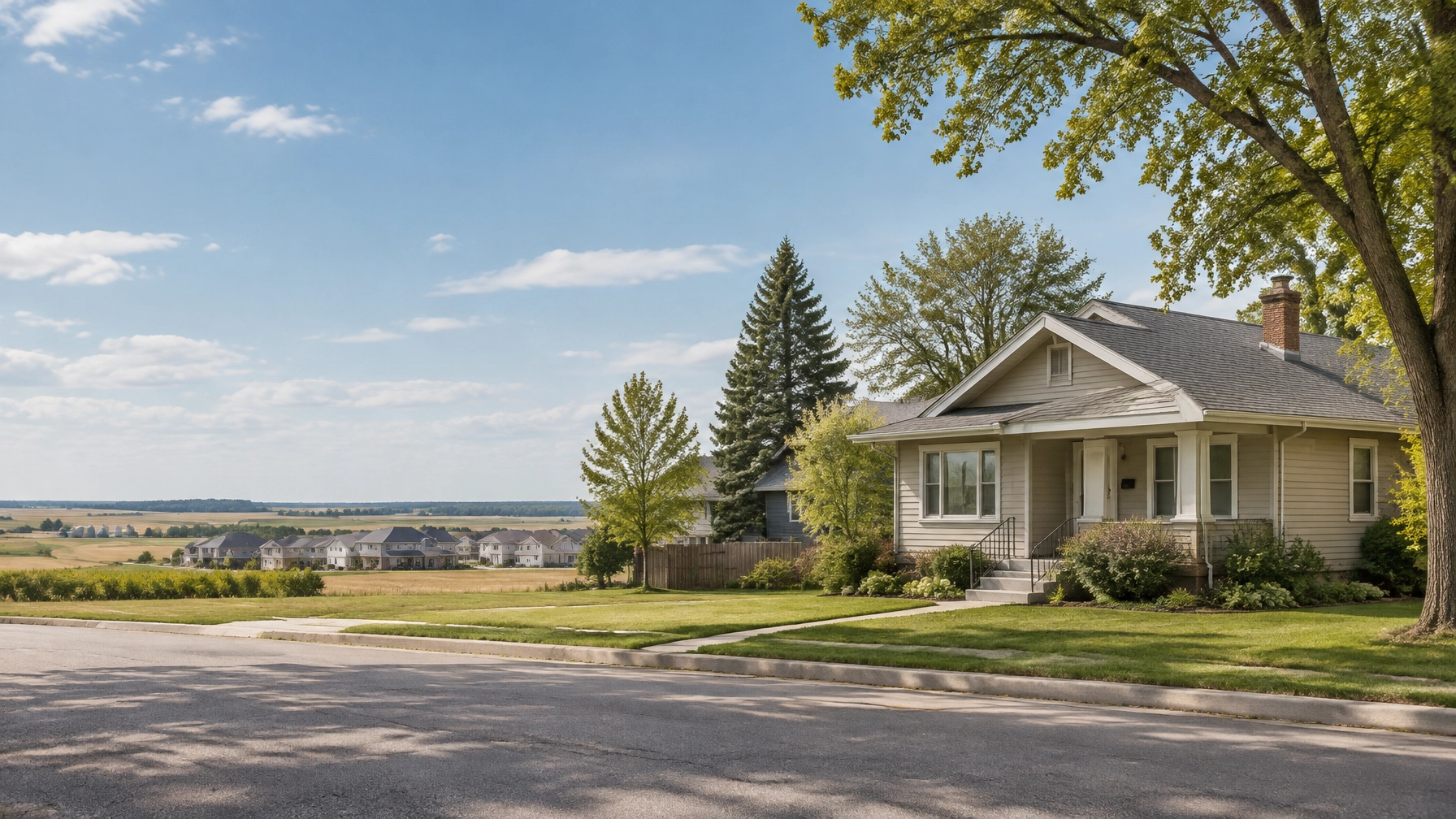
If you are researching a stony plain private mortgage, here is what matters most before you apply.
Stony Plain Private Mortgage at a Glance
- Used when a bank has declined a mortgage, refinance, or renewal application
- Approval is based mainly on property value and available equity, not credit score alone
- Funding can often be arranged in days rather than weeks
- Common uses include divorce buyouts, debt consolidation, and bridging a home sale
- Rates and fees are higher than a bank mortgage, so a clear exit plan matters
Stony Plain Private Mortgage: What to Know
Stony Plain is not Edmonton with a smaller sign at the edge of town.
It has a historic main street, established neighbourhoods, newer developments on the edges, and a rural community stretching into Parkland County. With roughly 18,000 residents and the Yellowhead connecting it to Edmonton, Stony Plain offers small-town character without being far from the city.
That mix matters when you need a mortgage.
A bank may be comfortable with a standard suburban home in Edmonton but hesitate over an older Stony Plain bungalow, an acreage with a private well, or a property with a shop, barn, or horse facilities. The problem may not be your equity. It may be that the property or your situation does not fit the bank’s lending box.
That is where a private mortgage in Stony Plain can provide a short-term bridge.
Why a Stony Plain homeowner might be declined by a bank
A bank typically wants several things to line up neatly:
- Strong credit
- Easily verified income
- A conventional residential property
- Standard water, septic, and access arrangements
- An appraisal that supports the requested loan
- Debt-service ratios within strict limits
Real life is less tidy.
An older home near Stony Plain’s established core may have dated wiring, deferred maintenance, or a basement that an appraiser treats cautiously. A rural property in Parkland County may have a well, septic system, cistern, outbuildings, or acreage that a bank values differently than the homeowner does.
Long-time homeowners can also run into trouble after retirement. Their home may be mortgage-free or nearly so, but their current monthly income is lower than it was during their working years.
A bank may say no because of income, credit, property condition, or servicing details. A private lender looks more closely at the property’s equity, marketability, and the plan for repayment.
Older Stony Plain homes and appraisal concerns
Stony Plain’s older neighbourhoods are part of its appeal. Mature trees, established lots, and character homes are not a bad thing.
They can, however, create financing friction.
Banks may question:
- Older roofs, furnaces, windows, or electrical systems
- Unfinished renovations
- Basement conditions
- Additions without clear permits
- Property condition compared with recent comparable sales
- Repairs required before a conventional mortgage can be approved
A private mortgage may work when the property has meaningful equity but needs time to address a bank’s concerns.
That does not mean a private lender ignores condition. An appraisal is usually still required, and the property must be reasonably marketable. The difference is that the lender may be more flexible about the overall file and focus on whether the loan is adequately secured.
Acreages, wells, septic systems, and outbuildings
The Stony Plain market is closely connected to the surrounding agricultural and equine community. For homeowners on an acreage, the house is only one part of the financing picture.
A bank may ask for documentation relating to:
- Well water quality and supply
- Septic condition and approval
- Private roads or access
- Zoning and permitted use
- Acreage size
- Outbuildings, shops, barns, or horse facilities
- Agricultural or commercial activity on the property
A missing well test or unclear septic documentation can slow down or derail a conventional mortgage. A large shop may be useful to the owner but add less value in a bank’s appraisal than expected.
Private financing can provide a solution for a Parkland County acreage or farm property, particularly when the property has strong equity and the borrower has a clear plan to refinance, sell, or repay from another source.

How much can you borrow?
NOW Mortgage may offer loan-to-value options of up to 75%, depending on the property, location, condition, appraisal, and overall file.
For example, if a Stony Plain property is appraised at $500,000, a 75% loan-to-value calculation would equal $375,000 before considering existing mortgages, liens, legal costs, and other financing details.
The maximum is not automatic. Rural properties, unusual homes, and agricultural properties may be assessed more conservatively. The more complex the property, the more important the appraisal and supporting documentation become.
A realistic assessment should account for:
- Current property value
- Existing mortgage balance
- Property taxes
- Registered liens or judgments
- Well and septic documentation
- Marketability of the home or acreage
- The amount required and the intended use of funds
No credit check to get started
You do not need a perfect credit score to start a conversation.
NOW Mortgage can begin with an initial review of your property, mortgage balance, and goals without a credit check at the inquiry stage. This lets you understand whether there may be a workable option before going through a full application.
If you proceed, credit may be reviewed later with your written consent. Private lending is equity-focused, but the full situation still matters.
This can be helpful if your credit was affected by:
- Divorce or separation
- Missed payments
- A consumer proposal
- Bankruptcy
- Collections or judgments
- High credit-card utilization
- A temporary income interruption
The goal is not simply to approve a loan. It is to structure financing that solves the immediate problem and gives you a realistic next step.
Common Stony Plain uses for private mortgage financing
Debt consolidation
High-interest credit cards, personal loans, tax arrears, or other debts can make monthly cash flow difficult. A private refinance or second mortgage may consolidate those obligations into one secured loan.
The benefit is not just a lower monthly payment. It may also be the chance to stabilize your finances and rebuild your credit before moving to a lower-cost lender.
Learn more about refinancing and debt consolidation.
Divorce or separation buyouts
If one spouse wants to keep the Stony Plain home, a buyout may be needed before the parties can move on. A private mortgage can sometimes provide the funds required to settle the other spouse’s equity while a longer-term financing plan is arranged.
Estate and probate financing
An estate may own a home, acreage, or farm property that needs to be maintained, transferred, or sold. Funds may be required for taxes, legal expenses, repairs, or an inheritance payout before the property sale is complete.
Short-term financing can help prevent a rushed sale when the estate has substantial real estate equity but limited available cash.
Agricultural financing
Parkland County farms and acreages do not always fit standard residential mortgage rules. Private agricultural financing may help with urgent operating needs, property improvements, debt restructuring, or other time-sensitive expenses.
Farm and commercial files may require more documentation. NOW Mortgage notes that 12 months of bank statements may be requested for commercial or farming files, compared with three months for many residential applications.
Reverse mortgages for local seniors
A Stony Plain homeowner aged 55 or older may have substantial equity but limited retirement income. A reverse mortgage can provide access to home equity without requiring the same monthly principal-and-interest payments as a conventional mortgage.
It may be worth considering for:
- Home repairs or accessibility improvements
- Debt repayment
- Medical or caregiving expenses
- Helping family members
- Retirement cash flow
- Avoiding a forced sale
Read more about reverse mortgages for homeowners over 55. A reverse mortgage still carries interest and reduces available equity over time, so it should be reviewed carefully.

Bank vs. private lender: what the timeline can look like
Every file is different, but private financing is often faster when the property and equity are clear.
| Stage | Traditional bank | Private lender |
|---|---|---|
| Initial review | Several business days or longer | Often same day |
| Income and credit review | Detailed and highly prescriptive | More flexible, equity-focused |
| Appraisal and conditions | Often several weeks | Commonly 2–5 business days for appraisal |
| Underwriting decision | Often 1–3 weeks after documents | Often 1–3 business days after a complete file |
| Legal and funding | Additional time for conditions | Often structured for faster closing |
| Typical purpose | Long-term financing | Short-term bridge or urgent solution |
NOW Mortgage’s private mortgage process includes an initial inquiry, equity review, application, appraisal, lender underwriting, legal preparation, and funding.
The process can move quickly, but “fast” does not mean careless. You should receive the proposed rate, term, fees, and conditions before committing.
Know the all-in cost before you commit
Private mortgages cost more than bank mortgages. That is the trade-off for speed, flexible criteria, and the ability to consider property or credit situations a bank may decline.
Before signing, ask for an upfront estimate of:
- Interest rate
- Lender fee
- Brokerage fee
- Appraisal cost
- Legal fees
- Administration charges
- Minimum-interest requirements
- Prepayment penalties
- Extension or renewal costs
The important number is the all-in cost, not just the advertised rate.
Your exit strategy matters
A private mortgage should usually be treated as a short-term bridge, not permanent financing.
Your exit strategy may be:
- Refinancing with a bank or credit union
- Moving to a B lender after improving credit
- Completing renovations and refinancing
- Selling the property
- Receiving an inheritance or settlement
- Increasing documented income
- Paying out high-interest debt and improving debt ratios
A good plan identifies what needs to change, how long it should take, and what lender you expect to use next.

For example, during a 12-month private term, you might:
- Make every payment on time.
- Reduce credit-card balances.
- Resolve collections, judgments, or tax issues.
- Complete well, septic, or property repairs.
- Improve income documentation.
- Review bank and B-lender options several months before maturity.
If refinancing is not realistic, selling may be the more responsible exit. A private lender should not be presented as a way to postpone an unavoidable problem indefinitely.
Stony Plain private mortgage FAQ
Can I get a private mortgage if my credit is bad?+
Possibly. Private lenders focus primarily on equity, property value, and repayment strategy. Credit history still forms part of the overall review, but a low score does not automatically end the conversation.
Can I finance an acreage near Stony Plain?+
Possibly, depending on the appraisal, location, condition, marketability, well and septic arrangements, zoning, and available equity. Outbuildings may be considered, but they do not always contribute their full replacement cost to lending value.
Can I borrow up to 75% of my property value?+
Loan-to-value options of up to 75% may be available depending on the property and lender. Complex rural properties may qualify for a lower LTV.
How quickly can private mortgage funds be available?+
Some files can move from inquiry to approval quickly, with funding often taking days to a few weeks depending on appraisal, legal work, documents, and lender conditions.
Do I need a credit check to find out my options?+
No credit check is required to start an initial conversation. If you proceed with an application, credit may be pulled later with authorization.
Is a private mortgage more expensive than a bank mortgage?+
Yes. Private mortgages generally have higher rates and fees because they address higher-risk, short-term, or non-standard situations.
What should I bring to the first conversation?+
Have your property address, approximate value, current mortgage balance, amount required, and the reason for financing. Property tax information, mortgage statements, identification, and acreage documents may be requested later.
A bank decline is not always the end of the road
For Stony Plain homeowners, the issue may be an older home, an acreage’s well and septic system, a rural outbuilding, a retirement-income calculation, or a difficult life event.
A private mortgage may create breathing room: but only when the numbers work and the exit plan is clear.
Start with a straightforward review of your situation through the secure NOW Mortgage application. You can also learn more about bruised-credit mortgage options. Financing is subject to property assessment, lender approval, and applicable terms and conditions.
Leave a Reply