If you are researching a high river second mortgage, here is what matters most before you apply.
High River Second Mortgage at a Glance
- Lets you access home equity without touching your existing low-rate first mortgage
- Approval depends on combined loan-to-value, property type, and your exit strategy
- Property type and location can affect your rate as much as your credit profile
- Funding is typically faster than refinancing through a bank
- Best suited to short- to medium-term needs with a clear repayment plan
High River Second Mortgage: What to Know
If you own a home in High River and need access to equity, you may wonder whether you will pay more than a homeowner in Calgary.
Sometimes, yes. But the town boundary itself is not what sets your second mortgage rate.
Lenders look at the property, the available equity, the combined loan-to-value, the first mortgage, and how easily the property could be sold if the loan does not pay out as planned.
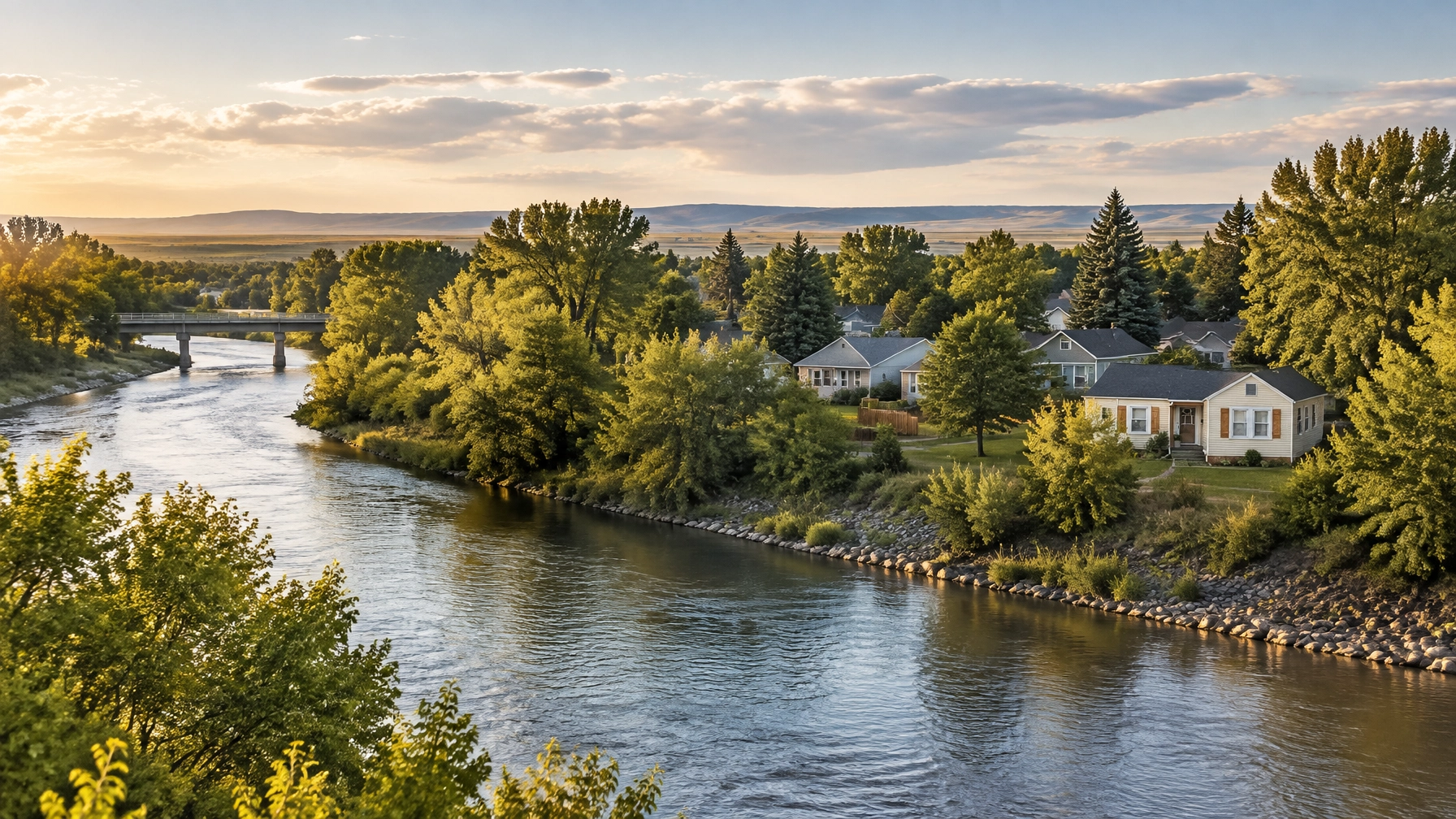
That matters in High River, a community of roughly 15,000 people about 45 minutes south of Calgary along Highway 2. The town has older modest homes near its historic downtown, newer development at the edges, and a strong connection to Western, agricultural, and ranching communities.
It also has the lasting legacy of the 2013 flood. Flood mapping, insurance availability, and property-specific risk can affect mortgage terms, even where municipal mitigation has reduced the practical risk.
The short answer: location matters, but property details matter more
A standard suburban home in Calgary is usually easier for a lender to value and resell than a rural acreage with wells, septic, multiple outbuildings, or agricultural use.
That does not mean every High River property receives a higher rate.
A newer home outside flood-affected areas may price reasonably close to a comparable urban file. An older home carrying flood mapping concerns, or an acreage with specialized improvements, may receive a higher rate or a lower maximum LTV.
For a second mortgage Calgary borrower, the urban property may fit more lender programs. For a High River borrower, the file may need a lender comfortable with smaller markets, rural properties, or flood-related underwriting.
What actually drives a second mortgage rate?
1. Loan-to-value and combined LTV
The more equity remaining after the new mortgage, the better the lender’s security position.
Combined LTV is calculated using:
- Existing first mortgage balance
- New second mortgage amount
- Appraised property value
- Any other registered financing on title
For example, a $60,000 second mortgage on a property with a $270,000 first mortgage and a $450,000 value creates a combined LTV of 73.3%.
That is a very different risk profile from the same $60,000 request on a property already carrying $350,000 in debt.
2. Property type and resaleability
Lenders generally prefer properties with a broad pool of potential buyers.
A typical Calgary detached home may have stronger resaleability than:
- An acreage with private water and septic
- A ranch property with extensive outbuildings
- Farmland with mixed residential and agricultural use
- An older home requiring significant repairs
- A property with unusual zoning or limited comparable sales
Private lenders Alberta borrowers work with may still lend against these properties, but the lender may compensate for the extra uncertainty through a higher rate, lower LTV, or additional fees.
3. Appraised value
The lender is not lending against what the property cost five years ago or what the owner hopes it is worth.
An independent appraisal considers recent comparable sales, condition, location, improvements, and marketability. In a smaller market like High River, there may be fewer directly comparable sales than in Calgary.
That can make the appraisal more conservative.
4. Flood mapping and insurance
High River’s 2013 flood remains part of the property conversation.
The town has completed significant flood mitigation work, including engineered berms and dikes. However, a lender may still review:
- Whether the property is in a mapped floodway or flood fringe
- Whether it was previously damaged
- Whether appropriate property insurance is available
- Whether the insurer has exclusions or special deductibles
- How flood mapping could affect future resaleability
The Town of High River’s flood preparedness and protection information is a useful starting point, but the lender and insurer will assess the specific property.
A property behind mitigation infrastructure is not automatically treated the same as a property in a mapped high-risk area. The details matter.
5. Your first mortgage
Keeping a low-rate first mortgage can sometimes make a second mortgage more sensible than refinancing the entire loan.
Suppose your first mortgage is fixed at 2.49% with a substantial prepayment penalty. Replacing it with a new mortgage could mean:
- Paying a break penalty
- Losing the low rate on the entire balance
- Paying new legal and appraisal costs
- Increasing the interest rate on money you did not actually need to borrow
A second mortgage applies the higher rate only to the additional funds.
It is not always cheaper, but it can be more efficient when the cash need is temporary and the existing first mortgage is attractive.
High River versus Calgary: side-by-side
The following comparison is illustrative only. Actual approval, pricing, fees, and LTV depend on the complete application.
| Factor | Calgary suburban home | High River in-town home | High River acreage |
|---|---|---|---|
| Typical property profile | Detached home, townhouse, or condo | Older core home or newer edge development | House with land, wells, septic, or outbuildings |
| Lender resaleability | Usually broad | Depends on condition and location | More specialized buyer pool |
| Flood review | Usually property-specific and neighbourhood-based | More likely to involve Highwood River mapping history | May involve drainage, access, and insurance review |
| Typical LTV flexibility | Often strongest on standard homes | Case-by-case | Often more conservative |
| Rate direction | Usually lowest when LTV is moderate | Can be close to Calgary for a strong property | Often higher because of rural complexity |
| Main documents | Mortgage statement, appraisal, ID, property tax information | Same, plus property and insurance details where needed | Same, plus acreage, agricultural, well/septic, and outbuilding information |
| Practical issue | Existing debt and credit | Mapping, condition, and smaller-market resaleability | Valuation, specialized use, and exit strategy |
Three realistic High River and Calgary scenarios
Scenario 1: High River acreage valued at $420,000
Assume:
- Property value: $420,000
- First mortgage: $250,000
- Proposed second mortgage: $45,000
- Combined debt: $295,000
- Combined LTV: 70.2%
- Illustrative rate: 11.99%
- Interest-only payment: approximately $449.63 per month
At first glance, 70.2% LTV may look reasonable. But the lender still needs to review the acreage’s access, zoning, well, septic system, outbuildings, insurance, and agricultural use.
If the property is mainly residential and easy to resell, it may receive better terms. If it is a specialized ranch or has limited comparable sales, the lender may reduce the maximum loan or increase the rate.
For a farm or acreage owner, private farm financing in Alberta may be more relevant than a standard residential mortgage product.

Scenario 2: Calgary suburban home valued at $450,000
Assume:
- Property value: $450,000
- First mortgage: $270,000
- Proposed second mortgage: $60,000
- Combined debt: $330,000
- Combined LTV: 73.3%
- Illustrative rate: 9.99%
- Interest-only payment: approximately $499.50 per month
This borrower is requesting more money, but the property may be easier to value and sell. A standard Calgary home can therefore receive a lower rate despite having a slightly higher combined LTV than the High River acreage.
That is the important point: the dollar amount borrowed does not determine the rate by itself.
Scenario 3: Older High River home valued at $330,000
Assume:
- Property value: $330,000
- First mortgage: $190,000
- Proposed second mortgage: $35,000
- Combined debt: $225,000
- Combined LTV: 68.2%
- Illustrative rate: 11.49%
- Interest-only payment: approximately $335.13 per month
The lower LTV helps. However, the smaller loan amount may create a practical problem.
Legal, appraisal, broker, lender, and administration costs can take up a larger percentage of a smaller mortgage. If the borrower needs only $15,000 but the total closing costs are several thousand dollars, a second mortgage may not be worthwhile.
A lower-value property can have equity and still fail the usefulness test.
When does keeping the first mortgage and adding a second make sense?
A second mortgage may be worth considering when:
- Your first mortgage has a very low rate
- Refinancing would trigger a large penalty
- You need a defined amount for a short-term purpose
- There is enough equity after all registered debt
- You have a realistic repayment or refinance plan
- The funds solve a more expensive problem, such as tax debt or high-interest credit cards
Some homeowners use equity for debt consolidation, urgent repairs, a business or farm need, or a mortgage for divorce settlement when timing matters.
The same equity-based approach may help someone searching for a bad credit mortgage Calgary option after missed payments, a consumer proposal, or a financial disruption. Credit still matters, but private lending is not based on a credit score alone.
When is a second mortgage the wrong move?
A second mortgage may be the wrong choice if:
- You have no clear exit strategy
- The new payment only delays an ongoing cash-flow problem
- The loan is being used to cover regular expenses
- Your combined LTV is already too high
- The fees consume too much of the advance
- Selling the property would be a better financial decision
- A refinance, secured line of credit, or payment arrangement is cheaper
The goal should not be to stay in private lending indefinitely. A short-term private mortgage should have a plan behind it: sell, refinance, improve income documentation, pay down debt, or transition to a lower-cost lender.
How the process works
NOW Mortgage starts with a conversation and a property review. No credit check is required to begin exploring your options.
A typical file may involve:
- Property address and estimated value
- Current mortgage statement
- Property tax information
- Details of the requested funds
- Identification for all applicants on title
- An independent appraisal
- Insurance and flood-related information where relevant
- A repayment or refinance plan
The private mortgage process explains the usual steps, from pre-qualification through appraisal, legal preparation, and funding.
High River second mortgage FAQ
Are second mortgage rates higher in High River than Calgary?+
They can be, particularly for acreages, unusual properties, high-LTV files, or homes affected by flood mapping and insurance concerns. A standard High River home may price closer to Calgary than a rural acreage.
Can I get a second mortgage on a High River acreage?+
Possibly. Private lenders may consider acreages, ranches, and agricultural properties with wells, septic systems, and outbuildings. Expect a closer review of value, access, insurance, property use, and resaleability.
Does the 2013 flood automatically prevent mortgage approval?+
No. The property’s current flood mapping, mitigation, insurance, condition, and marketability all matter. A lender will assess the specific address rather than applying one rule to the entire town.
Can I qualify with bad credit?+
Potentially. A private mortgage is primarily equity-based, so a low credit score, consumer proposal, or past missed payments does not automatically end the conversation. The loan still needs sufficient equity and a realistic repayment plan.
Is a second mortgage better than refinancing?+
Sometimes. If your first mortgage has a low rate and refinancing would create a significant penalty, adding a second mortgage may preserve the cheaper first loan. Compare the total cost, not just the monthly payment.
What if I need a different type of equity solution?+
The right product depends on the goal. Options can include a private mortgage, a home equity loan Alberta homeowners can use for consolidation, agricultural financing Alberta borrowers need for farm property, or a reverse mortgage for eligible seniors. Homeowners searching for a private mortgage Edmonton, debt consolidation mortgage Edmonton, or reverse mortgage Edmonton solution may also have different qualification paths.
The bottom line
High River does not automatically mean an expensive second mortgage.
The rate follows the risk profile of the property and the loan: not simply the town name.
A newer, well-insured High River home with moderate debt may receive reasonable terms. An acreage with specialized improvements or a property carrying flood-related concerns may require more equity and a higher rate. Calgary usually benefits from deeper resale markets, but a heavily leveraged or financially distressed Calgary file can still be expensive.
If you are considering a second mortgage, start with the complete picture: property value, first mortgage, requested amount, fees, insurance, and your exit plan. Apply to review your options with NOW Mortgage before committing to a structure that does not fit.
Examples in this article are illustrative only and are not rate quotes or guarantees of approval. All financing is subject to property assessment, lender approval, applicable fees, and legal documentation.