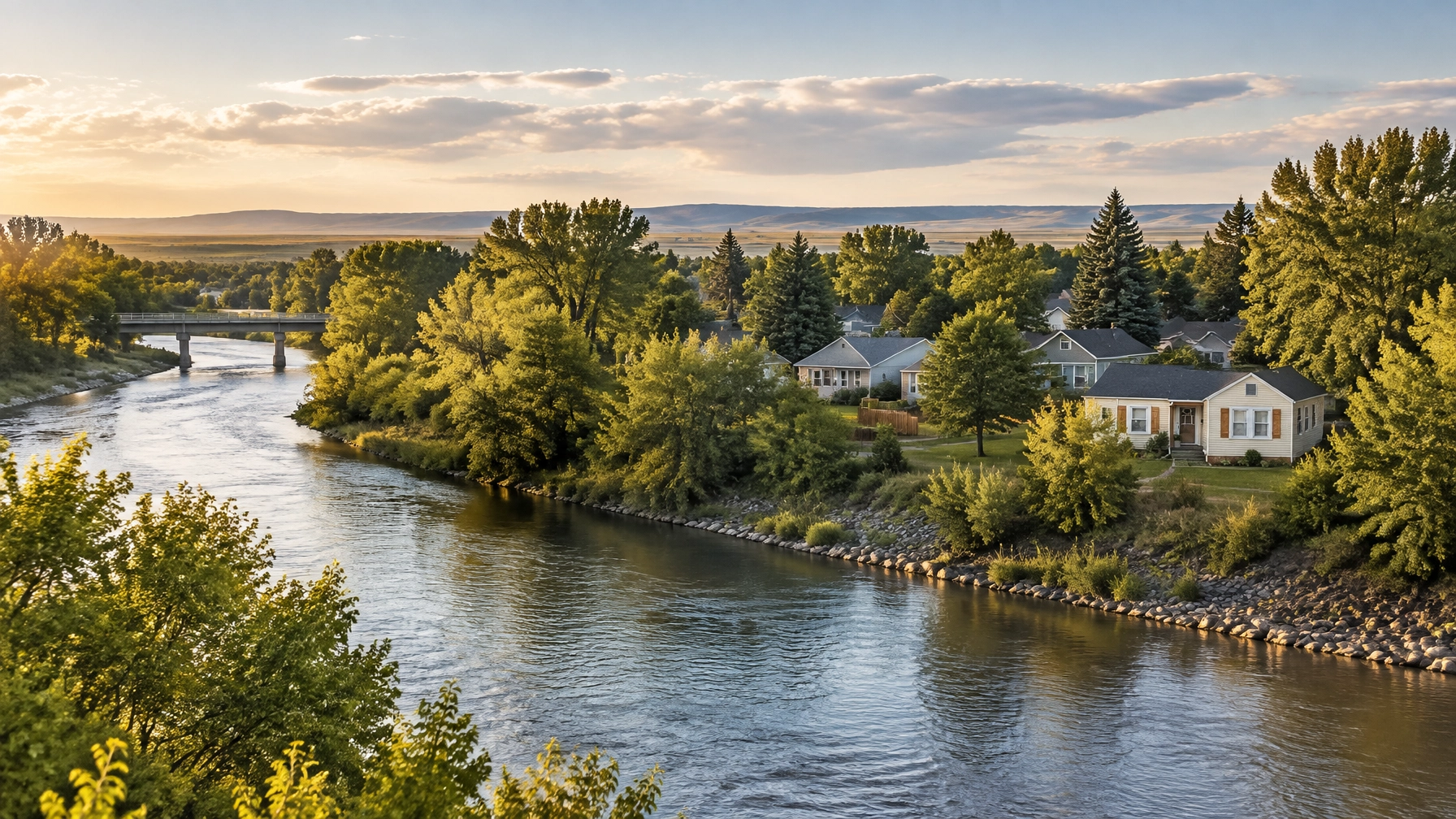
If you are researching a high river private mortgage, here is what matters most before you apply.
High River Private Mortgage at a Glance
- Used when a bank has declined a mortgage, refinance, or renewal application
- Approval is based mainly on property value and available equity, not credit score alone
- Funding can often be arranged in days rather than weeks
- Common uses include divorce buyouts, debt consolidation, and bridging a home sale
- Rates and fees are higher than a bank mortgage, so a clear exit plan matters
High River Private Mortgage: What to Know
High River is not Calgary with a smaller population.
It is a genuine small-town community about 45 minutes south of Calgary on Highway 2, with a historic downtown, strong Western and agricultural roots, older homes near the core, and newer development around the edges. The surrounding Foothills County landscape adds farms, ranches, acreages, and seasonal or self-employed income to the local mortgage picture.
That local mix matters when a bank says no.
A declined application may have less to do with your ability to repay and more to do with the property, the income documentation, the flood-risk classification, or a recent life event. A private mortgage in High River can sometimes provide a short-term bridge when traditional financing does not fit.

Why High River homeowners can fall outside a bank’s lending box
Banks prefer straightforward files:
- Stable salaried income
- Strong credit history
- Newer properties in standard neighbourhoods
- Conventional insurance coverage
- Predictable resale value
- Clean, easily documented debt
High River has plenty of those homes. It also has properties and homeowners that do not fit the standard template.
You may have an older house near the historic core, a home affected by the 2013 flood history, an acreage with well and septic systems, or income tied to agriculture, contracts, or seasonal work. You may also own a modestly valued home with substantial equity but have limited retirement income.
That does not automatically make the mortgage impossible. It means the lender may need to look at the property and available equity, not just a credit score and paystub.
Flood history and property condition can affect financing
The 2013 flood changed High River permanently. Since then, the Town has completed major mitigation work, including more than seven kilometres of engineered dikes, a flood gate at the Centre Street Bridge, and infrastructure designed to protect against a repeat of the 2013 event with an additional safety buffer.
That is important context: but it does not erase the need for property-specific review.
A lender may still want to know:
- Is the property in a floodway, flood fringe, protected flood fringe, or outside the mapped hazard area?
- Is adequate insurance available?
- Were repairs or renovations completed properly after the flood?
- Does the property meet current municipal and appraisal standards?
- How would the property perform on resale?
The Town of High River’s flood preparedness and protection information is a useful starting point. The Highwood River Hazard Study also explains how floodway and flood-fringe mapping supports planning and risk assessment.
A private lender may consider a property that a bank restricts, but not every property will qualify. Flood designation, insurance, condition, appraisal value, and the overall loan-to-value ratio still matter.
Older homes and modest values require realistic numbers
High River has older, modest homes close to the core as well as newer builds on the outskirts. Older housing stock can create problems when a bank’s appraisal or insurer identifies deferred maintenance, outdated systems, foundation concerns, or post-flood remediation questions.
Modest property values create another practical issue: there may simply not be enough equity to support a private mortgage after costs.
NOW Mortgage may offer financing up to 75% loan-to-value, depending on the property type, location, appraisal, and overall file. That is not a promise that every property qualifies at 75%.
For example, if a home appraises at $400,000 and the maximum lending position is 75%, total registered mortgage debt may need to stay around $300,000 before considering fees and lender requirements. If the existing mortgage is already close to that amount, the available new funds may be limited.
Private lending also involves higher rates than a traditional bank. On a smaller High River property, appraisal, legal, lender, and broker costs can take up a meaningful portion of the available proceeds.
There is a floor below which private financing stops making financial sense. A proper review should tell you that before you commit.
Agricultural income and Foothills County acreage properties
A farm, ranch, or acreage may be valuable, but conventional underwriting can become complicated when the income is seasonal, incorporated, partially cash-flow based, or tied to commodity cycles.
A bank may ask for several years of tax returns and detailed financial statements. It may also place limits on agricultural land, outbuildings, mixed-use properties, or acreage configurations.
Private agricultural financing in Alberta can sometimes help with:
- Working capital
- Equipment or operational expenses
- Tax obligations
- Farm transfers
- Land purchases
- Refinancing existing secured debt
- Time-sensitive estate or ownership changes

For commercial, farming, or acreage files, lenders may request more documentation than for a standard residential application. NOW Mortgage notes that farming and commercial files commonly require up to 12 months of bank statements, depending on the lender and situation.
The property still needs to support the loan. A rural location, unusual outbuildings, flood overlay, or limited resale market can affect the lender’s decision.
Common reasons High River homeowners use private financing
Debt consolidation
High-interest credit cards, unsecured loans, tax debt, and collection accounts can make monthly cash flow unmanageable.
A home equity loan in Alberta or private second mortgage may allow you to consolidate some debts into a secured mortgage structure. The goal is not simply to move debt around: it is to reduce pressure and create a realistic plan to refinance with a traditional lender later.
Divorce and separation buyouts
A separation can create a short deadline. One person may need to buy out the other’s share of the home, refinance joint debt, or secure funds while the family property is being divided.
A mortgage for a divorce settlement may be considered based on equity and the proposed buyout structure, even when income documentation or credit is temporarily complicated.
Estate and probate settlements
Inherited High River homes, acreage properties, and rural assets can be difficult to refinance quickly: especially when multiple beneficiaries, probate, taxes, or property repairs are involved.
A short-term private mortgage may provide time to complete the estate settlement, sell the property properly, or pay out beneficiaries without accepting a rushed sale.
Reverse mortgages for High River seniors
Some long-tenure homeowners have significant equity but reduced income after retirement. A reverse mortgage may help access funds without selling the home or making regular mortgage payments.
Eligibility depends on age, property type, value, existing debt, and lender review. You generally remain responsible for property taxes, insurance, and maintenance. You can also review the CHIP reverse mortgage estimate for an initial indication of possible proceeds.
This is the same general issue people search for as a reverse mortgage in Edmonton, but the property and borrower details: not the city name: drive the final answer.
What the process looks like
You do not need a perfect credit score to start. In fact, no credit check is required to begin a conversation and review your options. Credit may be requested later with your written consent as part of the full application.
The typical process includes:
- Initial conversation: Explain the property, mortgage balance, goal, and timeline.
- Equity review: Estimate available equity and identify realistic lender options.
- Upfront cost estimate: Review the expected rate, lender fees, broker fees, legal costs, appraisal, and other charges before you commit.
- Application and documents: All owners on title must be included, with identification and supporting documents.
- Independent appraisal: Confirm current market value and property condition.
- Lender review: The file is assessed based primarily on equity, property, exit plan, and risk.
- Commitment and legal work: Review the commitment before signing, then have a lawyer register the mortgage.
- Funding: Funds may be directed to debt payoffs, a buyout, an estate obligation, or your account.
See the full NOW Mortgage process for the documents and stages involved.
Bank vs. private lender: a practical timeline comparison
| Stage | Traditional bank | Private lender |
|---|---|---|
| Initial review | Several business days to weeks | Often same day |
| Income and credit underwriting | Detailed and strict | More equity- and property-focused |
| Property appraisal | Often required | Typically required |
| Approval | Commonly 2–6 weeks, depending on complexity | Often 1–3 business days after a complete file |
| Legal and closing | Usually 1–3 weeks after approval | Can be arranged quickly when conditions are satisfied |
| Best fit | Standard file with strong income and credit | Time-sensitive, complex, or non-standard file |
Fast does not mean automatic. A complete application, responsive applicants, a workable appraisal, and a clear legal path are still necessary.
Build the exit strategy before taking the mortgage
Private lending should usually be treated as a short-term bridge, not a permanent replacement for a bank mortgage.
Before proceeding, ask:
- What will change before renewal?
- Can debts be reduced or paid off?
- Will credit improve with consistent payments?
- Can agricultural or self-employed income be documented more clearly?
- Will a property repair or flood-related issue be resolved?
- Can the home be sold if refinancing is not realistic?
- Is there enough future income to support a traditional mortgage?
The objective may be to refinance with a bank or B lender in 6–24 months. If that is not realistic, the private mortgage needs to be structured very carefully: or reconsidered.
High River private mortgage FAQ
Can I get a private mortgage after a bank decline?+
Possibly. A decline caused by bruised credit, self-employed income, property condition, flood-related concerns, or a complicated ownership situation may still have an equity-based solution. Approval depends on the property, appraisal, existing debt, and loan-to-value.
Is there a minimum credit score?+
Private lending typically does not rely on a minimum credit score in the same way a bank does. No credit check is required to get started, although a credit report may be obtained later with your consent during the formal process.
Can I finance a High River property in a flood zone?+
It depends on the specific classification, insurance availability, property condition, appraisal, and lender policy. Floodway and flood-fringe properties require careful review. Do not assume that completed mitigation makes every lender comfortable.
Can I get a second mortgage in High River?+
A second mortgage in Calgary or High River may be available when there is sufficient equity after the first mortgage. The available amount may be smaller on a modestly valued property, and the costs need to be weighed against the benefit.
Is private lending more expensive than a bank mortgage?+
Yes. Private mortgage rates are generally higher, and there are additional costs. The value is speed and flexibility when traditional financing is unavailable: not a promise of bank-level pricing.
Do you only help High River homeowners?+
NOW Mortgage serves Alberta borrowers, including High River and the surrounding Foothills County area. The same equity-based approach can apply to people searching for a private mortgage in Calgary, a bad credit mortgage in Calgary, or a private mortgage in Edmonton.
Start with the numbers, not the pressure
A bank decline is frustrating, but it is not always the final answer. For High River homeowners, the right solution depends on the property’s flood and condition history, available equity, income profile, timeline, and exit strategy.
NOW Mortgage provides upfront cost estimates before you commit, flexible lending criteria, and fast reviews for homeowners who need to understand their options.
Start an application with NOW Mortgage or learn more about private mortgages.
Leave a Reply