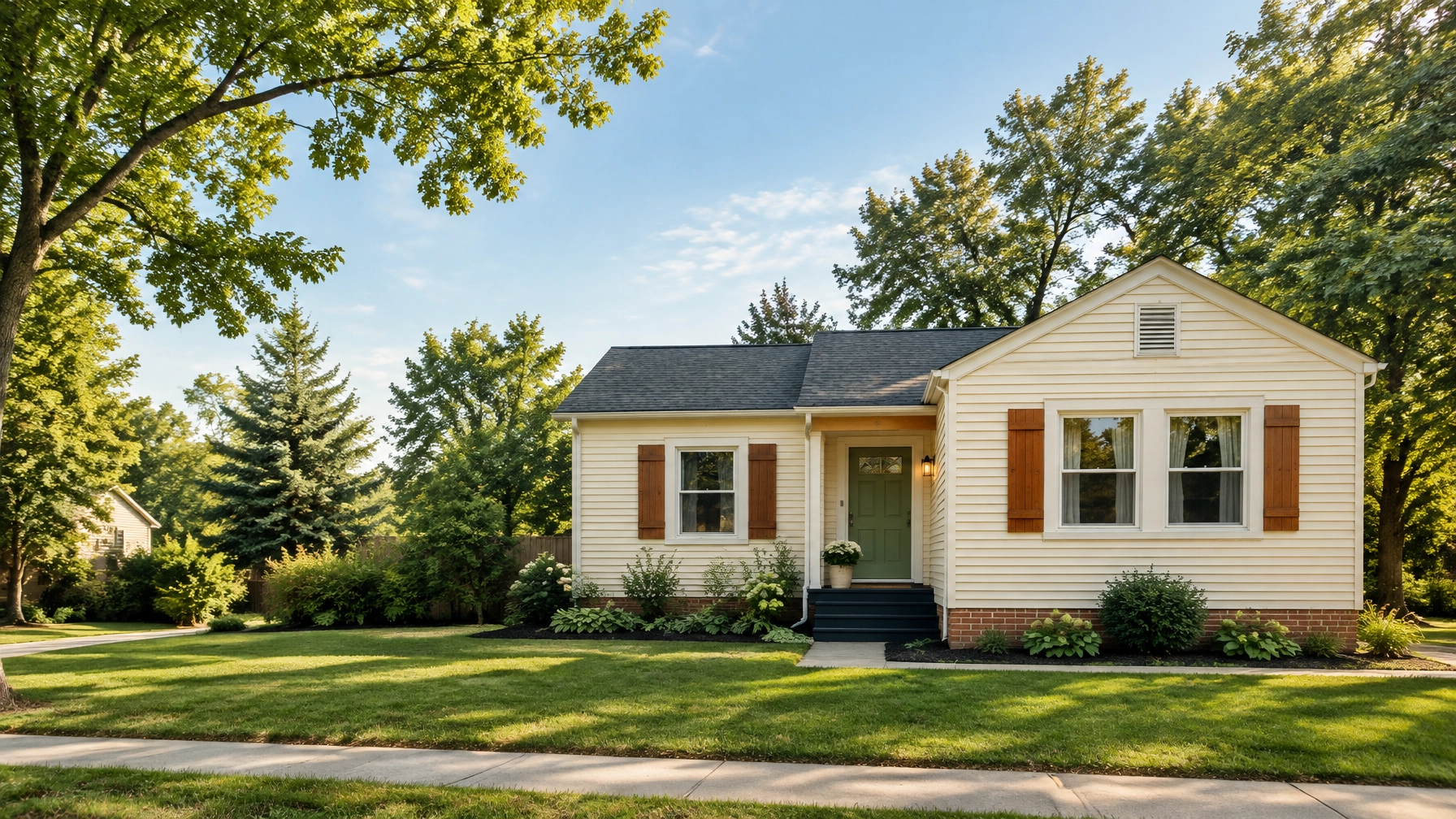
If you are researching a st. albert private mortgage, here is what matters most before you apply.
St. Albert Private Mortgage at a Glance
- Used when a bank has declined a mortgage, refinance, or renewal application
- Approval is based mainly on property value and available equity, not credit score alone
- Funding can often be arranged in days rather than weeks
- Common uses include divorce buyouts, debt consolidation, and bridging a home sale
- Rates and fees are higher than a bank mortgage, so a clear exit plan matters
St. Albert Private Mortgage: What to Know
Being declined by a bank in St. Albert can feel especially frustrating.
This is a community with strong household incomes, substantial home equity, and a large share of well-kept detached homes. But a strong property and a good-looking neighbourhood do not automatically solve a bank’s income, credit, or debt-service rules.
That is where a private mortgage in St. Albert may provide a short-term bridge.
Private lending is not a magic workaround, and it is not usually cheaper than a bank mortgage. But when timing matters, a separation agreement needs funding, an estate needs to be settled, or a bank declines a file because it does not fit a standard box, it can create a practical path forward.
Why St. Albert homeowners can still be declined by a bank
St. Albert is a city of roughly 70,000 people just northwest of Edmonton. According to the 2021 Census, about 70% of occupied private dwellings are single-detached homes, and approximately 19% of residents are 65 or older.
In other words, many local homeowners have significant equity. They may also have decades of mortgage payments behind them.
So why might the bank still say no?
Banks primarily qualify borrowers using documented income, credit history, debt-service ratios, and strict underwriting guidelines. A decline may happen because of:
- Self-employed or irregular income
- A recent separation or divorce changing household income
- Consumer proposals, collections, missed payments, or bankruptcy
- High credit-card balances and debt-service ratios
- Retirement income that does not fit the bank’s calculations
- A complicated estate or probate situation
- Tax arrears, judgments, or liens
- A time-sensitive purchase, buyout, or debt obligation
- Property or financing details outside the bank’s standard policy
A high-income community does not mean every homeowner has simple paperwork. St. Albert has plenty of real-life situations behind the front doors: downsizing, inheritance, separation, retirement planning, and debt consolidation.

What is a private mortgage in St. Albert?
A private mortgage is financing arranged through a private lender rather than a traditional bank or credit union.
The lender’s main focus is usually the property’s value and available equity. Income and credit may still be reviewed, but they are not always the deciding factors.
At NOW Mortgage, you can start the conversation without a credit check. That means you can first discuss your property, mortgage balance, goals, and possible options before authorizing a credit pull.
Private lending may be considered for:
- A private first mortgage
- A private second mortgage
- Debt consolidation
- A refinance
- A spousal buyout
- Estate or probate financing
- A bridge until a traditional mortgage becomes available
- A reverse mortgage transition for an older homeowner
Depending on the property, lender, and overall file, financing may be available up to 75% loan-to-value (LTV).
That means a property valued at $600,000 could potentially support total mortgage financing of up to approximately $450,000, subject to the existing mortgage, appraisal, lender requirements, and closing costs.
It is an example, not a guaranteed approval.
Private lending costs more than a bank mortgage
This is the part worth putting in bold.
Private mortgages generally have higher interest rates and fees than bank mortgages.
That higher cost pays for flexibility, speed, and a different approach to risk. Private financing is usually intended as a short-term bridge, not a permanent replacement for a traditional mortgage.
Before committing, ask for the complete cost, including:
- Interest rate
- Lender fee
- Broker fee, if applicable
- Legal fees
- Appraisal cost
- Administration or other closing charges
- Renewal or discharge costs
- Estimated interest over the full term
The goal is not simply to get approved. The goal is to understand exactly what the mortgage will cost and whether the payment and exit plan are realistic.
A clear exit strategy matters
A private mortgage should come with a plan for what happens next.
Common exit strategies include:
- Refinancing with a bank after credit improves
- Moving to a B lender once income or credit documentation is stronger
- Selling the property
- Completing a divorce or estate settlement and refinancing afterward
- Paying down debt to improve debt-service ratios
- Transitioning to a reverse mortgage
- Using a pending business, investment, or other source of funds
For example, a St. Albert homeowner may use private financing to complete a spousal buyout. Once the separation agreement is finalized and the homeowner has sufficient income documentation, the private mortgage may be refinanced with a traditional lender.
The exit plan should be discussed before the private mortgage closes, not when the term is about to expire.
Divorce and separation buyouts in St. Albert
A separation can turn a straightforward mortgage into a complicated file quickly.
One spouse may want to remain in the family home but need funds to buy out the other spouse’s equity. The problem is that the remaining homeowner may not qualify with a bank immediately because:
- Household income has changed
- Support payments affect debt-service calculations
- The separation agreement is still being finalized
- Credit has been affected by joint debts
- The timeline is too short for a conventional refinance
A mortgage for a divorce settlement can provide temporary financing based on the property’s equity while the legal and financial details are completed.
The important questions are:
- What is the home worth?
- What is currently owed?
- How much is required for the buyout?
- Can the remaining homeowner carry the payments?
- What is the plan to refinance or sell later?
Debt consolidation for St. Albert homeowners
Credit cards, personal loans, tax debt, and other unsecured obligations can become expensive and difficult to manage.
A debt-consolidation mortgage may use home equity to pay out higher-cost debts and replace several payments with one mortgage payment.
This can help stabilize cash flow, but consolidation only works if the underlying spending and repayment problem is addressed. A private mortgage may have a lower rate than some unsecured debts while still costing more than a standard bank mortgage.
Ask for a side-by-side comparison of:
- Keeping existing debts
- Consolidating through a private mortgage
- Applying with a B lender
- Selling or downsizing
- Using another home-equity option
For homeowners searching for a debt consolidation mortgage in Edmonton, the same principle applies in St. Albert: compare the full cost, not just the monthly payment.
Estate and probate financing
Estate settlements can create a timing problem.
An inherited St. Albert home may have substantial value, but beneficiaries may still need funds to:
- Buy out another beneficiary
- Pay legal or estate expenses
- Cover taxes or property costs
- Clear a mortgage or secured debt
- Complete repairs before selling
- Distribute proceeds according to the will
A private mortgage can sometimes provide short-term access to the property’s equity while probate and other estate matters are being finalized.
Every estate is different. The lender and lawyer will need to understand who is on title, what authority exists to borrow, and how the financing will be repaid.
Reverse mortgages for St. Albert seniors
With nearly one in five St. Albert residents aged 65 or older, retirement-focused mortgage planning is relevant locally.
A reverse mortgage may allow an eligible homeowner to access equity without making regular mortgage payments. NOW Mortgage’s reverse mortgage estimator notes that the youngest homeowner generally must be at least 55, the property must be a Canadian primary residence, and eligibility depends on the home, value, existing debt, and underwriting.
A reverse mortgage may be considered for:
- Supplementing retirement income
- Consolidating debt
- Funding accessibility renovations
- Helping family members
- Creating an emergency reserve
- Paying off an existing mortgage
A private mortgage may sometimes act as a temporary bridge before a reverse mortgage is arranged. However, reverse mortgages also have their own costs and long-term considerations. Compare both options carefully.
You can review the CHIP reverse mortgage estimator to get an initial idea of how the process works.

Bank vs. private lender: How do the timelines compare?
| Stage | Traditional bank | Private lender |
|---|---|---|
| Initial review | Several business days or longer | Often same day |
| Income and credit review | Detailed and policy-driven | More equity-focused and flexible |
| Approval | Can take one to several weeks | Often 1–3 business days after a complete file |
| Appraisal | Required in many cases | Typically required; often 2–5 business days |
| Funding | Commonly several weeks, depending on conditions | Often about 7–21 days, depending on the file |
A private lender is not always faster. An appraisal, lawyer, title issue, missing document, or complex estate matter can delay any mortgage.
The advantage is that private lending may be more flexible when a bank’s process cannot accommodate the situation.
What documents should St. Albert homeowners prepare?
You may be asked for:
- Government-issued identification
- Current mortgage statement
- Property tax information
- Details of any secured loans or liens
- A recent appraisal or property information
- Three months of bank statements for many residential files
- Separation or divorce documents
- Estate or probate documents
- Basic income or retirement information
Not every file requires every document. At NOW Mortgage, all applicants on title must be included in the application, and two pieces of ID are generally required from each applicant.
The NOW Mortgage process explains each stage, from the initial inquiry through funding.
Frequently asked questions about private mortgages in St. Albert
Can I get a private mortgage if my bank declined me?+
Possibly. Private lenders typically focus more heavily on the property’s value and available equity. A bank decline does not guarantee approval, but it does not automatically end your options.
Is there a minimum credit score?+
A credit score is not required to start a conversation with NOW Mortgage. Private lending is primarily equity-based, although credit may be reviewed later with your consent as part of the full application.
How much equity do I need?+
NOW Mortgage may consider LTV options up to 75%, depending on the property and file. The amount available depends on the appraised value, existing mortgage balance, fees, and lender requirements.
Can I use a private mortgage for a separation buyout?+
In some cases, yes. A private mortgage or second mortgage may help fund a spousal buyout when a conventional refinance is not immediately available.
Is a private mortgage the same as a second mortgage?+
No. A private mortgage can be registered as a first or second mortgage. A second mortgage in St. Albert sits behind an existing first mortgage and must leave enough equity for both lenders.
Are private mortgages available for bad credit?+
They may be. Private lenders can consider files involving missed payments, collections, proposals, or bankruptcy, depending on the property and equity. This is different from searching for a bad credit mortgage in Calgary or a second mortgage in Calgary, the city changes, but the core review remains property- and equity-focused.
How quickly can funds be available?+
A complete private file may be approved quickly, with funding often possible within approximately 7–21 days. Urgent timelines should be discussed early so appraisal and legal requirements can be coordinated.
Start with the numbers, not a promise
If you own a home in St. Albert and the bank has said no, the next step is not guessing. It is reviewing the property value, current mortgage balance, purpose of the funds, total cost, and exit strategy.
NOW Mortgage is located at 15 Carleton Drive #202, St. Albert, AB T8N 7K9. You can start a secure application, request a pre-qualification, or call 587-200-6727.
You can also email lending@nowmtg.ca.
Private lending can be more expensive than a bank mortgage. The right structure, however, may give a St. Albert homeowner time, flexibility, and a realistic path back to traditional financing.
Leave a Reply