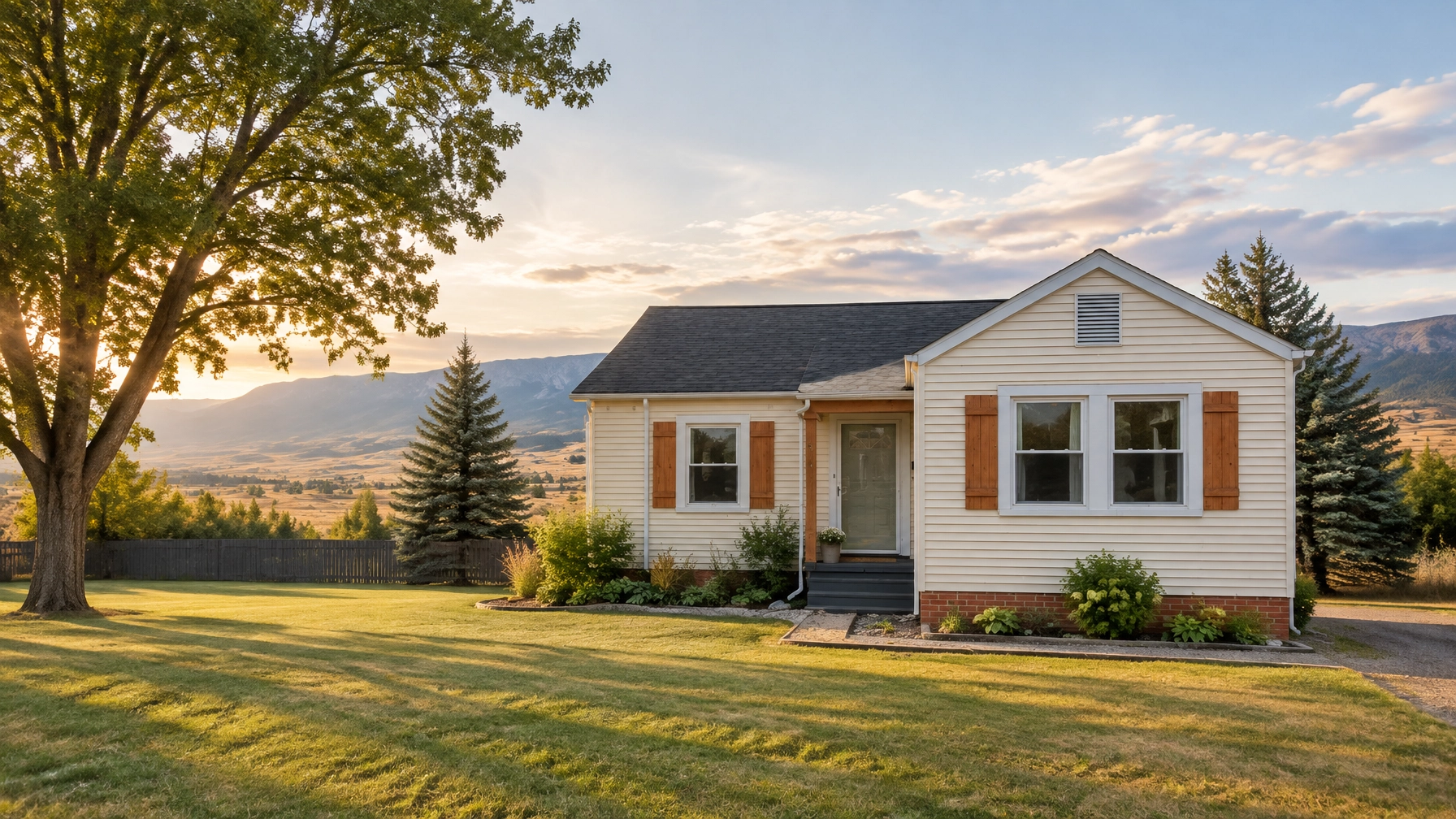
If you are researching a black diamond & turner valley second mortgage, here is what matters most before you apply.
Black Diamond & Turner Valley Second Mortgage at a Glance
- Lets you access home equity without touching your existing low-rate first mortgage
- Approval depends on combined loan-to-value, property type, and your exit strategy
- Property type and location can affect your rate as much as your credit profile
- Funding is typically faster than refinancing through a bank
- Best suited to short- to medium-term needs with a clear repayment plan
Black Diamond & Turner Valley Second Mortgage: What to Know
If you own a home in Black Diamond or Turner Valley and need access to equity, you may wonder whether living outside Calgary automatically means a higher second mortgage rate.
The honest answer: the town boundary matters less than the property sitting behind the loan.
Black Diamond and Turner Valley, now combined as Diamond Valley, are neighbouring foothills communities roughly 45 minutes southwest of Calgary along Highway 22. They have historic main streets, strong local identities, oil and gas roots, arts and community culture, and a mix of older homes, newer construction, acreages, ranches, and country residential properties.
That mix is precisely why second mortgage pricing can vary.
A standard older home in town is one kind of security. A rural acreage with a private water system, septic field, detached shop, and several outbuildings is another. The address is only the beginning of the conversation.

The short answer: location influences the rate, but property risk does more
A second mortgage Calgary lender is not simply charging one rate for Calgary and another for every town outside the city.
Pricing usually reflects:
- Loan-to-value and combined LTV
- Property type and condition
- Appraised value
- Resaleability
- Depth of the local buyer pool
- Existing first mortgage balance
- Your credit, income, and overall situation
- The purpose of the loan
- Your repayment or exit strategy
Calgary has a deep and active housing market. Appraisers can usually find plenty of recent comparable sales, and lenders know there are many potential buyers if they ever need to sell the property.
Black Diamond and Turner Valley have steady demand, especially from people commuting to Calgary or Okotoks and buyers looking for more space. But the market is thinner. A modest in-town property may still be very financeable, while a unique foothills acreage may take longer to sell and require a more conservative valuation.
That difference can affect pricing.
Black Diamond and Turner Valley are not the same as Calgary, on paper or in practice
Calgary offers a broad range of suburban homes, condos, infills, and established neighbourhoods. The city also benefits from a larger pool of buyers and more frequent transactions.
Diamond Valley has a different housing profile:
- Older bungalows and detached homes on larger in-town lots
- Limited newer development compared with Calgary
- Townhouses and a smaller amount of condo inventory
- Older homes with renovations that may not show up cleanly in comparable sales
- Acreages, ranches, and country residential properties in surrounding Foothills County
- Properties with wells, septic systems, shops, barns, and other improvements
Home prices are generally lower than Calgary’s metro market, although individual properties vary widely. A lower purchase price does not automatically mean an easier second mortgage.
In fact, a lower-valued home can create a practical problem: there may not be enough available equity left after fees to make a small second mortgage worthwhile.
What actually determines your second mortgage rate?
1. Loan-to-value and combined LTV
The lender looks at the total debt registered against the property compared with its appraised value.
For example:
- Property value: $500,000
- First mortgage: $300,000
- Proposed second mortgage: $75,000
- Total financing: $375,000
- Combined LTV: 75%
A 75% combined LTV may be viewed more favourably than an 85% combined LTV because there is a larger equity cushion.
A lower LTV does not guarantee a specific rate, but it generally strengthens the file.
2. Property type and condition
A clean, well-maintained in-town bungalow with several recent comparable sales is easier to underwrite than a specialized rural property.
For an acreage or ranch, the appraisal may need to separate:
- Land value
- Main residence
- Detached garage or shop
- Barns and other outbuildings
- Fencing and agricultural improvements
- Water source and septic system
- Access, road quality, and zoning
A large shop may be valuable to the right buyer, but it may not add its full construction cost to the appraised value. Rural improvements do not always translate dollar-for-dollar into mortgage security.

3. Resaleability and market depth
A typical home in Black Diamond or Turner Valley can be perfectly reasonable collateral. The question is how quickly it could be sold at a realistic price if the lender ever had to rely on the property.
A standard three-bedroom home near local amenities generally has a broader buyer pool than:
- A high-value estate acreage
- A hobby farm with specialized buildings
- A property with unusual zoning
- A home requiring substantial repairs
- A rural property with limited comparable sales
This is why two homeowners living only a few kilometres apart can receive different pricing.
4. Your first mortgage
Your current first mortgage matters in two ways.
First, the balance determines how much equity remains. Second, the interest rate and prepayment terms determine whether adding a second mortgage is smarter than refinancing everything.
If you have a first mortgage at a low fixed rate, breaking it could trigger a significant penalty. Refinancing the entire balance into a new mortgage may also mean paying a higher rate on money you do not need to refinance.
That is where a second mortgage can be useful: you leave the low-rate first mortgage alone and borrow only the additional amount required.
Side-by-side: three Alberta borrowers
The following examples are illustrative, not rate quotes. Actual approval depends on appraisal, lender policy, legal review, and the borrower’s complete file.
| Borrower | Property | Estimated first mortgage | Requested second | Combined financing | Main pricing consideration |
|---|---|---|---|---|---|
| Foothills acreage owner | $700,000 acreage | $350,000 | $75,000 | $425,000 / 61% LTV | Strong equity, but rural appraisal and resaleability |
| Calgary suburban owner | $450,000 detached home | $300,000 | $50,000 | $350,000 / 78% LTV | Deeper market and easier comparables |
| Black Diamond owner | $310,000 older in-town home | $190,000 | $35,000 | $225,000 / 73% LTV | Moderate LTV, but smaller loan and fee impact |
The acreage borrower may have the strongest equity position, but the property could still require more detailed underwriting.
The Calgary homeowner may receive competitive pricing because the property is easy to compare and resell, even with a higher combined LTV.
The Black Diamond homeowner may have a reasonable LTV, but the smaller requested amount can be affected more heavily by appraisal, legal, lender, and broker fees.
Worked example: when keeping the first mortgage makes sense
Suppose you own an older Black Diamond home worth $310,000.
- Existing first mortgage: $190,000 at 2.89%
- Credit card and personal debt to consolidate: $35,000
- Proposed second mortgage: $35,000
- Total financing: $225,000
- Combined LTV: approximately 73%
If you refinance the entire $190,000 first mortgage at a higher current rate, you could lose the benefit of your existing low rate and potentially face a prepayment penalty.
A second mortgage allows you to preserve the first mortgage and borrow only the $35,000 required. The second mortgage rate will be higher, but the higher rate applies to the smaller amount, not the entire $225,000.
That structure may make sense when:
- Your first mortgage rate is significantly below current pricing
- The refinance penalty is substantial
- You need a defined amount of equity
- You have a realistic plan to repay or refinance the second mortgage
- The property has enough equity after all costs
However, if the second mortgage amount is only $15,000 or $20,000, fees can consume too much of the benefit. The practical question is not only, “Can I borrow?” It is also, “Does the net amount justify the cost?”
When a second mortgage is the wrong move
A second mortgage is not a magic escape hatch. It may be the wrong solution if:
- The payment is unaffordable even after debt consolidation
- You have no clear repayment or refinance plan
- The property value is uncertain
- Your combined LTV would leave very little equity
- The loan only delays an ongoing spending problem
- Fees absorb a large percentage of the proceeds
- Selling the property would solve the problem more safely
- A conventional refinance, HELOC, or credit union product is available at a meaningfully lower cost
A private mortgage should usually be treated as a bridge, not a permanent replacement for long-term financial planning.
At NOW Mortgage, the conversation starts with the property, your objective, and the numbers. There is no credit check required to start exploring options, and costs should be explained before you commit.
What local homeowners may use the funds for
Second mortgage proceeds can sometimes support:
- Debt consolidation
- A time-sensitive repair
- Tax or judgment repayment
- A business or agricultural need
- Estate settlement
- A mortgage for divorce settlement
- A separation-related buyout
- A refinance while rebuilding credit
For acreage owners, the need may involve equipment, land improvements, or working capital. That is different from a Calgary homeowner consolidating credit cards. Both may be possible, but the lender will assess the property and the exit strategy differently.
For larger rural or farming properties, explore private farm financing in Alberta and agricultural financing options.
How the process works
A typical application includes:
- Initial conversation about your property and objective
- Equity and property review without a credit check to start
- Application and identification for all owners on title
- Independent appraisal arranged through the broker
- Lender review of the property, debt, and exit plan
- Commitment letter showing the approved amount, rate, term, and conditions
- Lawyer preparation and registration
- Funding to your account, creditors, or another agreed destination
See the full private mortgage process before you apply.
FAQ
Does living in Black Diamond or Turner Valley automatically mean a higher rate than Calgary?+
No. Location is one factor, but property type, combined LTV, appraisal quality, and resaleability usually matter more than the municipal boundary.
Are acreages harder to finance than homes in town?+
They can be. Wells, septic systems, outbuildings, zoning, access, and limited comparable sales may require more detailed underwriting. Strong equity can help, but rural properties are not valued exactly like suburban homes.
Can I get a second mortgage with bad credit?+
Possibly. A bad credit mortgage Calgary lender or private lender may focus more heavily on equity and the property than a traditional bank would. Credit events, income, and your repayment plan still matter.
Can a second mortgage be used for debt consolidation?+
Yes, in suitable cases. A home equity loan Alberta homeowners use to consolidate high-interest debts may reduce monthly pressure, but the debt becomes secured against the property. Budgeting still matters.
What if I need a larger rural or agricultural loan?+
Acreage and farm files may require additional documents, including more detailed financial information. NOW Mortgage also works with private lenders Alberta borrowers seeking agricultural financing.
Do you only help clients in Calgary?+
No. NOW Mortgage works with homeowners across Alberta, including Calgary, Edmonton, Diamond Valley, and surrounding rural communities. You can also explore a private mortgage Edmonton solution or debt consolidation mortgage Edmonton if your property is elsewhere.
Is a reverse mortgage another option?+
For qualifying older homeowners, a reverse mortgage may be worth comparing with a second mortgage. Review your options carefully, including the reverse mortgage estimator, before choosing a structure.
The bottom line
A second mortgage in Black Diamond or Turner Valley is not priced simply because the home is outside Calgary.
The real question is how the specific property performs as collateral.
A standard in-town home may compare well with Calgary property once its value, condition, and equity are assessed. An acreage or ranch can still be financeable, but wells, septic, outbuildings, land value, and a thinner buyer pool may affect the lender’s risk assessment.
If you are considering a private mortgage Calgary homeowners use to access equity: or you own property in Diamond Valley and want a clear answer: start with the numbers. Compare the cost of a second mortgage with the cost of breaking your first mortgage, and make sure there is a realistic exit plan.
Start your application with NOW Mortgage to review your options with transparent upfront pricing.
Leave a Reply